
What happens if electrical fault finding reveals unsafe wiring?
If fault finding reveals unsafe wiring, we make the affected circuit safe first, which may mean isolating it or carrying out an urgent repair. We then explain what needs replacing or rewiring, provide a written quotation before further work starts, and leave the decision with you.
Unsafe wiring does not automatically mean the whole property needs rewiring. We first separate immediate hazards from defects that can be repaired safely as part of planned work. The result may be a local repair, a consumer unit change with associated remedial work, or a partial or complete rewire.
The finding is recorded clearly. A fault may involve damaged insulation, loose or overheated connections, exposed live parts, inadequate earthing, incorrect alterations or a circuit that is overloaded. Old wiring is not automatically dangerous, but its condition, protection and suitability for present-day use all matter. We explain what we have found in plain terms rather than treating every older installation as the same.
Where an inspection is being recorded against the usual electrical condition categories, a C1 indicates immediate danger, while a C2 indicates a potentially dangerous condition. A C3 records an improvement recommendation rather than an unsafe defect. Further investigation may be needed where the available tests cannot establish the cause or extent of a problem.
If there is an immediate risk, stop using the affected equipment or circuit. If it is safe to do so, switch off the relevant circuit at the consumer unit and keep people away from damaged accessories, exposed cables or signs of overheating. Do not remove covers or attempt to reconnect the wiring. Burning smells, scorch marks, buzzing, sparks or repeated tripping need particular care because continued use can increase the risk of electric shock or fire.
We identify which circuit is involved and check whether the fault affects other parts of the installation. The circuit may remain isolated until the danger has been removed. We label anything left disconnected and explain what can still be used. This avoids a temporary reset masking a fault that needs proper repair.
The repair depends on where the defect is and what caused it. Examples include:
- replacing damaged cable or a failed accessory;
- remaking a loose connection and checking for heat damage;
- correcting an incorrectly connected circuit;
- improving earthing or bonding where testing identifies a deficiency;
- separating an overloaded or unsuitable circuit;
- investigating concealed cable damage before reconnecting the circuit; or
- replacing sections of an installation that no longer provide suitable protection.
A new consumer unit can provide modern protective devices, but it cannot make defective cables or unsafe connections safe by itself. If the fault lies elsewhere, we explain the additional work needed rather than presenting the consumer unit as a complete answer.
A full rewire is considered when local repairs would leave too much of the installation unsuitable. This can apply where several circuits have defects, protective measures are inadequate throughout, or the wiring cannot support the way the property is now used. A partial rewire may be more appropriate where the problem is confined to an extension, kitchen, outbuilding or individual circuit.
In an older, solid-wall or listed property, access often determines the least disruptive approach. We discuss cable routes, floorboards, loft spaces and accessible voids before work starts. Where cables are concealed, some lifting, chasing or making-good may be necessary. We set out what the electrical work includes and what other decorating or building work would remain for someone else.
If you are planning other changes, such as an electric shower, induction hob, heat pump, solar installation or EV charger, tell us before the remedial work is designed. The existing supply, consumer unit and spare capacity may affect those additions. Dealing with related defects at the same stage can avoid opening up finished areas again, but we still distinguish essential safety work from optional upgrades.
After the repair, we test the affected circuits again. We check continuity, insulation resistance, polarity, earthing and the operation of protective devices as appropriate to the work. We do not treat a circuit as complete simply because its lights or sockets operate. The testing confirms that the repair has addressed the underlying defect and that the circuit is safe to return to service.
You receive the relevant electrical certification or test documentation for the work carried out, along with any remaining recommendations. If the property is rented or being prepared for letting, keep this paperwork with the electrical records. A recommendation that does not make the installation immediately dangerous should still be explained, so you can decide when to deal with it before it develops into a larger fault.
Where the work is more extensive, we can separate urgent remedial action from later improvements in the quotation. That gives you a clear choice about the sequence, the areas affected and the work required to bring the installation back into safe use.
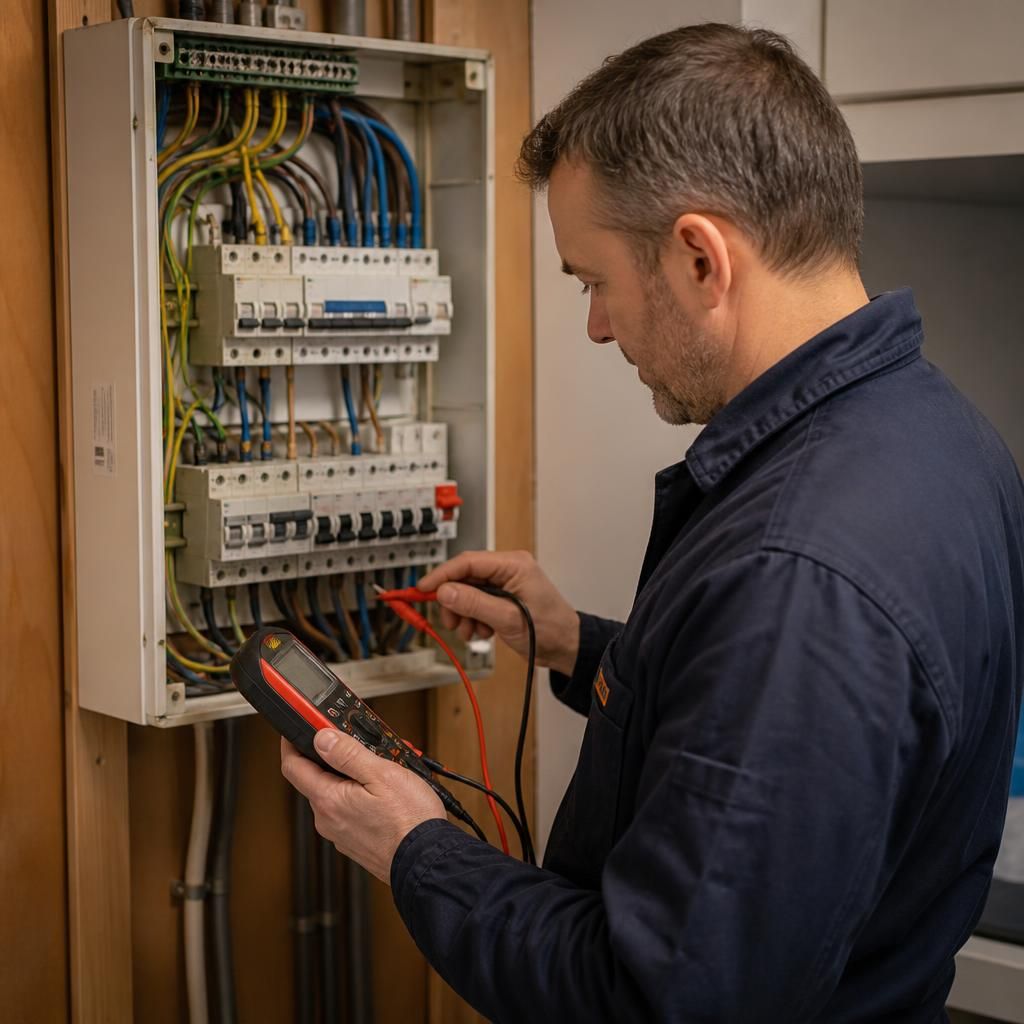
An unsafe finding should leave you clear about the decision, not just a list of faults. We explain which work is necessary for safe use, which improvements can wait, and what the property will look like while repairs are carried out.
That distinction matters in an older home, where replacing one damaged section may be the sensible answer. You can then plan any wider electrical improvements separately, with the scope and cost set out before work begins.