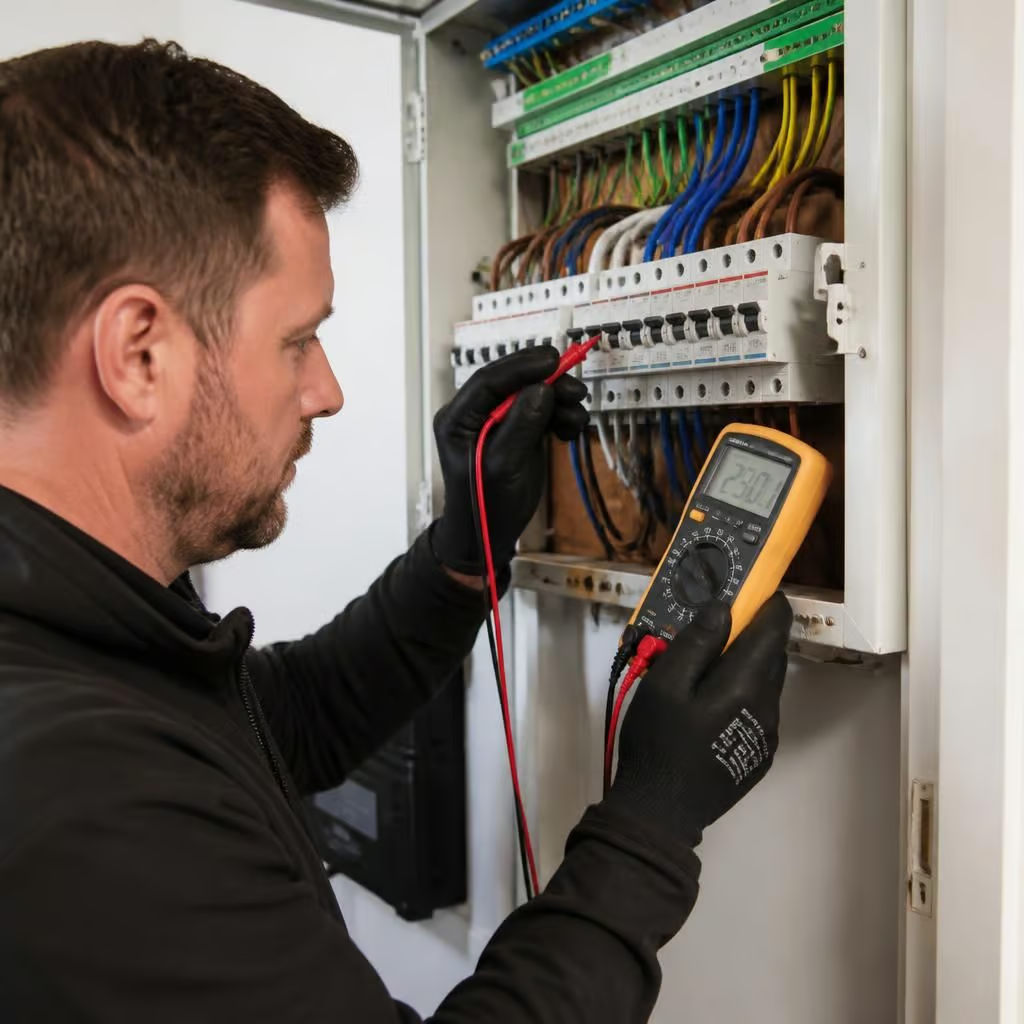
Will electrical fault finding require the power to be switched off?
Sometimes. We may need to isolate a circuit or switch off the main supply while testing, but we’ll explain what’s necessary before interrupting the power.
We isolate only what is needed for each test, then restore circuits as soon as they are safe. A fault-finding visit does not automatically mean the whole property will lose power throughout.
We start by asking what happened and which circuits are affected. A tripping RCD, a socket that has stopped working, flickering lights or a burning smell each points us towards different checks. We inspect the consumer unit, switches, sockets and visible wiring before deciding how far the isolation needs to go.
Where the fault appears to be on one circuit, we normally leave the rest of the installation available. That might mean the lights still work while we investigate a socket circuit, or that the upstairs circuits remain on while we test a fault downstairs. The affected circuit stays off until we know it can be energised safely.
Some faults cannot be tested safely while the circuit is live. We use the appropriate isolation point, prove that the circuit is dead with a suitable tester and protect it from being switched back on during the checks. We then carry out tests such as continuity, insulation resistance and earth fault loop testing, depending on the suspected fault.
Live testing is limited to situations where it is necessary to understand the fault and can be controlled safely. We use suitable equipment and procedures rather than repeatedly resetting a tripping breaker. Repeated resets can worsen damage or leave a dangerous fault connected.
The whole supply may be unavailable for part of the visit if the fault is at the consumer unit, affects more than one circuit or cannot be separated safely. It may also be necessary while we check the main switch, incoming conductors or the relationship between several circuits. We explain this before carrying out that stage wherever the condition of the installation allows.
Tell us before testing if the property relies on electrically powered heating controls, a medical device, an alarm, a freezer or other equipment that must not be disconnected without planning. We can take those circumstances into account when arranging the order of the checks, although safety takes priority if the installation is presenting an immediate danger.
On an older property, the cause may not be the item that first showed the symptom. Moisture, damaged cable, a loose connection, an overloaded circuit or a failing appliance can all produce similar behaviour. We trace the circuit rather than replacing the tripping device without finding out why it operated.
Once we locate the cause, we explain whether the answer is a repair, replacement or further investigation. If remedial work is needed, we provide the quotation before starting it. We then retest the circuit, check that protective devices operate correctly and restore the supply only when the results support doing so.
If you notice scorching, a hot socket, smoke, sparks or a burning smell, do not remove covers or handle the wiring. If it is safe to do so, switch off the relevant circuit or the main switch, keep clear of the area and arrange an electrical inspection.
A power cut during testing doesn’t automatically mean the property needs a full rewire. Isolation is often a temporary safety measure while we establish whether the problem is limited to one cable, connection, accessory or appliance.
Once we have identified the cause, we explain what needs doing and what can remain in service. You’ll know whether the next step is a small repair, replacement of a damaged component or a wider electrical inspection before any remedial work begins.