
Can you add lighting to an existing circuit safely?
Yes, we can add lighting to an existing circuit safely if the circuit has enough capacity and the wiring, protective devices and earth continuity are suitable. We check those points first, then choose the correct connection and test the completed work before you use the new light.
Adding a light to an existing circuit is usually safe when the new fitting, cable route and switching arrangement are suitable for that circuit. The work must be planned around how the circuit is wired, not just around the position of the new fitting.
The new light needs a proper connection point. We may take the feed from an existing ceiling rose, a suitable junction point or the circuit’s wiring route. A loose connection behind a fitting is not an acceptable substitute. Where a junction cannot remain accessible, we use a maintenance-free connection designed for that purpose. This prevents a future fault being hidden above a ceiling or behind a wall.
Your existing light may use a traditional loop-in arrangement, separate switch drops or a junction-box system. These methods are not interchangeable without checking how the live, neutral and earth conductors are arranged. A switch cable may contain a permanent live and switched live but no neutral. That matters if you want a smart switch, illuminated switch or some types of sensor.
The switching you want affects the wiring. A single switch for the new fitting is relatively straightforward. Two-way switching, a second control point, pull-cord operation or a presence sensor needs a different cable arrangement. We establish how you want to use the room before choosing the connection method, so the finished controls work as expected rather than requiring alterations later.
LED fittings also need the right control gear. If you want a dimmer, the lamp and dimmer must be compatible. Some LED lamps flicker, fail to switch off fully or have a reduced dimming range when paired with an unsuitable control. We match the controls to the fitting and explain any limitation before installation.
The position of the light can affect the amount of work. A loft above the room may allow us to route the cable with limited access to the ceiling. Solid walls, tiled surfaces and finished ceilings make concealed wiring more disruptive. In those situations, we discuss surface cable containment, access through adjoining spaces or a carefully planned route before work starts. We do not leave inaccessible connections simply to avoid making an extra access point.
Older homes need particular care around existing cable routes. Previous alterations may have left redundant wiring, mixed cable types or connections that do not match the rest of the circuit. If we find a local defect, we explain whether it can be corrected as part of the lighting work or whether a wider repair is needed. Adding one fitting should not conceal a fault elsewhere.
Special locations need separate consideration. A bathroom light, an external light or a fitting near water cannot be treated like a bedroom pendant. The fitting’s location, enclosure rating, cable route and protection must suit the environment. Outdoor cables and accessories also need protection from moisture and physical damage. We will recommend a different position or fitting if the proposed one would not be suitable.
A new light does not normally require the whole property to be rewired. However, we will not extend a circuit where its existing arrangement makes the addition unsafe or unreliable. Warning signs include repeated tripping, scorch marks, warm switches, flickering lights, damaged insulation or a fitting that has worked loose. These symptoms need investigation rather than another connection added to the circuit.
Before the light is used, we test the alteration and confirm that the controls operate correctly. We check the new fitting, connections and protective operation as part of the completed work. You receive the relevant electrical certification for the alteration, giving you a record of what was changed and tested.
For a straightforward addition, the main decisions are the light’s position, the switch arrangement and the access route. A site assessment is worthwhile when the property has older wiring, solid ceilings, unusual switching or a bathroom or outdoor installation. It gives you a clear view of the practical work before any cable is run.
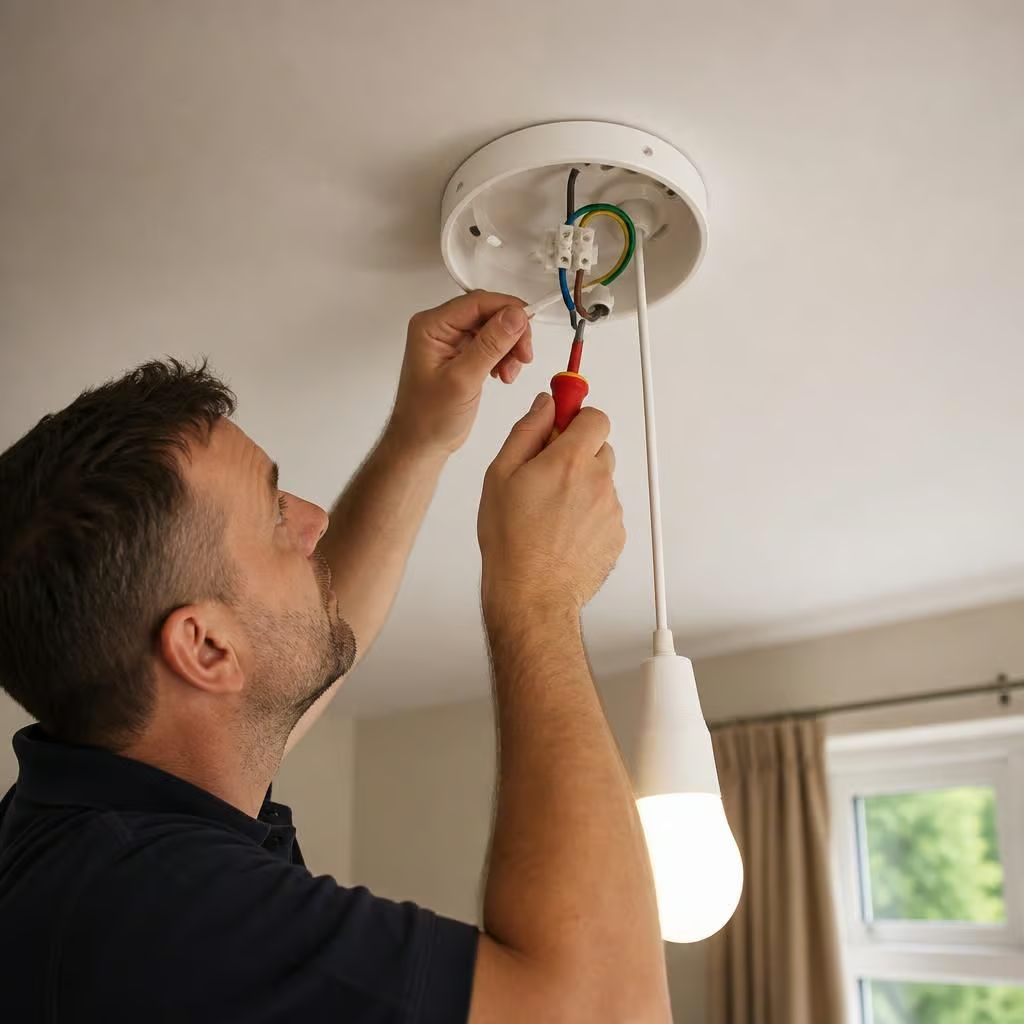
If the property has more than one lighting circuit, the nearest switch may not control the cable you need. We identify the correct circuit at the consumer unit, isolate it and prove it is dead before opening any connection. This matters especially where previous alterations have left cables passing through the same ceiling void.
Once the new light is connected, we make the alteration clear for future maintenance. Connections are enclosed correctly, unused conductors are terminated safely and any change to the circuit is recorded in the electrical certificate. That gives the next electrician a reliable starting point if you later add another fitting or investigate a fault.