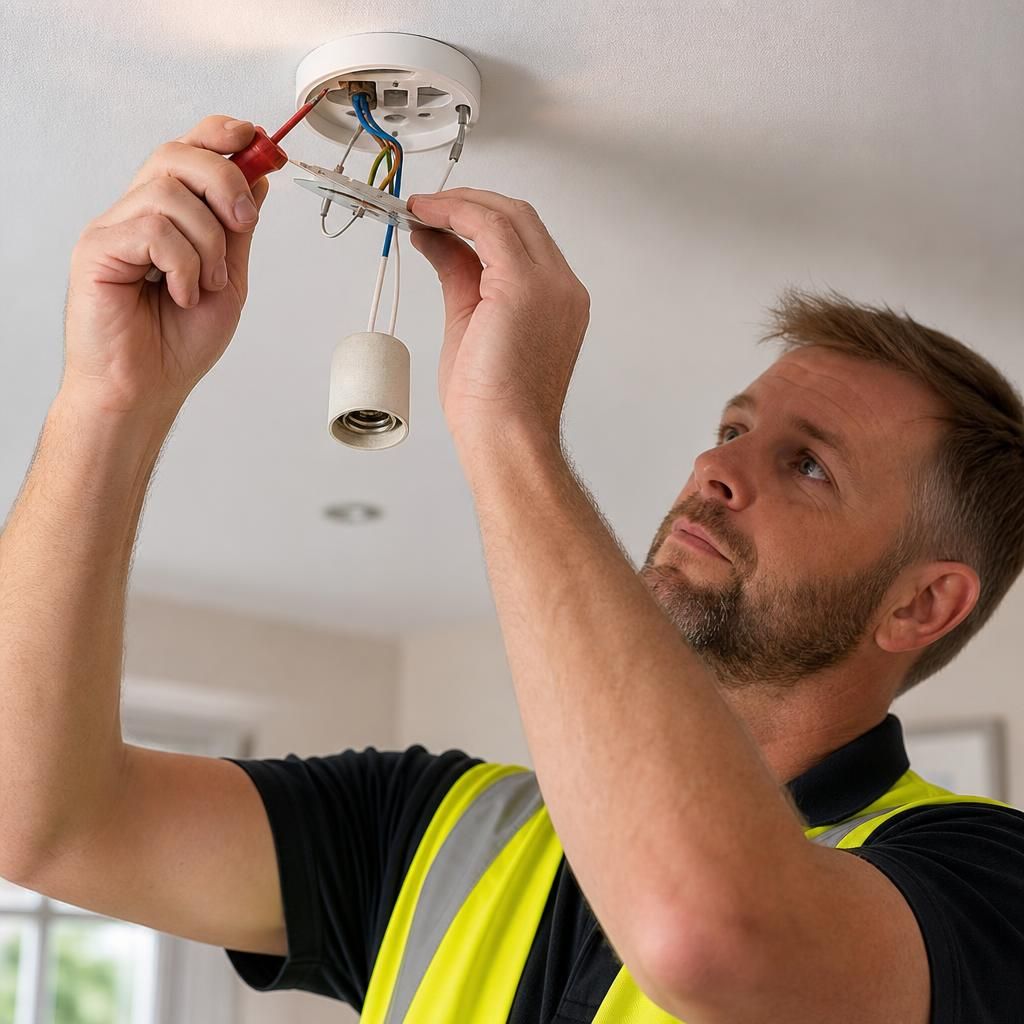
How do you test a home lighting installation?
A safe test combines a visual inspection with electrical checks on the switches, fittings, wiring, earthing and protective devices. We isolate the circuit where needed, test it with the right equipment, and explain any fault or remedial work before you use the installation.
A proper lighting test checks the wiring and protective measures, not just whether the bulbs come on. It confirms that the circuit is correctly connected, safely earthed where required, protected by the right device and suitable for the fittings being used.
What we check first
After a new installation, alteration or fault, we examine the circuit layout and the condition of the accessible wiring. Loose terminals, damaged insulation, heat marks and poorly supported cables can all cause problems that a working lamp will not reveal.
The switch operation also matters. A standard light switch should interrupt the live conductor rather than leaving the fitting live when the lamp is off. Two-way and intermediate switching needs additional checks, as an incorrectly connected strapper can leave one switch working unpredictably or prevent the other switch from operating.
We also check that the fittings suit their location. Bathroom, outdoor and other damp areas need the correct equipment and protective measures. LED lamps and dimmers must be compatible, while fittings with metal parts need the correct earthing arrangement.
Electrical tests carried out at the circuit
A qualified electrician uses test instruments to assess parts of the installation that cannot be judged by sight. The exact tests depend on the type and age of the circuit, but may include:
- Continuity testing: this checks that conductors and protective connections form an unbroken path.
- Insulation resistance testing: this looks for deterioration or unwanted leakage between conductors and earth.
- Polarity testing: this confirms that live, neutral and earth connections are in the correct places throughout the circuit.
- Earth fault loop impedance testing: this helps establish that a fault would disconnect the protective device quickly enough.
- RCD testing: where residual current protection is installed, we test that it trips as intended and record the result.
- Functional testing: every switch, control and fitting is operated to confirm that the finished circuit behaves correctly.
These tests are carried out with suitable instruments and in a controlled sequence. The readings are considered together rather than treated as isolated pass-or-fail numbers. A result that looks acceptable on one test can still point to a wiring fault when compared with the circuit layout or another reading.
Testing after a fault or alteration
A flickering lamp, tripping protective device, burning smell or warm switch needs more than a replacement bulb. The fault may be in a fitting, a connection, the switch or the fixed wiring. We trace the circuit to identify the cause before restoring normal use.
If another electrician has altered the circuit, or if an old fitting has been replaced several times, the connections may no longer match the original arrangement. Testing can reveal reversed polarity, missing earth continuity, damaged cable or a connection that has loosened inside a ceiling rose or junction box.
Older homes can contain wiring that has been extended over several decades. A visual inspection may show older accessories or mixed cable types, but only electrical testing can establish whether the circuit remains suitable for continued use. If the test identifies a wider concern, we explain which work is necessary and which items can safely remain.
What happens during a professional test
We start by discussing the symptoms, recent changes and any equipment that has been added. We then identify the lighting circuit, inspect the accessible parts and carry out the relevant dead and live tests using calibrated equipment. Power may need to remain off while readings are taken, so lights on that circuit will not be available during part of the visit.
Once the checks are complete, we operate the controls and fittings, refit covers and leave the installation in a safe condition. If the work forms part of a new installation or alteration, we provide the appropriate electrical certification for the work carried out. If the purpose is to assess an existing installation, an Electrical Installation Condition Report may be more suitable.
We explain any C1, C2 or further-investigation items in plain terms rather than presenting a list of readings without context. That tells you whether the issue needs immediate attention, recommended improvement or monitoring as part of future work.
Homeowners can safely report symptoms, identify which lights are affected and avoid using a fitting that shows visible damage. Removing covers or testing live wiring is different. A NICEIC- and ECA-registered electrical team has the equipment and experience to investigate the installation without turning a simple lighting fault into a larger one.
Replacing a lamp is different from altering the fixed wiring. If a new fitting, switch or lighting circuit has been installed, we test the affected work and its protective connections before it goes into regular use. That keeps the checks proportionate while still confirming that the alteration is safe.
If the test finds a problem outside the immediate work, we explain its significance and show which repair should come first. You receive a clear record of the checks carried out, rather than having to judge safety from whether the lights turn on.