
How often should commercial premises have an EICR?
Commercial premises should have an EICR at the interval recommended by the previous report, commonly every five years, although higher-risk or heavily used premises may need more frequent inspections. There is no single statutory interval for every workplace; the duty is to maintain electrical installations so they remain safe, with the inspection frequency based on the premises, installation and use.
The next commercial EICR should be arranged by the date recommended on the previous report, unless the premises or the electrical risks have changed sooner. That date is based on the condition of the installation, how the building is used and the environment in which the equipment operates.
The person responsible for electrical safety must be able to show that the fixed installation is maintained in a safe condition. The Electricity at Work Regulations place this duty on businesses, but they do not set one inspection interval for every type of workplace. An EICR is one important part of demonstrating that the duty is being met.
For many offices, shops and similar premises, an inspection cycle of five years is a reasonable starting point. That does not automatically make five years suitable for every building. The previous report may recommend an earlier inspection, and a competent electrical contractor may advise a shorter cycle after considering the risks.
Shorter intervals may be appropriate where the installation is exposed to conditions that cause faster deterioration. We may recommend more frequent checks for workshops, warehouses, agricultural buildings, commercial kitchens, damp areas and premises with dust, heat, chemicals or mechanical damage. Equipment that is frequently moved, overloaded or altered also increases the need for closer review.
The way people use the building matters as well. A small office with a stable installation presents different risks from a manufacturing unit with machinery, temporary supplies and frequent changes to circuits. A public building, care setting or property with vulnerable occupants may also need a more cautious inspection programme.
A new tenancy, change of business use or major refurbishment is a good reason to review the inspection date. The same applies after a flood, fire, significant water leak, electrical fault or suspected overheating. If the business has added machinery, EV chargers, heating equipment, air conditioning, additional lighting or new distribution boards, the existing report may no longer describe the installation accurately.
Changes do not always mean that the whole building needs an immediate full EICR. We assess what has changed and advise whether the affected circuits need testing, whether remedial work is required or whether a complete inspection is the sensible option.
Commercial landlords should also check the lease, insurance requirements and any conditions attached to the building’s use. Those documents may require specific inspection records or a particular testing interval. A general EICR recommendation does not replace a stricter contractual, licensing or insurer requirement.
An EICR is different from routine visual checks. Staff should report damaged accessories, scorch marks, burning smells, exposed wiring, loose sockets, repeated tripping and other signs of danger as soon as they notice them. A visual check can identify a problem between formal inspections, but it cannot replace testing of the fixed wiring.
Portable appliance checks are separate too. Testing kettles, tools, computers or other plug-in equipment does not assess the fixed installation, distribution boards, sockets or permanent wiring. A business may need both arrangements, depending on its equipment and risk assessment.
When we plan a commercial EICR, we review the previous certificate, the recommended next inspection date and any outstanding observations. We also ask how the premises operate, what equipment has been added and whether any areas have difficult conditions. That information helps set an interval that reflects the building rather than applying the same date to every customer.
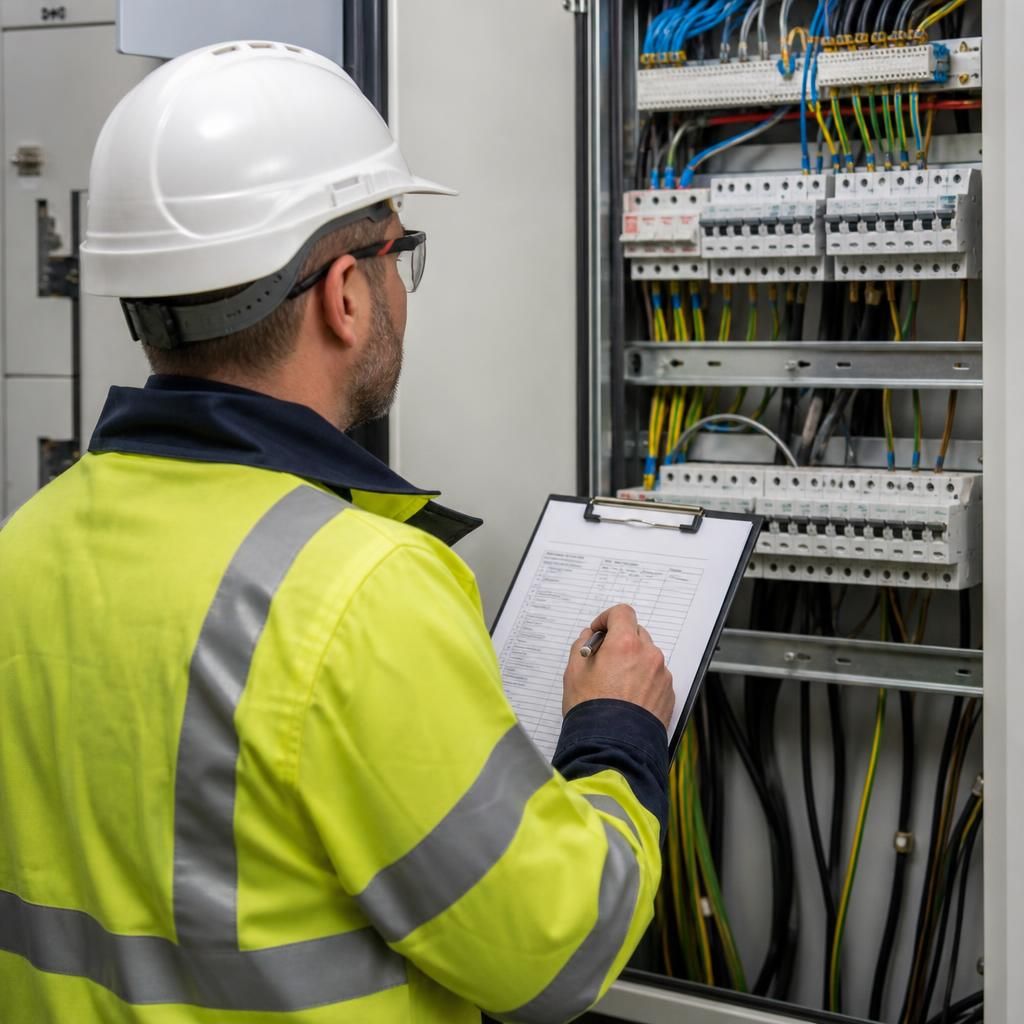
Our NICEIC-registered electricians test the fixed installation and record the results in the report. If the inspection identifies an immediate danger or a serious defect, the business should deal with it promptly rather than continuing to rely on the existing certificate. Less urgent observations still need a considered plan, particularly where they point to ageing equipment or a pattern of deterioration.
Keep the current EICR with records of remedial work, alterations and any follow-up testing. A certificate is evidence of the installation’s condition on the inspection date; it is not a permanent declaration that the electrical system will remain safe indefinitely.
For a premises with no previous report, an older installation or unclear records, arrange an initial inspection and use the recommendation in that report to set the next date. If the recommended date has passed, the safest approach is to arrange a new assessment rather than assume that the old certificate remains current.
In a multi-tenant building, different parts of the electrical installation may fall under different responsibilities. The tenant may control the wiring inside its unit, while the landlord or managing agent looks after communal areas, incoming supplies and shared distribution equipment.
That can mean separate EICRs or different inspection dates. Check the lease and maintenance arrangements before booking, then keep each report with the records for the area it covers. This avoids assuming that an inspection of one unit also covers the rest of the building.