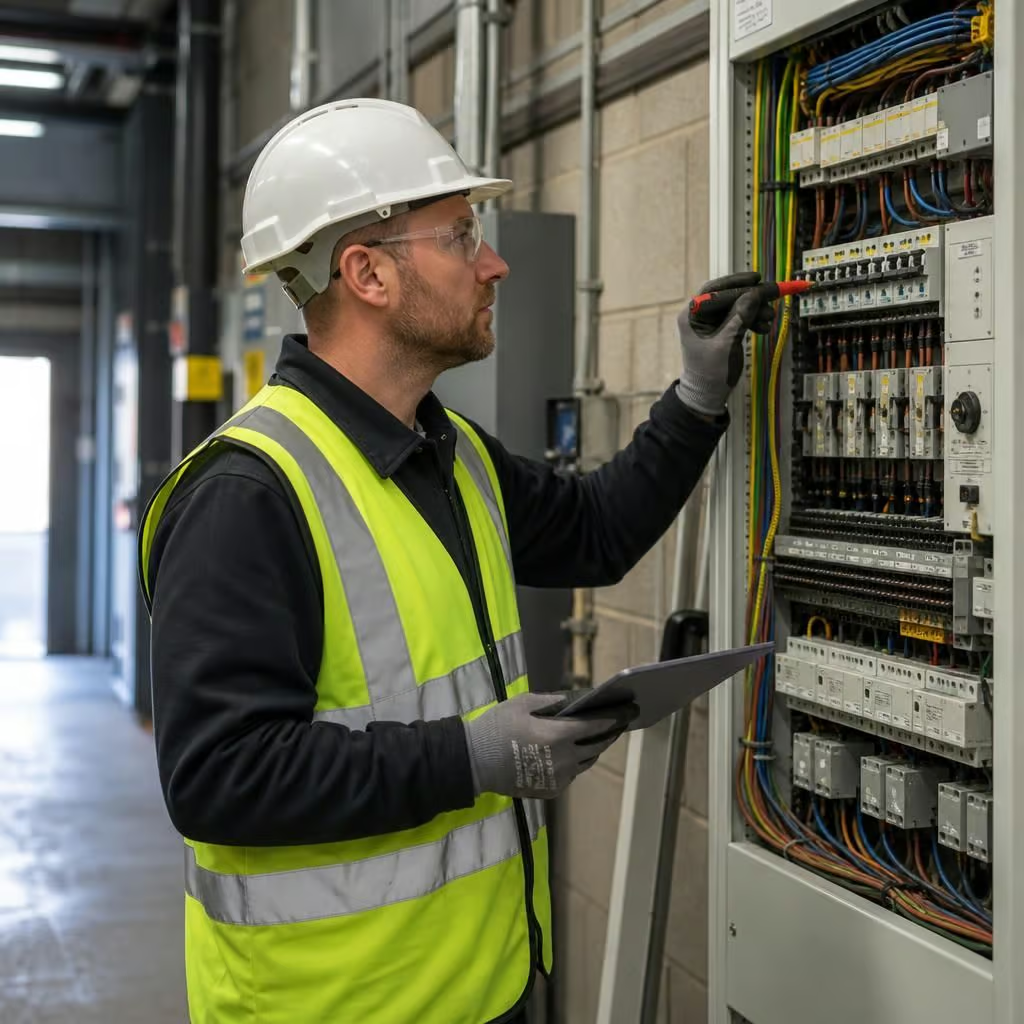
What should we prepare before a commercial EICR inspection?
Before a commercial EICR inspection, arrange access to distribution boards, fixed electrical equipment and all areas covered by the assessment, and gather previous reports, drawings and records of alterations. Tell us about known faults, restricted areas, sensitive equipment and circuits that cannot be isolated, so we can plan the inspection safely.
The most useful preparation is to appoint someone who can make decisions on site, confirm the inspection boundaries, and keep the premises safe while testing takes place. The inspection will run more smoothly if we can reach every part of the fixed installation and understand how the building is used.
Nominate a responsible person
Choose a site contact who knows the building and can speak for the owner, landlord or managing agent. They should be able to:
- provide keys, access cards and alarm instructions;
- identify plant rooms, locked cupboards, roof spaces, tenant areas and external supplies;
- approve temporary isolation of circuits;
- contact tenants, contractors or department managers when access is needed; and
- confirm which areas are included in the inspection.
If nobody on site knows where a distribution board supplies a particular area, allow time for tracing. Clear labelling helps, but we still check that circuit identification matches the installation.
Confirm the inspection boundary
A commercial building may contain several supplies, extensions or separately occupied areas. Decide in advance whether the inspection covers the whole premises or a defined part. Include any detached buildings, workshops, outbuildings, external supplies, landlord areas and shared services that fall within the responsibility being assessed.
Tell us about recent building work, changes of use or areas that have been added since the last inspection. A converted office, kitchen, workshop or charging area may have different electrical demands from the original installation. We need to know where those changes are so that the inspection does not rely only on older drawings or reports.
Plan around essential equipment
Testing can require individual circuits to be isolated. Identify equipment that must not lose power without preparation, such as servers, refrigeration, pumps, security systems, medical equipment, production machinery and access-control systems.
Arrange safe shutdown procedures with the people responsible for that equipment. If a circuit cannot be isolated, tell us before testing starts. We can then discuss the limitation and record it properly rather than creating an unsafe situation or interrupting a critical process without approval.
Consider the effect on customers, residents, staff and visitors. A shop, care setting, school, office or industrial unit may need temporary barriers, a marshal or a planned quiet period while we access boards and test circuits. Keep children, members of the public and untrained staff away from open electrical equipment.
Make specialist areas ready
Electrical equipment is often located behind stored goods, machinery or fixed displays. Move anything that prevents safe access to distribution boards, isolators, control panels and electrical enclosures. Do not ask staff to move heavy machinery or remove covers themselves.
Tell us about locked areas, restricted zones, hazardous processes, aggressive environments, confined spaces or work at height. We can then decide what access arrangements and controls are needed. If an area contains dust, moisture, chemicals or high temperatures, its conditions may be relevant to the inspection and the condition of the installation.
Where access depends on a ladder, lifting equipment or another specialist arrangement, organise this before the appointment. We will not treat an inaccessible item as inspected simply because it appears on a drawing.
Prepare information about the building’s use
Explain how each part of the premises operates. The electrical risks in a commercial kitchen differ from those in an office, workshop or agricultural building. Tell us about wet areas, outdoor equipment, flammable materials, high-load machinery, temporary installations and any unusual operating conditions.
Let us know if the building is changing use or if new equipment is planned. An EICR reports on the condition of the existing fixed installation. It does not design an upgrade for future machinery or confirm that a supply will support a proposed load, so a separate assessment may be needed.
Check site safety arrangements
Have the site’s induction, signing-in process and emergency arrangements ready. We need to know how to raise an alarm, leave the building and report an incident. Tell us about site-specific personal protective equipment requirements before we attend.
Keep electrical rooms dry, well lit and free from trip hazards. Do not attempt to open distribution boards, remove covers or expose wiring to make the inspection easier. Our NICEIC and ECA-registered electrical team carries out the inspection and testing using appropriate procedures and equipment.
Allow time for questions and follow-up
Set aside time at the end for us to explain any immediate safety concern, limitation or recommended next step. If we find an issue that needs urgent attention, the responsible person must be available to decide how the affected area will be managed.
Good preparation cannot remove every issue from an older commercial installation. It does, however, reduce avoidable delays and gives us a clearer picture of the building, its use and its risks. That helps the completed EICR distinguish between accessible items inspected, items that could not be tested, and work that may need further investigation.
If the previous EICR raised defects or limitations, keep the report and any remedial invoices together. We can compare the earlier findings with the installation we inspect, rather than treating old issues as unresolved without checking.
Include electrical installation certificates for alterations, additions or new equipment. These records help us understand what has changed and identify which parts of the installation need closer attention. Missing paperwork does not prevent an inspection, but we may need to verify more of the installation on site.