
Does an EICR cover outbuildings and external circuits?
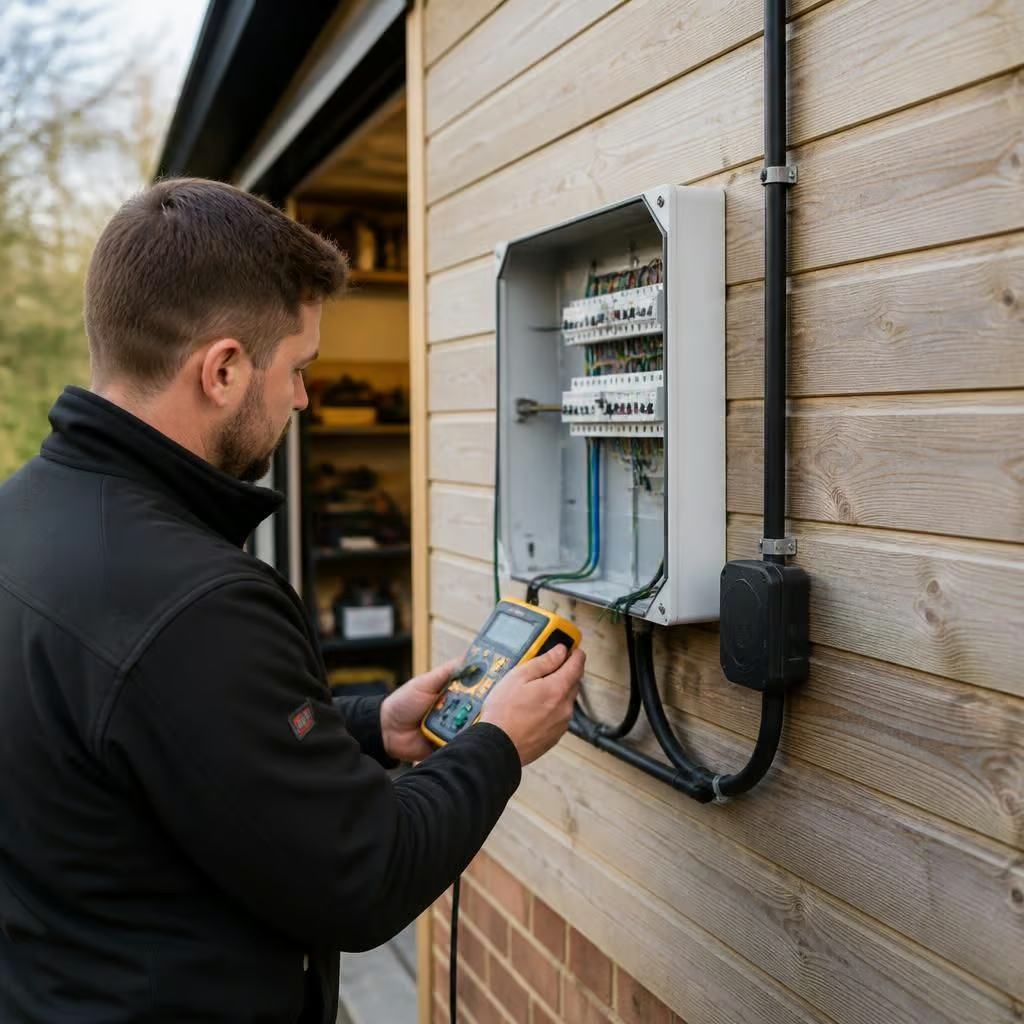
Yes, an EICR can cover outbuildings and external circuits, including garages, sheds, outdoor lighting and sockets, provided they’re included in the inspection and accessible. We trace the circuits back to the main installation and record any faults, damage or safety concerns in the report.
The scope follows the fixed wiring, not the building’s name. A garage, shed, workshop or garden office can be included when its electrical installation is connected to the property and forms part of the fixed installation being inspected.
That may include the cable leaving the house, a separate consumer unit in the outbuilding, sockets, lighting, heaters, fans and fixed equipment connected to the circuit. External circuits can also include garden sockets, security lighting, driveway lighting, pond equipment and supplies to gates or other fixed installations.
Detached buildings do not fall outside an EICR simply because they are away from the house. We trace the supply as far as we safely can, check the accessible wiring and accessories, and assess how the circuit is protected. Where an outbuilding has its own consumer unit, we inspect that board and the circuits it supplies as part of the connected installation.
For an outdoor socket or lighting circuit, we look at matters such as:
- the condition of the socket, switch, light fitting and enclosure;
- whether the equipment is suitable for its location and protected from water and mechanical damage;
- the cable route and visible sections of cable;
- the circuit’s protective device and RCD protection;
- earthing and bonding arrangements where they apply;
- signs of overheating, loose connections, corrosion, impact damage or water ingress; and
- whether the circuit can be isolated and tested safely.
An armoured cable running to a workshop is not automatically satisfactory because it is buried. We check the visible termination points, glands, connections, protection and accessible route. We cannot confirm the condition of cable hidden underground without excavation, so the report records any limitation that affects the inspection.
The same applies inside a shed or garage. Stored items may prevent access to a consumer unit, socket, light or cable. We do not move heavy machinery, dismantle fixed structures or remove finishes simply to expose concealed wiring. If a circuit cannot be inspected or tested properly, we record it as a limitation and may recommend further investigation rather than treating it as satisfactory.
An EICR assesses the fixed electrical installation. It does not test portable appliances such as plug-in tools, extension leads, chargers or freestanding heaters. A fixed appliance may be considered through its connection and supply circuit, but a separate appliance safety test is needed to assess the appliance itself.
Some installations also need their scope clarified before the inspection. A garden office supplied from the house usually sits within the same installation. An outbuilding with a separate electricity supply or its own separately metered installation may need its own EICR. We establish which parts are connected and state the inspected extent in the report.
External wiring often needs more attention than indoor wiring because it faces rain, frost, sunlight, gardening work and accidental impact. Older installations may also have been extended over time, with a socket or light added without the original protective arrangements being reviewed. We assess the installation that exists rather than assuming that newer-looking accessories mean the whole circuit is safe.
If we find a defect, the report explains its location, the risk it presents and the appropriate classification. A dangerous fault needs prompt attention. Other observations may require repair, improvement or further investigation, depending on the condition and the effect on safety. We can discuss the practical repair separately, but an inspection report should not conceal a limitation or turn an inaccessible circuit into a pass.
Before the inspection, clear access to the main consumer unit, any outbuilding distribution board, external sockets, lighting controls and fixed equipment. Tell us about buried cables, recent extensions, nuisance tripping or circuits that have been disconnected. This helps us inspect more of the installation and distinguish an existing fault from an area that could not be reached safely.
Our electrical inspection work is carried out by NICEIC- and ECA-recognised electricians. That means the report is based on a structured assessment of the installation’s safety, including the less visible parts that supply garages, sheds and outdoor circuits.
If a garage, garden room or external circuit was installed recently, an EICR is not a substitute for the electrical installation certificate. We inspect the completed installation as it exists on the day, while the original certificate records the new work and its testing.
Keep any certificates, circuit details and instructions with the property records. They help us understand later additions, identify which outbuildings share the supply and avoid unnecessary investigation where wiring is concealed.