
How are EICR observations coded?
EICR observations are coded C1 for danger present, C2 for potentially dangerous conditions, C3 for improvements recommended, and FI where further investigation is needed. C1 and C2 defects require remedial work, while C3 observations do not make the installation unsatisfactory on their own.
An EICR observation code records the seriousness of a problem, or explains why the inspection could not reach a firm conclusion. The code applies to the individual observation, not automatically to every part of the installation.
C1 – danger present
A C1 means someone could be in immediate danger from the condition found. This might include an accessible live part, severe damage to an accessory, or a fault that creates an immediate risk of electric shock or fire.
We normally make the circuit safe during the inspection where we can. That may involve isolating part of the installation until permanent repairs are completed. The report should explain what we found and what action was taken or remains necessary.
C2 – potentially dangerous
A C2 identifies a defect that could become dangerous, or could cause electric shock or fire under foreseeable conditions. The risk may not be immediate at the time of the inspection, but leaving the defect in place is not considered acceptable.
Examples can include inadequate protection against electric shock, serious damage, or an installation fault that could become hazardous if equipment is used normally. The exact code depends on the condition, the surrounding installation and the likely consequences. We do not assign C2 simply because a component is old.
C3 – improvement recommended
A C3 points to a part of the installation that could be improved, but which does not present a danger based on the inspection. It may reflect a newer recommendation in BS 7671, an installation that could be made safer, or work that would bring older equipment closer to current practice.
A C3 does not normally make the EICR unsatisfactory. You may still choose to address it during other electrical work, especially if access is already available. A C3 should not be treated as proof that the installation is unsafe.
FI – further investigation required
FI means that we could not obtain enough evidence to decide whether a dangerous defect exists. It is not a severity rating in the same way as C1, C2 or C3. It flags an unresolved point that needs more inspection or testing.
For example, wiring may disappear into an inaccessible area, test results may indicate an unexplained fault, or part of the installation may not be available for inspection. We explain what needs investigating and why. Opening walls, lifting flooring or disconnecting equipment is not automatically included in a standard visual inspection, so we discuss any additional work before it starts.
How the code is decided
We assess the installation against the requirements that apply to its type and use, then consider the condition we can see and the test results we obtain. We also look at how people use the property and whether a defect could expose them to shock, fire or loss of supply.
The age of an installation does not decide the code on its own. Older wiring can remain satisfactory if it is safe and suitable for its intended use. Equally, a relatively recent component can receive a C1 or C2 if it is damaged, incorrectly connected or no longer providing the required protection.
One observation can sometimes relate to more than one issue. We record the relevant code and describe the defect rather than relying on the code alone. The explanation matters because it tells the electrician what needs correcting and helps the property owner understand the risk.
What the codes mean for the report result
- C1: the dangerous condition needs to be made safe and repaired.
- C2: remedial work is needed to remove a potentially dangerous defect.
- C3: improvement is recommended, but this code alone does not usually make the report unsatisfactory.
- FI: further investigation is needed before the installation can be judged properly.
An EICR is generally recorded as unsatisfactory where it contains a C1, C2 or FI observation. A report with C3 observations only can still be satisfactory, although the recommended improvements should not be ignored indefinitely.
What to do after receiving the report
Start with the observation details, not just the summary box. The report should identify the circuit or location, describe the defect, state its code and recommend the necessary action. If the wording is unclear, ask the inspecting electrician to explain the risk in practical terms.
A C1 may require immediate isolation or repair. A C2 needs planned remedial work, with priority based on the risk and how the affected circuit is used. An FI may require a separate investigation before anyone can confirm whether repairs are needed. C3 items can often be planned alongside other electrical work.
After remedial work, keep the paperwork that shows what was completed. Depending on the work, this may be a minor works certificate, an electrical installation certificate, or a further report confirming the condition of the installation. A quotation should distinguish between urgent safety work, further investigation and optional improvements.
For a rented property, the landlord must deal with observations that make the installation unsatisfactory and retain the required electrical safety records. For a home you occupy yourself, the same codes still help you prioritise work and understand which repairs affect safety now, rather than treating every recommendation as equally urgent.
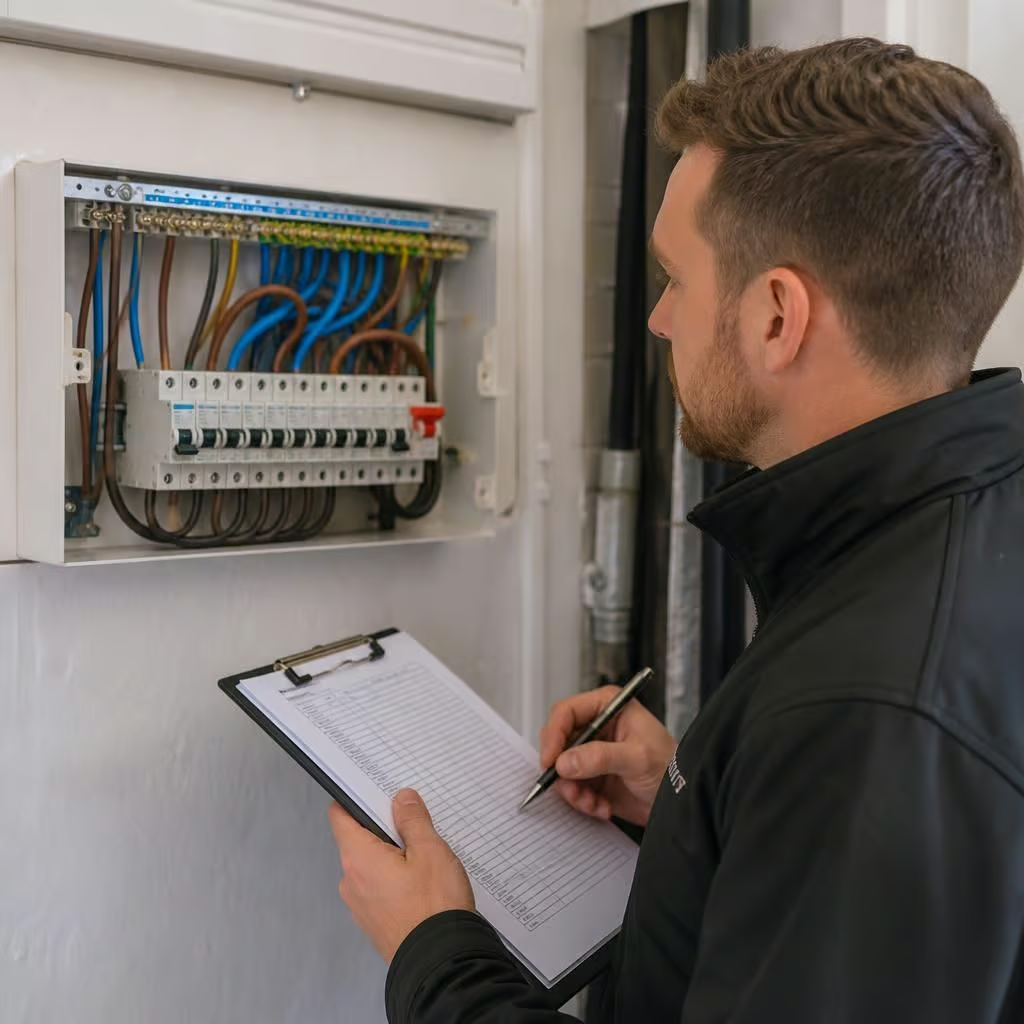
The same type of component can receive different observations in different circumstances. A damaged accessory in an accessible position presents a different risk from one inside a secured enclosure. We therefore consider access, protection, the surrounding installation and how the circuit is used before selecting a code.
That context matters when you read the report. The code tells you how the inspector has classified the observation, while the description explains the condition found at that particular location. A component name or its age alone cannot show how serious the issue is.