
How much access does an EICR inspection require?
An EICR needs access to the consumer unit, sockets, switches, light fittings and other accessible electrical equipment, including any rooms, cupboards or outbuildings included in the inspection. Please clear furniture where possible and unlock relevant areas; we don’t normally remove fixed finishes, so inaccessible wiring or equipment may be recorded as a limitation.
An EICR inspection usually needs access to the main electrical points throughout the property, not every part of every room. We need enough space to work safely, identify the circuits and examine the installation properly.
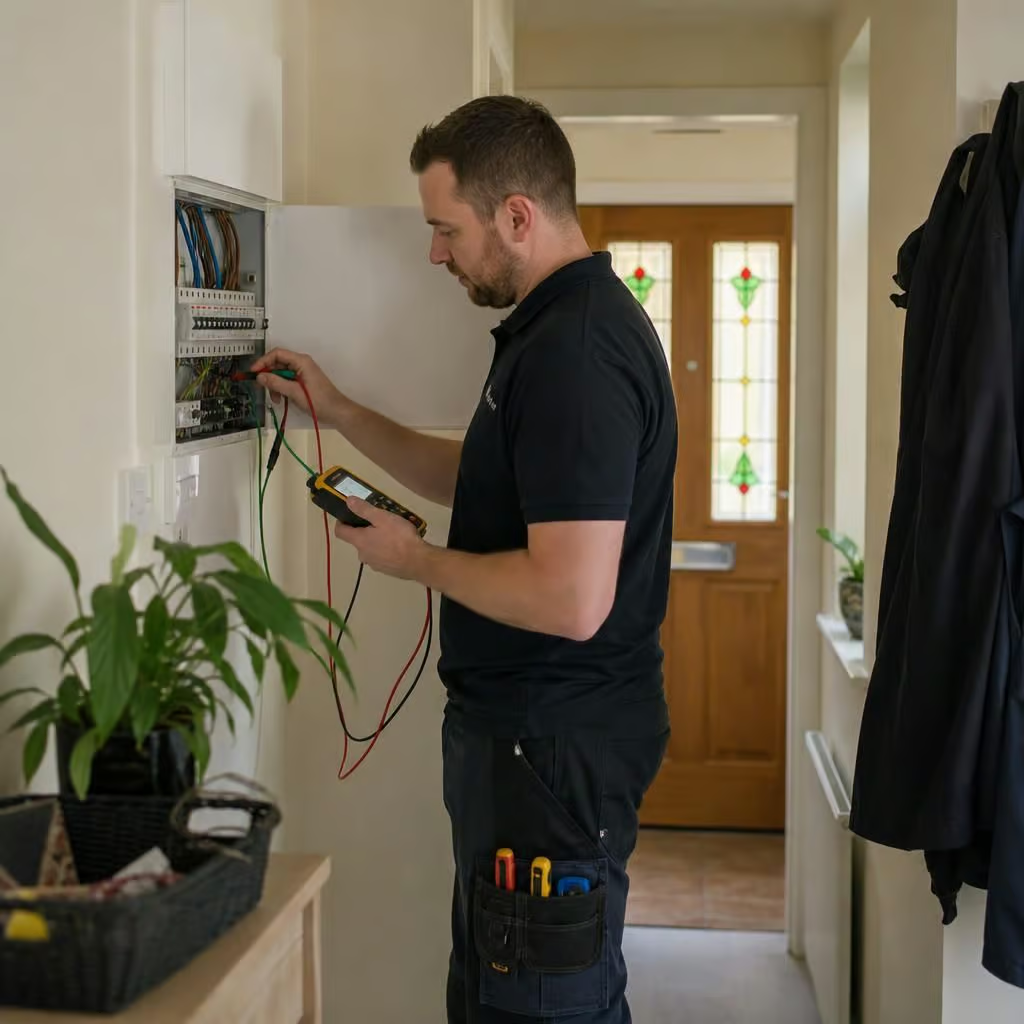
Before we start, please make sure we can reach the consumer unit, meter position, fixed switches, accessible sockets and permanently connected equipment. Clear furniture, stored items and boxes from directly in front of these points. A cupboard containing the consumer unit should open fully, with enough room for safe testing.
We may need to visit each room because the inspection covers the installation as a whole. This includes bedrooms, kitchens, bathrooms, utility rooms, garages and other areas with electrical accessories. We might need to move small items, but we won’t expect you to empty the property.
Areas that commonly need attention include:
- Consumer unit and meter cupboard: the cover and circuit labels must be accessible. If the board is behind stored goods or inside a locked cupboard, please clear the way and arrange the key.
- Sockets and switches: we need to inspect their condition and carry out testing at suitable points. Furniture may need to move if it prevents access.
- Bathrooms and kitchens: appliances, fans, heaters and other fixed equipment can form part of the installation. We need to see the relevant connections where they are safely accessible.
- Lofts, cellars and plant areas: these may contain cables, junction boxes or equipment that cannot be assessed from the rooms below. Safe access, lighting and a suitable floor surface help us carry out the checks.
- Rooms with restricted access: locked rooms, tenant-occupied rooms and rooms used for storage still need to be included. Please arrange access before the appointment.
We don’t normally need to strip out walls or dismantle the property. Some checks can be completed at the accessories and consumer unit, while others depend on seeing how cables and connections are installed. If a cable runs through a loft or under a floor, we may need to inspect that route directly. We’ll discuss any intrusive step before carrying it out.
Floor coverings, fitted units and fixed furniture can limit what we can see. We won’t lift them simply to investigate without discussing it first. If important parts of the installation remain inaccessible, we record that limitation in the report rather than assume the wiring is satisfactory.
That distinction matters when the certificate is being used for a property sale, insurance matter or tenancy. An inaccessible circuit may need further investigation before the report can give a complete picture. We explain what could not be checked and what access or follow-up work would be needed.
Electrical testing can also interrupt the supply briefly. Sensitive equipment, alarms, servers and refrigeration should be identified before we begin, particularly in commercial or rented properties. We can then plan the testing around the equipment where the installation allows it.
For a smoother inspection, have keys available, clear the area around the consumer unit and note any rooms, outbuildings or circuits that are difficult to reach. Tell us about known faults, recent alterations and equipment that must remain powered. That information helps us test the installation safely and produce a report that reflects the property accurately.
Access is judged against the parts of the installation that affect safety, not against the amount of floor space in the property. A room can remain furnished while we inspect its electrical accessories and record the condition of the installation. If a later repair or upgrade needs more access than the EICR itself, we’ll identify that separately so you can decide what happens next.