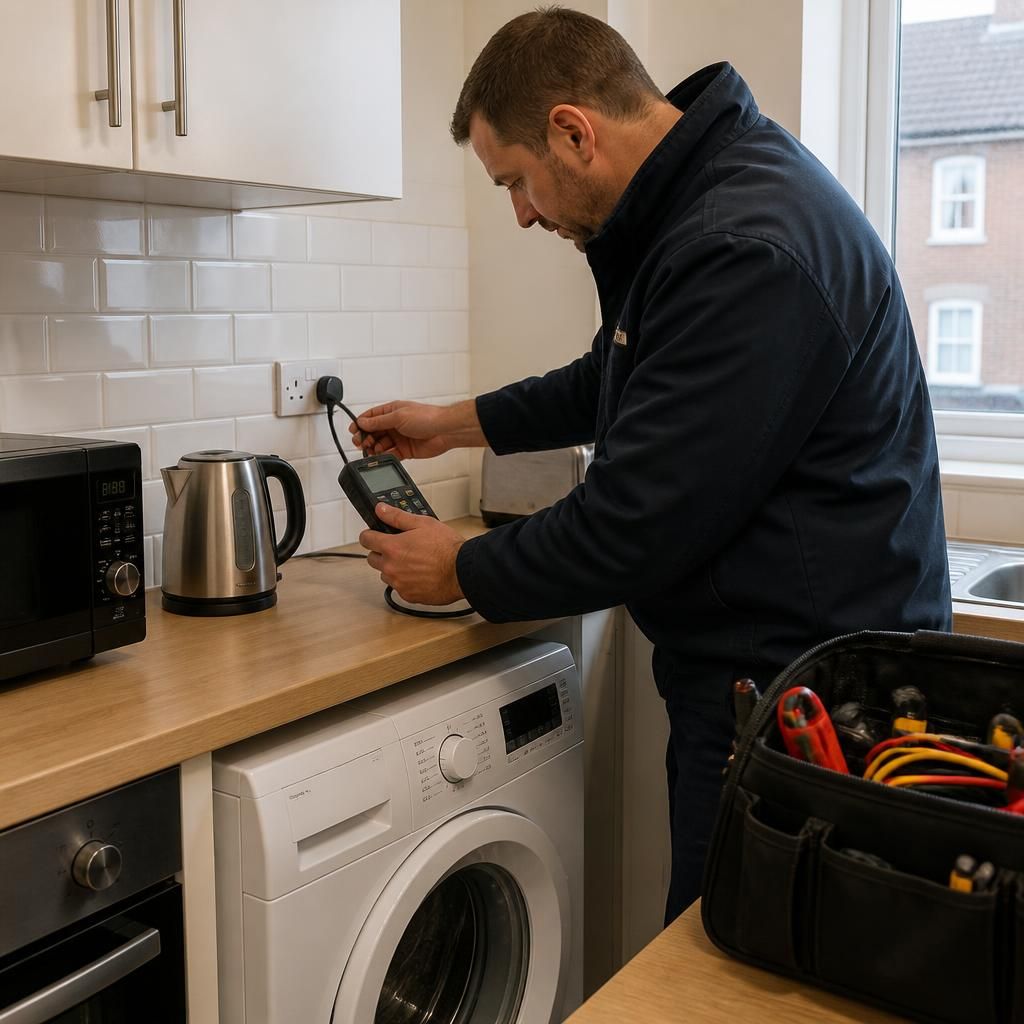
Does a landlord EICR cover electrical appliances?
No. A landlord EICR checks the fixed electrical installation, including wiring, sockets, switches and the consumer unit, but it does not test plug-in appliances such as fridges or washing machines. Those appliances may need separate portable appliance testing (PAT), depending on the risk assessment and how the property is let.
No. A landlord EICR checks the fixed electrical installation, such as wiring, sockets, switches and the consumer unit. It does not normally test portable appliances, so separate PAT testing may be needed for appliances supplied with the property.
The distinction is between the electrical system and the equipment connected to it. An EICR assesses whether the installation is safe to use and whether faults could cause danger. It may include fixed wiring to an appliance, such as the cable and connection supplying an electric cooker. It does not usually assess the cooker’s internal components, condition or operation.
Appliances that may fall outside the EICR include:
- Fridges and freezers
- Washing machines and tumble dryers
- Electric cookers and microwaves
- Dishwashers
- Portable heaters and fans
- Lamps, televisions and other plug-in equipment
The same applies to appliances supplied in furnished accommodation. If the item belongs to the tenant, it is generally outside the landlord’s responsibility. If the landlord supplies it, the landlord must take reasonable steps to ensure it is safe, maintained properly and does not put anyone at risk.
PAT testing is not automatically required for every appliance at set intervals. The law does not prescribe a particular testing label or testing schedule for domestic rental properties. The appropriate checks depend on the type of equipment, its age and condition, how often it is used, and the environment around it.
A visual inspection may be enough for some low-risk items. We look for damaged plugs, cracked cases, exposed conductors, scorch marks, loose cables and signs of overheating. An appliance with a fault should be removed from use, even if it has a recent test label.
Formal PAT testing becomes more useful where the property contains several supplied appliances, where equipment is older or heavily used, or where a risk assessment identifies a greater chance of damage. Properties with communal areas, staff equipment or higher-risk environments may also need a more structured inspection and testing programme.
A test label does not replace safe maintenance. It records the condition of an appliance at the time it was checked, but it cannot show how the appliance will be treated afterwards. Landlords should keep records of supplied equipment, repairs, inspections and any items taken out of service.
An EICR can still identify issues around appliances. For example, we may find a damaged socket, an overloaded circuit, an unsuitable extension lead or signs that a fixed appliance has been connected incorrectly. Those findings belong to the installation report. The appliance itself may need a separate inspection by someone competent to assess that type of equipment.
Tenants should be told to report damaged equipment, burning smells, repeated tripping or unusual heat. A landlord should not assume that a satisfactory EICR makes every supplied appliance safe. The EICR and appliance checks address different parts of the property’s electrical safety.
For a rental property, we can carry out the fixed-installation inspection and explain which supplied appliances need separate attention. Our NICEIC-registered electrical team records defects clearly, so you can distinguish remedial work to the wiring from testing or replacement of an appliance. We provide the relevant electrical paperwork after the inspection, while any appliance testing is recorded separately.
If an EICR is due, arrange it as its own inspection rather than asking for an appliance test to be assumed within the price. A landlord with several supplied appliances should discuss both scopes before work starts, so the quotation and resulting records match the property’s actual needs.
A PAT check is limited to the appliance’s electrical safety. It does not confirm that a washing machine drains correctly, that a cooker heats evenly or that a fridge maintains its temperature. Those faults need an appliance repair or service, not an EICR or PAT result.
For supplied equipment, keep the electrical test record alongside the inventory and any service paperwork. That gives you a clearer record of what was checked, what was repaired and what was removed from the property.