
What paperwork supports a fire safety certificate for landlords?
A landlord’s fire safety certificate is supported by the fire risk assessment, alarm inspection and testing records, installation or replacement certificates, and records showing that any faults were corrected. Keep these documents together with emergency lighting checks, maintenance records and tenant safety information where they apply to the property.
A useful landlord fire safety file brings together the documents that show how risks were assessed, how protective equipment was selected, and how the property is being maintained. It should let a landlord, managing agent or inspector trace each important decision from the assessment through to the latest test.
The file usually needs more than certificates alone. Keep the following records together and make sure each one identifies the property, the date, the person or company carrying out the work, and any defects found.
- Fire risk assessment details: retain the assessor’s name and qualifications, the date of the assessment, the areas covered, the people considered at risk and the actions raised. The assessment should explain the reasoning behind its recommendations rather than simply listing equipment.
- Action plans: record each recommendation, who was responsible for completing it, the target date and how it was closed. If an item remains outstanding, note the interim measure and the planned completion date.
- Fire alarm information: keep the system design information, the alarm category or coverage, zone plan where applicable, installation and commissioning records, user instructions and service reports. Routine test records should show the date, result, faults found and any follow-up work.
- Emergency lighting records: where emergency lighting is required, retain the design or completion information and the periodic inspection and test reports. A report should identify failed fittings, battery issues and any areas that were not adequately illuminated.
- Fire door records: include inspection sheets for flat entrance doors, communal doors and other fire-resisting doors where they form part of the escape strategy. The record should cover gaps, closers, hinges, glazing, seals, damage and whether doors shut correctly. Keep evidence of repairs or replacement rather than recording only that an inspection took place.
- Fire extinguisher and fire blanket servicing: retain servicing labels and reports where this equipment is provided. The paperwork should confirm that the equipment is suitable, accessible and in date, not just that it is present.
- Electrical safety documents: an EICR can support the fire safety file by showing the condition of the fixed wiring. Keep records of any C1, C2 or FI observations and the work completed in response. Portable appliances, extension leads and communal electrical equipment may need separate checks, depending on how the property is used.
For a house in multiple occupation, converted building or block of flats, the file should also explain the evacuation arrangements. Keep a current floor plan showing escape routes, fire doors, alarm points, extinguishers and assembly information where these are used. If the strategy is stay-put, simultaneous evacuation or phased evacuation, the written instructions should match the building’s layout and fire precautions.
Landlords should retain copies of the information given to tenants. This may include instructions not to wedge fire doors open, how to report an alarm fault, what to do if a common escape route is blocked, and the action to take when the alarm sounds. Record when the information was issued, especially after a new tenancy or a material change to the building.
Records of maintenance visits matter because a certificate only describes the system or condition at the time of inspection. A landlord should keep a continuing log of alarm tests, emergency lighting checks, fire door inspections, remedial visits and reported faults. Include invoices or job sheets where they show what the engineer actually repaired or replaced.
When a report identifies a defect, the supporting paperwork should close the loop. For example, an alarm service report may note a failed detector, while a later job sheet confirms its replacement and a test record confirms that the system was left operational. If the defect affects an escape route or life-safety system, record the temporary control used while the repair was outstanding.
Some documents support the fire safety assessment without being fire certificates. A gas safety record, oil boiler service record or heating repair record may be relevant where appliances, flues or plant rooms create a risk. These records should sit alongside the fire safety file, while remaining clearly labelled as separate compliance documents.
The person responsible for the property should know where the file is kept and be able to produce it during an inspection. Digital copies are suitable if they are legible, backed up and organised by property. Use a clear naming system, such as the address, document type and inspection date, so an old report cannot be mistaken for the current one.
We can review the available records during a landlord fire safety inspection and identify gaps that need attention. Where electrical work forms part of the action plan, our NICEIC-registered electricians can provide the relevant inspection or remedial paperwork. The result is a clear record of what was assessed, what was installed or tested, and what still needs completing.
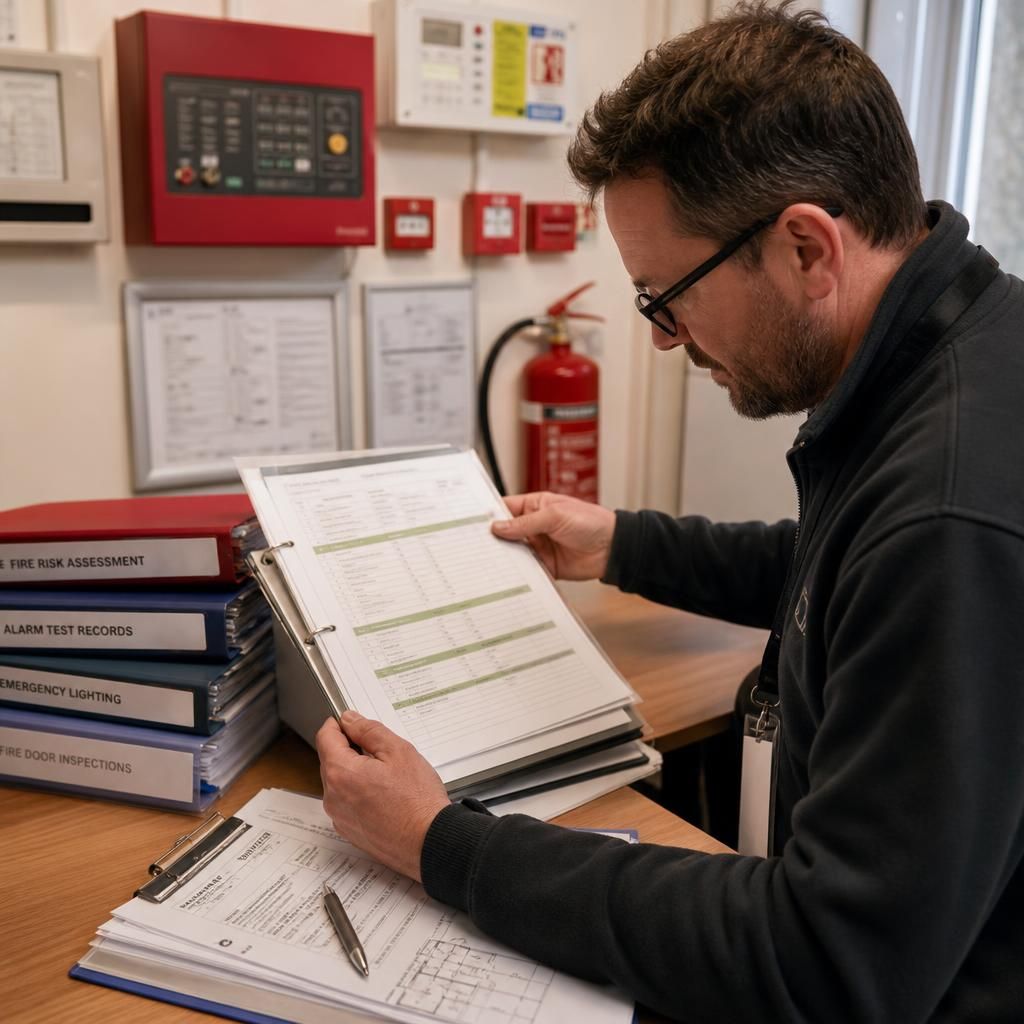
Paperwork must reflect the property as it is now. A loft conversion, altered room layout, new fire door or change from single-family use can affect the escape plan and alarm coverage.
After a material change, we review the relevant fire safety records rather than relying on certificates issued before the work. We record what changed, which measures were checked and whether further action is needed. Keep the earlier documents, but mark them as superseded so they cannot be mistaken for the current record.