
How do you check a circuit breaker before arranging a repair?
Unplug the appliance linked to the fault, then switch the tripped circuit breaker fully off and back on once. If it trips again, feels hot, smells of burning or will not reset, leave it alone and contact us for a repair rather than removing the consumer unit cover.
The useful checks are all external to the consumer unit. You can identify which circuit is affected, remove obvious loads safely and record what happened. Do not remove the consumer unit cover or try to test live wiring yourself.
Start by identifying what has lost power. Check which rooms, sockets or fixed appliances are affected. A single bedroom socket suggests a different fault from a complete loss of power to the lighting or upstairs circuits. Note anything that stopped working at the same time, including an oven, immersion heater, boiler controls, outdoor supply or garage circuit.
Some circuits are labelled inaccurately, particularly in older homes. If the labels do not match the rooms that have lost power, make a note of that rather than removing the cover to investigate. An electrician can confirm the circuit arrangement during the repair.
Look at the consumer unit without touching its internal parts. Take a clear photograph of the front, showing the breaker positions and labels. This helps us understand the type of board and which protective device has operated before we arrive. Keep the photograph for reference, but do not rely on it if the board is in a cupboard, loft or other difficult position.
Older properties may have more than one consumer unit, a separate board for an extension, or a small enclosure serving an outbuilding. Check whether the affected circuit is supplied from another board. Do not switch other devices to test this theory, especially where the equipment supplies heating, pumps or external buildings.
Consider what was happening immediately before the fault. Useful details include:
- which appliance or tool was switched on;
- whether the fault followed recent drilling, decorating, plumbing or building work;
- whether rain or water ingress affected an outdoor socket or lighting circuit;
- whether the problem affects sockets, lights, a fixed appliance or the whole property;
- whether the breaker operated once or has operated repeatedly; and
- whether the circuit serves a fridge, freezer, alarm, heating control or other equipment that needs attention.
If a portable appliance appears to be involved, leave it disconnected. Do not reconnect equipment with a damaged lead, cracked plug or signs that moisture has entered it. Do not move or handle an appliance if doing so would bring you near water or exposed wiring.
Do not carry out tests that require the cover to come off. A circuit breaker can operate because of a faulty appliance, damaged cable, loose connection, water ingress or a problem with the breaker itself. The position of the switch does not identify which of these has caused the fault. Finding that out requires electrical testing with suitable instruments.
Do not use a multimeter, voltage tester or other test equipment unless you are trained to use it safely on electrical installations. A plug-in socket tester may show some wiring conditions, but it cannot prove that a circuit is safe or locate every fault. It is not a substitute for testing by an electrician.
Make the area safe before arranging the visit. Keep children and pets away from the consumer unit and any affected electrical equipment. If water may have reached a socket, appliance or cable, avoid contact with it and explain the situation when you call. Do not remove floorboards, socket fronts or light fittings to trace the problem.
Have the consumer unit accessible, along with any affected socket or appliance. If the board is behind stored items or inside a locked room, clear access before the engineer attends. Tell us about concealed supplies, solar equipment, batteries, generators or outbuildings, because these can affect how the installation must be isolated and tested.
For a repair, we first establish which circuit has operated and test it safely before deciding what needs replacing. We may isolate individual appliances, inspect accessible connections and test the circuit insulation and protective devices. That separates a failed breaker from a fault elsewhere in the installation.
The repair may involve replacing the breaker, repairing a connection, dealing with a damaged cable or identifying an appliance that is causing the fault. We explain the finding before carrying out additional work. If the existing consumer unit is not suitable for the repair, we explain why rather than assuming that the whole board needs replacing.
When you contact Alderminster Group, a photograph of the consumer unit and a short account of what happened are useful starting points. Give us the property location, the affected circuit if known, and whether the initial safe check restored power. That information helps us prepare for the correct type of electrical repair without asking you to investigate beyond what can be done safely.
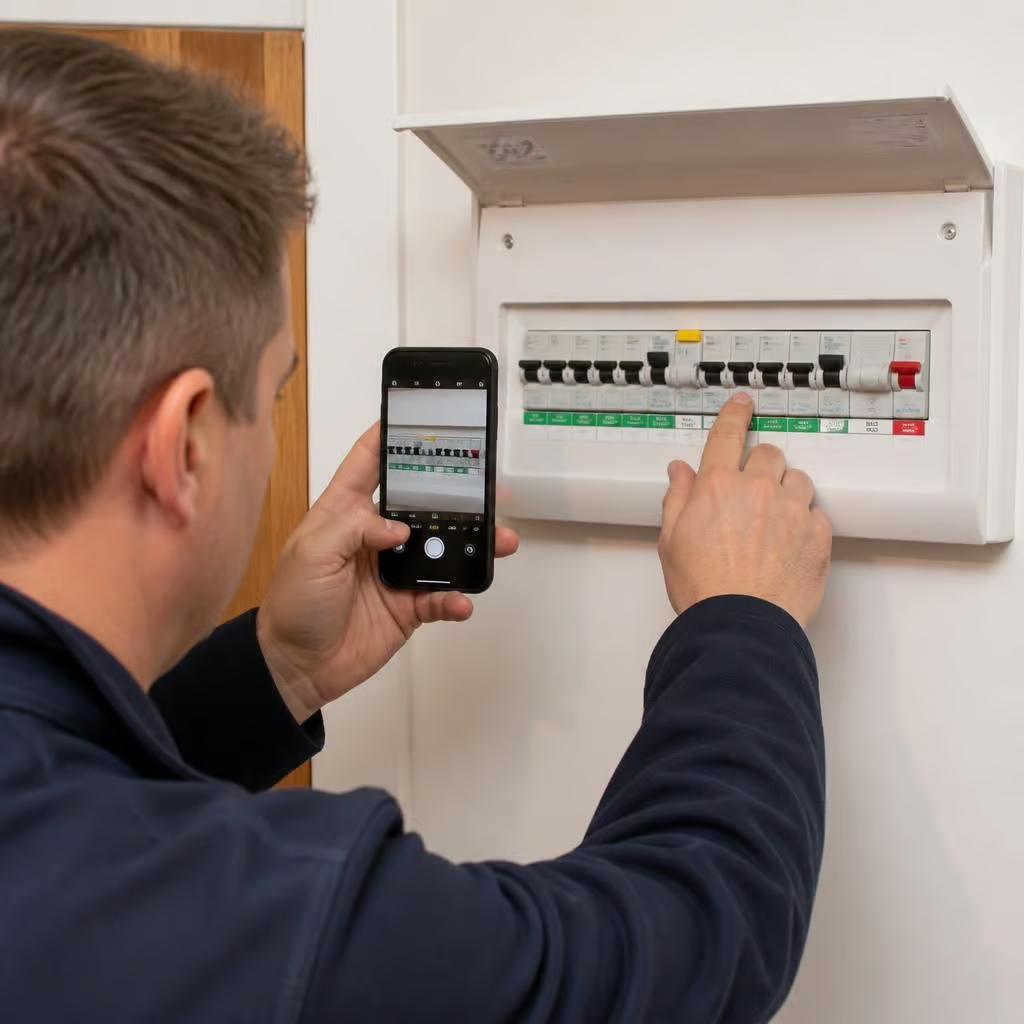
A breaker with a test button may protect several circuits, so one operation can affect more than one room. Don’t assume the nearest label identifies the fault. Note which areas have lost power and leave any unclear switches alone.
If the switch will not remain on, don’t hold it in position or keep trying it. A single reset can provide useful information, but repeated operation can leave an appliance or circuit fault connected. Tell us which switch moved, what lost power and what was running at the time.