How often must emergency lighting be tested?
Emergency lighting should have a brief functional test each month and a full-duration test each year, following the manufacturer’s instructions and the system’s design. Record every test, including any faults and corrective work, so the building has clear evidence of ongoing compliance.
Those routine intervals are the baseline, not the whole maintenance plan. The responsible person must make sure the system remains reliable, suitable for the building and supported by clear test records. The fire risk assessment, system design and manufacturer’s instructions may require additional checks.
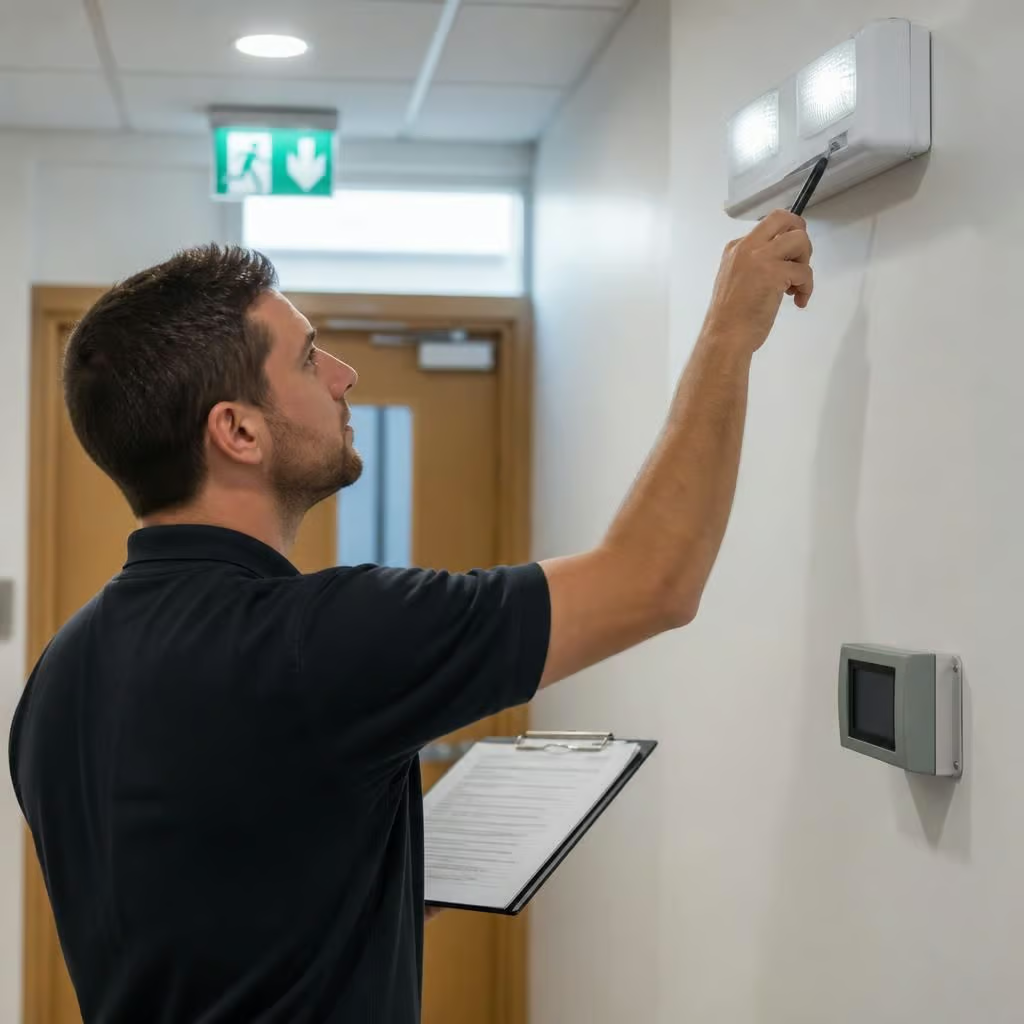
A functional test checks the changeover to emergency power. We interrupt the normal lighting supply through the test facility and confirm that the emergency fittings operate correctly. We check escape route fittings, open-area lighting and illuminated exit signs for failed lamps, damaged covers, loose connections and visible faults.
A full-duration test checks more than whether a fitting switches on. The battery must continue supplying the lighting for its designed emergency period. This helps identify batteries that accept a charge but no longer hold enough capacity. The system also needs time to recharge afterwards, so the test must be planned around the building’s use and fire safety arrangements.
Testing is different from inspecting the installation. A light can pass a basic functional check while still being poorly positioned, obstructed by a new partition or hidden behind stored goods. An inspection considers the escape routes, exit signs, changes to the building, damage and whether the lighting still matches the current risk assessment.
Automatic self-test fittings can record battery and lamp faults without someone operating a test switch. They still need the results reviewing and defects resolving. Automatic testing does not remove the responsible person’s duty to maintain the system or keep suitable evidence.
The logbook should show what happened at every test. Useful records include:
- the date of the test and the person who carried it out;
- which fittings or circuits were tested;
- whether the system operated correctly;
- any failed lamps, batteries, signs or control equipment;
- the remedial work arranged and the date it was completed; and
- any restrictions or temporary measures used while a fault remained.
Keep the records where the responsible person and relevant contractors can access them. They provide evidence during a fire safety review and help identify repeated failures, ageing batteries or faults affecting one circuit.
Extra testing may be needed after a power failure, battery replacement, electrical alteration or change to the building layout. A new partition, changed escape route or converted room can alter the areas that need emergency illumination. The system should be reassessed rather than left on its original arrangement.
If a test finds a failure, we identify whether the cause is the fitting, battery, test facility, wiring or central supply. We then explain the effect on the building and set out the remedial work in writing. If the failure leaves an escape route inadequately lit, the responsible person needs to manage that risk until the repair is complete.
Our NICEIC- and ECA-registered electricians can test existing commercial emergency lighting, investigate faults and provide a written record of the findings. Where the installation no longer suits the building, we can explain whether targeted repairs, replacement fittings or wider alterations are appropriate.
A testing schedule works best when it has a named owner. Record the monthly and annual dates in the building’s fire safety calendar, with the logbook location and the person responsible for arranging each test.
In a multi-tenant or managed building, agree who receives the results and who authorises repairs. That avoids a failed fitting being reported but left without an owner. Staff should also know if a test will briefly interrupt normal lighting or require access to separate rooms.