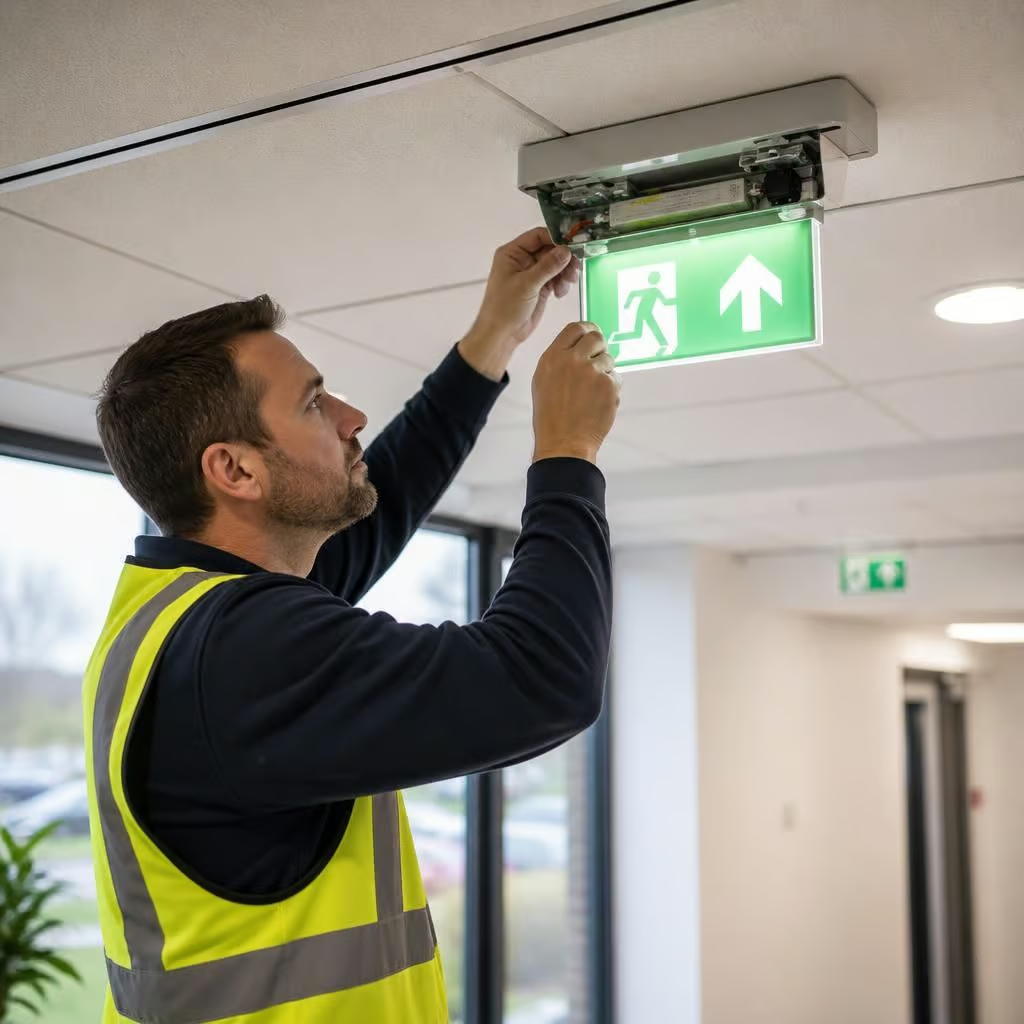
What happens if existing emergency lighting fails the inspection?
If existing emergency lighting fails its inspection, the defects are recorded and the system cannot be treated as fully compliant until they’re corrected. We identify whether the problem is with fittings, batteries, wiring or signage, carry out the necessary repairs and retest the affected installation.
A failed emergency lighting inspection does not automatically mean the whole system needs replacing. The result depends on the fault, the risk to occupants and whether the existing wiring and fittings can still support a reliable system.
A single failed fitting may need a battery, lamp, charger or complete luminaire. A wider failure can point to a damaged circuit, poor wiring, unsuitable fittings or a system that no longer provides the required illumination. We assess the cause rather than treating every failed test as a replacement project.
Until the fault is resolved, the emergency lighting cannot be relied on as intended. That can leave people without a safe, illuminated route if normal lighting fails. It can also leave the responsible person with incomplete fire-safety records and an unresolved action from the inspection.
For a business, landlord or managing agent, the sensible next step is to keep the inspection report and arrange remedial work with a competent electrical contractor. We use the report, test results and site conditions to establish what has failed and what needs changing.
- Battery failure: the fitting may appear normal during everyday use but fail its duration test. We check the battery condition and charging function before deciding whether the battery or complete fitting should be replaced.
- Lamp or LED failure: a failed light source can leave part of an escape route dark. We replace the appropriate component where the fitting remains suitable and serviceable.
- Charging or control fault: an emergency fitting may not recharge after a test. We investigate the charger, connections and supply instead of assuming the battery is the only problem.
- Failed circuit or supply: a fault affecting several fittings may need electrical fault-finding before the emergency lighting can be tested again.
- Inadequate coverage: building alterations, changed room layouts or damaged signs can leave the current arrangement unsuitable. Additional or repositioned fittings may then be needed.
Some faults can be repaired with limited disruption. If fittings are obsolete, damaged or no longer supported, replacement may be more practical. We explain the difference in the quotation, including any access equipment, wiring changes or making-good work that could affect the cost.
Where work cannot be completed immediately, the responsible person should consider the risk created by the failure. They may need temporary measures, such as restricting access to an affected area or arranging alternative lighting, until the escape route is properly protected. The right measure depends on the building, occupancy and extent of the fault.
After the repair or replacement, we test the affected equipment and confirm that it operates from the emergency supply. A duration test may be needed to establish that the system remains lit for the required period. We record the work and test results so the responsible person has evidence of what was corrected.
A failed inspection can also reveal a maintenance problem rather than a one-off defect. Repeated battery failures, missing test records, damaged signs or inaccessible fittings suggest that the testing routine needs attention. We can identify these wider issues while carrying out the remedial work, so the next inspection is not simply a repeat of the same failure.
Emergency lighting is electrical safety work, so we carry it out with the relevant competence and testing equipment. Our NICEIC and ECA electrical credentials relate to the standard of electrical work and documentation involved. You receive a written quotation before work starts, with no surprise charges for the agreed work.
If an inspection has already identified a failure, keep the report available when arranging the repair. It should show which fittings, circuits or tests failed. Photographs, test readings and details of any building changes can also help us plan the correct repair before attending.
A useful remedial record should say more than “failed”. For each affected fitting or circuit, it should identify the test, the defect found, the work completed and the retest result.
This gives the responsible person a clear record of what changed and what still needs attention. It also helps the next inspection focus on unresolved issues instead of repeating the same investigation.