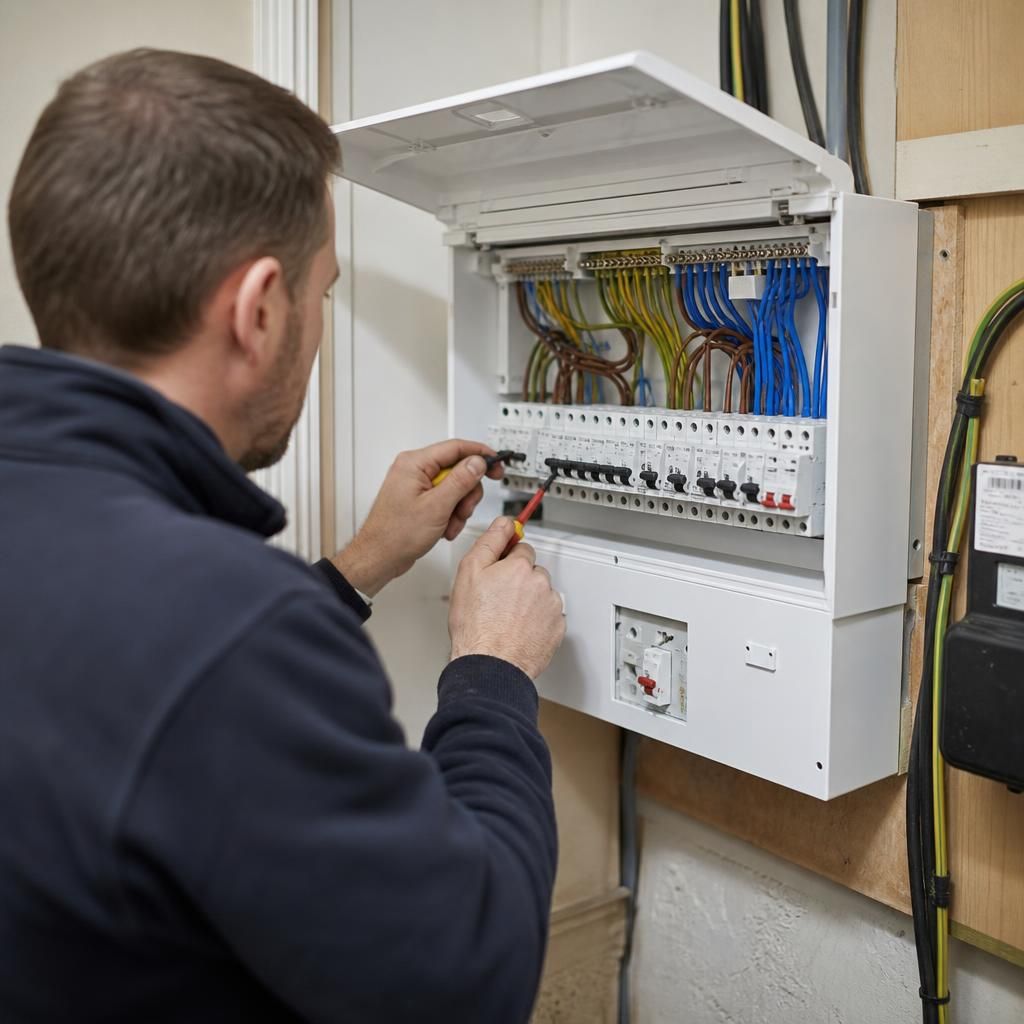
How much does a consumer unit upgrade cost?
There isn’t a fixed consumer unit upgrade cost: the price depends on the replacement board, the number of circuits and any faults or remedial work we find. We inspect the existing installation and provide a written quotation before work starts, so you know what the upgrade will cost.
The cost of a consumer unit upgrade is usually determined by the condition of the existing installation, not simply by the size of the new board. A straightforward replacement costs less than an upgrade that also needs new earthing, bonding, circuit repairs or improvements elsewhere in the electrical system.
The consumer unit itself is only part of the price. The quotation may need to allow for:
- the number of circuits that need connecting;
- the type of protection required for those circuits, such as individual RCBO protection;
- surge protection where it is appropriate for the installation;
- upgrades to the main earthing conductor or bonding to gas and water services;
- faults found on existing circuits;
- replacement of damaged tails, enclosures or accessories near the board;
- testing, labelling and electrical certification after the work.
A small board does not always mean a small job. Older properties can have several generations of wiring, inaccessible junctions or alterations that were not recorded clearly. A rural or converted property may also have outbuildings, pumps, immersion heaters, electric heating or other circuits that make the board more complex. Those details affect the labour and materials needed, even when the consumer unit is physically easy to reach.
Earthing and bonding can change the price significantly. The consumer unit cannot provide the expected protection if the earthing arrangement is inadequate. We check the incoming supply, the main earthing conductor and bonding connections before deciding what the upgrade involves. If improvements are needed, we explain why they matter and include them as separate items in the quotation.
The choice of protection also affects the total. A modern board may use RCBOs so that a fault on one circuit is less likely to disconnect several others. That can make fault-finding easier and reduce unnecessary disruption, but the cost depends on how many circuits need individual protection. The right arrangement depends on the installation rather than on choosing the largest or most expensive board.
Some apparent consumer unit upgrades reveal wider electrical faults. For example, an old socket circuit may have damaged cable, poor connections or insulation problems. Outdoor supplies and garage circuits need particular attention because moisture and mechanical damage can affect their safety. We identify these issues during testing rather than treating the new board as a way to hide them.
That does not automatically mean the whole property needs rewiring. We separate essential remedial work from improvements that can be planned later, then explain the effect of leaving each item outstanding. This helps you compare the immediate upgrade with any longer-term electrical work without paying for work that the installation does not need.
Access and the location of the existing board matter too. A board in a clear hallway cupboard is generally simpler to work on than one behind fixed units, inside a crowded utility area or in a position that does not allow safe access. Moving the consumer unit is a different job from replacing it in the existing position. Extra cable length, making good and changes to the cable routes may then be included.
If the upgrade forms part of another project, such as an extension, kitchen alteration, heating change or electric vehicle charger installation, the electrical design may need to account for the additional demand. Planning these works together can avoid duplicated testing or separate changes later, but we assess the actual load and cable routes before recommending an alteration.
Check what the quotation includes. A useful quotation should make clear:
- which consumer unit and protective devices are included;
- how many existing circuits will be connected;
- whether earthing and bonding work is included;
- which faults or remedial items are essential;
- whether testing, labelling and certification are included;
- what happens if testing identifies an additional unsafe fault.
We carry out the electrical work in line with the relevant requirements and provide the paperwork needed for the completed installation. Our NICEIC and ECA credentials relate directly to electrical competence and help you understand who is responsible for the inspection, testing and certification.
The most reliable way to establish the cost is to have the existing installation assessed rather than comparing a board-only price. Once the circuits, protective devices and any remedial work are clear, you can see which costs are necessary and which improvements can wait.
The incoming supply can affect the cost, even when the consumer unit is easy to reach. Older properties may have an outdated service head, short meter tails or a supply arrangement that needs attention before the new board can be connected safely.
Those parts may belong to the network operator or electricity supplier rather than the electrician. If we find a limitation, we explain who needs to deal with it and separate that work from our quotation. You can then budget for the complete upgrade instead of being surprised by a problem on installation day.