
Is a full house rewire always the most economical option?
No. A full house rewire isn’t always the most economical option. If the existing cables are sound and the problem is limited, targeted repairs or partial rewiring may cost less, but we need to inspect the installation before recommending the cheaper long-term choice.
A full house rewire is not always the most economical choice. If most of the installation is in reasonable condition, targeted repairs or replacing individual circuits can deal with the risk at a lower initial cost. A full rewire becomes more economical when the wiring is broadly worn, difficult to access, or likely to need repeated remedial work.
The important comparison is not simply the price of the first visit. You need to compare the cost of the proposed work, the disruption involved and the likelihood of further electrical work later.
When a partial rewire may make sense
A partial rewire can be appropriate when one part of the installation has deteriorated but the rest remains suitable for continued use. This might involve replacing a damaged circuit, upgrading the supply to an extension or outbuilding, or renewing accessories and connections in a particular area.
For example, a kitchen refurbishment may require new circuits for an oven, induction hob, dishwasher and additional sockets. That does not automatically mean every circuit in the house needs replacing. We assess how the new work connects to the existing installation and identify any limitations before recommending the scope.
Targeted work may also be sensible when an inspection finds a small number of clearly defined faults. We can explain which items need attention, which can remain in service and what risks would remain if you postpone wider work.
This approach usually causes less disruption because we can limit the work to accessible areas. It may also allow you to coordinate electrical upgrades with another project, such as a kitchen renovation, loft conversion or heating upgrade.
When a full rewire is likely to offer better value
A full rewire deserves serious consideration when faults or outdated components are spread across several circuits. Replacing one section at a time can then leave you paying repeatedly for access, testing, making good and redecorating.
The same applies when cables run through areas that are already difficult to reach. If floorboards, ceilings or finished walls must be opened for each separate repair, several smaller jobs may create more disruption overall than completing the electrical work in one planned sequence.
A full rewire may also be more practical when you are carrying out major building work. With walls, floors or ceilings already being opened, we can install circuits in the right positions and reduce the need to disturb finished surfaces later.
Older homes often have been altered over many years. Extensions, converted rooms and previous repairs may have left a mixture of cable types, circuit arrangements and accessories. If the installation no longer has a clear, consistent layout, a full replacement can make future fault-finding and alterations more straightforward.
Properties with solid walls, listed features or barn-conversion details need particular care. A full rewire is not automatically the right answer, because access can be expensive and visually sensitive. We plan cable routes and access points around the building rather than assuming that every wall can be chased or every floor can be lifted.
The age of the wiring is only one part of the decision
People often use the age of a house as a shortcut for deciding whether it needs a rewire. That can be misleading. A newer property may have had poor alterations, while an older property may have received substantial electrical upgrades over time.
We look at the condition and arrangement of the installation, including the consumer unit, protective devices, earthing and bonding, cable condition, socket outlets, switches and visible connections. We also consider how the home is used now. A system designed for a smaller electrical load may not suit an electric vehicle charger, electric heating, workshop equipment or a modern kitchen.
Signs such as damaged accessories, scorching, overheating, repeated tripping, exposed cables or unexplained electrical faults need attention. They do not, by themselves, prove that a full rewire is necessary. They show that the affected parts need proper investigation.
An inspection report is not the same as a rewire quotation
An electrical inspection can identify defects and safety concerns, but it may not define every detail needed for a full replacement. Before comparing costs, we need to understand the number of circuits, the layout of the property, access to floors and ceilings, the position of the consumer unit and the finish expected after the work.
We also need to know about planned changes. If you intend to convert the loft, build an extension, install solar panels, add an EV charger or replace the heating system, those requirements should be considered before the cable routes and consumer unit are finalised.
A lower-priced partial repair may stop a current fault but leave the installation unable to support your next project. Conversely, a full rewire may add cost without adding useful protection if the existing circuits are sound and your plans are limited. The right choice depends on the whole property, not just the most obvious fault.
How the disruption affects the overall cost
A full rewire is intrusive. We normally need access to sockets, switches, the consumer unit and cable routes throughout the house. Some floorboards, ceilings or wall finishes may need to be lifted or opened, followed by making good and redecoration arranged as part of the wider project.
That disruption has a cost even when it is not shown as a separate line on the quotation. You may need to move furniture, empty rooms or coordinate other trades. A partial rewire can reduce this impact, but repeated visits may extend the disruption over a longer period.
We set out what access is needed and what making good is included before work starts. This gives you a more useful comparison than looking at the electrical labour alone.
What to compare before choosing an option
- Which circuits and accessories will be replaced?
- What defects will remain after the proposed work?
- Will the consumer unit, earthing and bonding be included where needed?
- Does the design allow for planned additions such as an EV charger or extension?
- How will cables be accessed, and who will make good disturbed surfaces?
- What inspection, testing and certification will be provided when the work is complete?
- Will the proposed work solve the underlying issue or only the current symptom?
We provide a written quotation before work starts, with the scope and any assumptions set out clearly. That helps you decide between a targeted repair and a full rewire on the likely total cost, not on an artificially narrow starting price.
For electrical work, our NICEIC and ECA registration reflects the systems and testing standards we work to. The useful outcome for you is a clear recommendation, properly tested work and paperwork that records what has been changed.
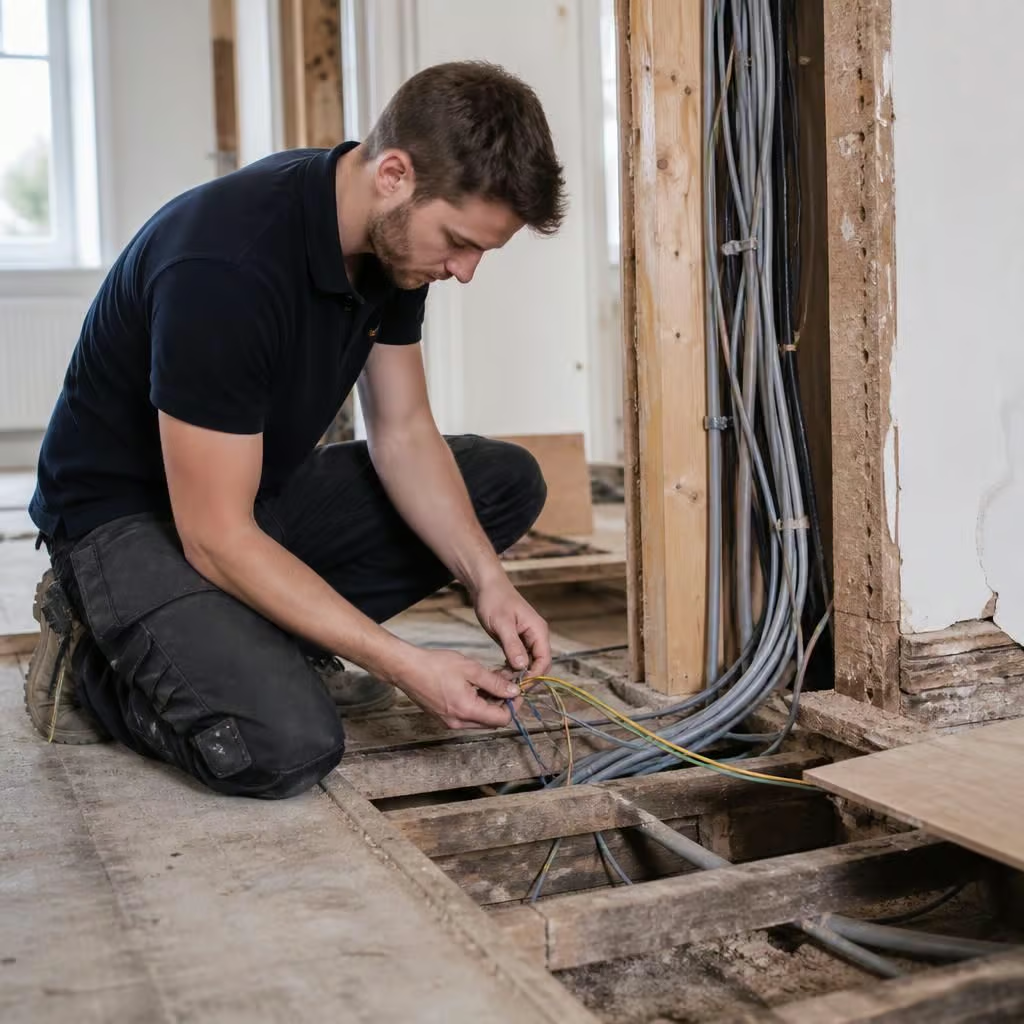
The most economical option can change once access is taken into account. In a finished home, lifting floors and opening walls may cost more than the electrical work itself.
Where access is limited, we map the cable routes before work begins and identify practical entry points. That helps separate necessary electrical replacement from avoidable damage to plaster, flooring or listed features, so the quotation reflects the complete job rather than just the new cable.