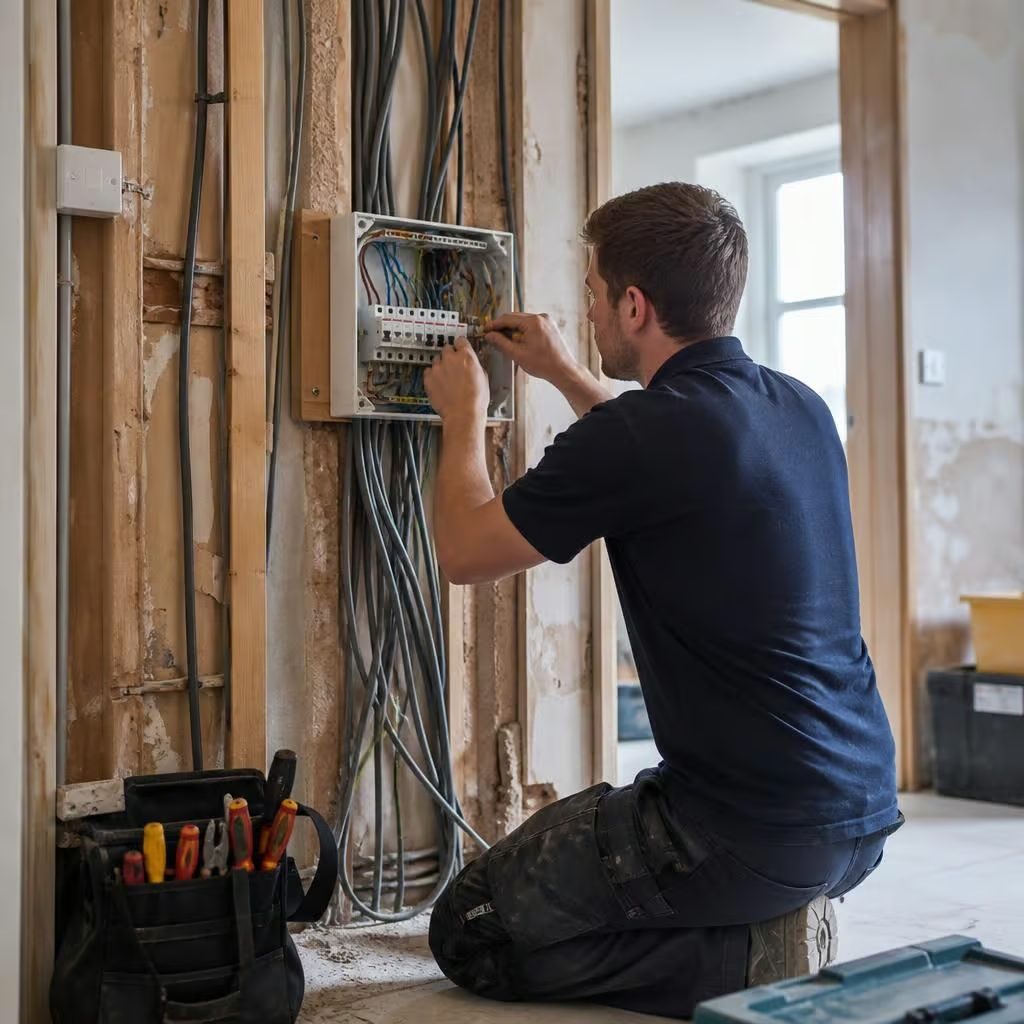
How long does a complete house rewire take?
A complete house rewire typically takes several days, with larger or occupied homes taking longer. We confirm the expected timescale after assessing the property, access, number of circuits and how much making good is needed.
A complete house rewire is normally completed in phases rather than in one visit. A straightforward, vacant property may follow a compact programme, while a larger or occupied home takes longer because engineers must work around furniture, flooring and daily use of the rooms.
The main stages are:
- Preparation: we agree the circuit layout, socket and switch positions, lighting points, consumer unit location and cable routes before work starts.
- First fix: we remove or disconnect the old wiring and install new cables, back boxes and the main circuit routes.
- Second fix: we fit sockets, switches, light fittings and other accessories once the walls, ceilings and floors are ready.
- Inspection and testing: we test each circuit, label the consumer unit and complete the required electrical paperwork.
The first-fix stage usually takes the largest part of the programme. Cable routes may run through floor voids, loft spaces, cupboards and wall chases. Older houses often need more careful work because solid walls, timber floors, unusual extensions and previous alterations can restrict access.
A property with clear loft and floor access is generally simpler to rewire than one where cables are buried behind plaster or boxed in by later building work. Listed buildings, barn conversions and homes with finished stone or lime plaster may also need a slower approach to avoid unnecessary damage.
The number of circuits affects the work as well. A modern installation may include separate circuits for lighting, sockets, the cooker, showers, outdoor equipment and other higher-load appliances. We establish what the home needs rather than simply replacing each old cable in the same position. That can mean extra time for routing, testing and updating the consumer unit.
Living in the property during a rewire usually extends the calendar programme. We may need to complete the work room by room, leaving safe temporary supplies where possible and returning areas to use before moving on. This reduces the time the whole house is disrupted, but it can increase the total duration because furniture and floor coverings must be moved more than once.
An empty property allows the team to work through the installation without waiting for rooms to be cleared. It also makes it easier to lift selected floorboards, access wall routes and carry out the second fix in a continuous sequence. Even then, the condition of the existing wiring and the amount of making good required can change the programme.
The programme can also change if we find concealed faults or work that does not match the original plan. Examples include damaged cables, unsafe alterations, inaccessible junctions, asbestos-containing materials or a consumer unit that needs a different position. We explain these findings before carrying out additional work, rather than allowing the final bill or completion date to change without discussion.
Rewiring also involves more than installing cable. We allow time to remove redundant wiring, make safe disconnected circuits, install protective devices, check earthing and bonding, and test the completed installation. The final paperwork matters if the property is sold, let or inspected later, so we complete the certification once the tests have passed.
Your quotation should therefore show the expected sequence, what access we need, which fittings are included and what happens if concealed conditions alter the work. It should also state whether decorating, plaster repairs, flooring and furniture movement are included. These details often explain why two apparently similar programmes differ.
After a survey, we can give a realistic programme for the particular property. The useful question is not only how many days the electricians will be on site, but how much of the home will be unavailable at each stage and when the installation will be fully tested and certified.
If the rewire forms part of a larger refurbishment, the other trades can affect the programme. Plastering, flooring, kitchen fitting and decorating are usually planned around the first and second fix.
We agree the electrical stages with you before work begins, so cables are installed before finishes cover the routes and fittings are connected after the relevant surfaces are ready. If another trade is working in the same rooms, coordinating the sequence can prevent avoidable return visits and extend the overall calendar time.