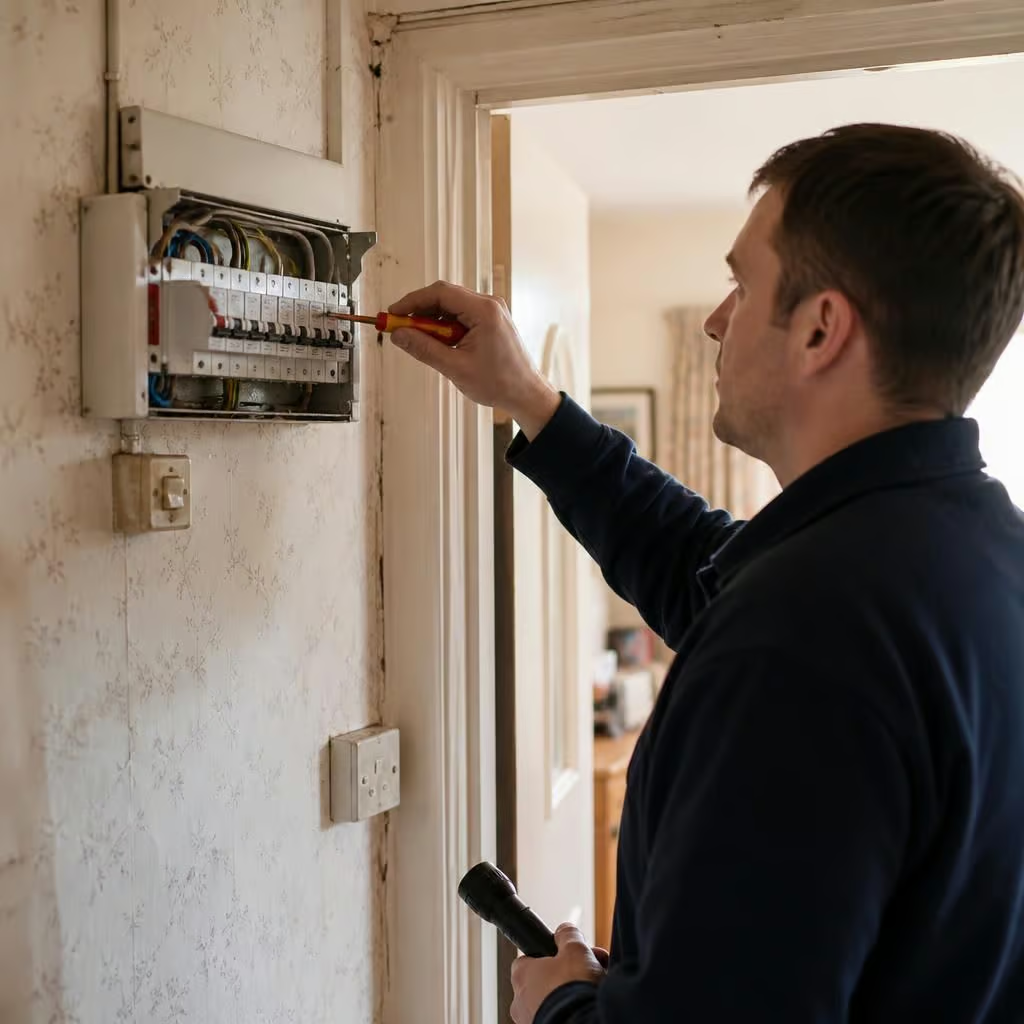
How do I know if my older house needs rewiring?
An older house may need rewiring if it has frequent electrical faults, damaged cables, scorch marks, outdated accessories or a fuse box without modern safety protection. We inspect the installation and test its condition so you know whether it needs a full rewire, targeted repairs or no immediate work.
An older house needs rewiring when its cables, connections or protective equipment no longer provide a safe and suitable installation. Age alone does not decide it. Some older installations remain serviceable, while others need a full rewire because the insulation has deteriorated, the earthing is inadequate or the wiring cannot safely support modern use.
The next step is an inspection and electrical test, rather than guessing from the age of the property. We examine the consumer unit, accessible cables, switches, sockets, lighting circuits, earthing and bonding. We also look for signs of alteration, overloading and poor connections. An Electrical Installation Condition Report (EICR) records what we find and separates urgent defects from items that need improvement or monitoring.
Signs that need proper investigation
- Old rubber, fabric or lead-sheathed cables, particularly where the insulation has cracked, become brittle or degraded.
- Socket outlets or switches that are loose, discoloured, cracked or warm during normal use.
- Burning smells, buzzing, sparking or scorch marks around accessories.
- Repeated fuse or circuit-breaker operation when ordinary appliances are being used.
- Too few sockets, leading to several adaptors or extension leads in one room.
- Different types of cable, sockets or switches that suggest several unrecorded alterations over the years.
- A lack of effective earthing or bonding, which can increase the danger from an electrical fault.
These signs do not automatically mean the whole house needs rewiring. A damaged socket may need replacing, a loose connection may need repairing and a single altered circuit may be brought up to standard without disturbing the rest of the installation. We recommend the smallest amount of work that resolves the safety issue, unless the wider installation is in poor condition.
When a full rewire is more likely
A full rewire becomes more likely when several circuits have deteriorated wiring, previous work is unsafe or undocumented, and the installation has no reliable protective measures. It may also be sensible during a major renovation, before walls and floors are finished, or when the layout is changing substantially. Installing a new kitchen, converting a barn or adding an outbuilding can expose limitations that were not apparent when the house used fewer appliances.
Older homes need careful planning because the wiring may run through solid walls, lath and plaster, timber floors, roof spaces or areas with original finishes. We discuss the construction before deciding how to route cables. Where access is limited, we plan the work around floorboards, cupboards and existing voids. If we find materials that may contain asbestos or other hazardous substances, we do not disturb them casually; the correct specialist advice may be needed before work continues.
An EICR can clarify the decision
An EICR does not simply label a property as safe or unsafe. It identifies particular defects and gives them classifications according to their risk. We explain what each finding means in practical terms, which work is urgent and which improvements can be planned. A report may recommend repairs, a consumer unit upgrade, remedial work on selected circuits or a complete rewire.
A new consumer unit on its own is not a rewire. It can improve circuit protection, but it cannot repair deteriorated cable hidden in the walls. Conversely, replacing all the cables may not require every accessory or fitting to be changed if those parts are suitable. We assess the installation as a whole before recommending either option.
If rewiring is needed, we map the circuits and agree the position of sockets, switches, lights and larger appliances before work starts. We then provide a written quotation describing the work and any assumptions about access or redecoration. The quotation helps you understand whether the proposal covers a full rewire, selected circuits or associated repairs.
Our NICEIC- and ECA-recognised electrical work is tested as it progresses and at completion. We issue the relevant electrical certification and explain any areas that could not be inspected. You should ask for an inspection if you are buying an older property, planning significant alterations, or have noticed faults that are becoming more frequent.
A previous owner’s claim that the house was rewired isn’t enough on its own. Ask for the electrical installation certificate and check what work it covers. A certificate for an extension, kitchen or consumer unit does not prove that every circuit was replaced.
If the paperwork is missing, that does not automatically mean the installation needs a full rewire. We compare the available records with what we find during inspection and testing, so you can distinguish a complete installation from later additions or isolated improvements.