
Can PAT testing be carried out while premises are occupied?
Yes. We can carry out PAT testing while your premises are occupied, working around staff, customers and essential equipment to keep disruption to a minimum.
Occupied premises do not normally need to be emptied for portable appliance testing. The equipment is tested in manageable groups, with brief interruptions where an appliance must be switched off or unplugged.
The main limitation is that an appliance cannot be tested while someone is using it. A computer, kettle, charger, printer or other item may need to be disconnected for a short period. We plan around that interruption rather than removing equipment without warning.
Before testing starts
Your staff, visitors or tenants may still be using parts of the building, so we agree access arrangements before the appointment. This helps us identify rooms that need advance notice, equipment that must remain available and any areas with restricted access.
We can work through the premises in sections, such as one office, room or floor at a time. For a business with shared equipment, we can begin with appliances that are not in use and leave essential items until an appropriate point in the day.
If the premises have unusual risks, we take those into account before starting. These may include public access, children or vulnerable occupants, confidential work areas, stock rooms, workshop activity, trailing leads or equipment connected to sensitive systems.
What happens during the visit
We identify the appliance, carry out a visual inspection and use appropriate electrical tests for its type. The checks can include the condition of the plug, flex, casing and connections, along with earth continuity, insulation and leakage testing where applicable.
We keep leads and test equipment organised so they do not create avoidable trip hazards. Items are returned to their original position after testing, and we do not leave a disconnected appliance for someone else to deal with.
Some equipment should not be tested in the same way as ordinary mains appliances. Battery-powered items, IT equipment and appliances with electronic controls may need a different approach. We consider the manufacturer’s instructions and the appliance’s construction before connecting test equipment.
A device that must stay running can be discussed before the work begins. We may arrange a suitable time to test it, or record that access was not available so the premises has an accurate record of what was and was not inspected.
If an appliance fails
A failed test does not mean we simply place a label on the item and move on. We explain what we found and identify whether the appliance should be removed from use, repaired or examined further.
If the fault creates an immediate risk, we make the appliance safe by disconnecting it where appropriate and tell the responsible person clearly. We do not return a dangerous item to service merely because the premises is occupied.
Minor issues may sometimes be corrected during the visit, but this depends on the fault, the appliance and the parts required. We record the result and any action taken, so the person responsible for the premises can make an informed decision.
Keeping disruption under control
- We agree which rooms and appliances need access before testing begins.
- We work in a planned sequence rather than moving unpredictably around occupied areas.
- We give the responsible person a clear indication before disconnecting essential equipment.
- We keep the work area orderly and avoid blocking entrances, walkways or workstations.
- We record appliances that could not be accessed, rather than treating them as tested.
- We explain failed items and any immediate action needed before leaving them in use.
For a landlord, property manager or business owner, the practical aim is a usable record of the equipment that was inspected, the results obtained and any defects requiring attention. Testing can therefore take place alongside normal activity, provided the responsible person allows suitable access and accepts the short interruptions needed to test individual appliances.
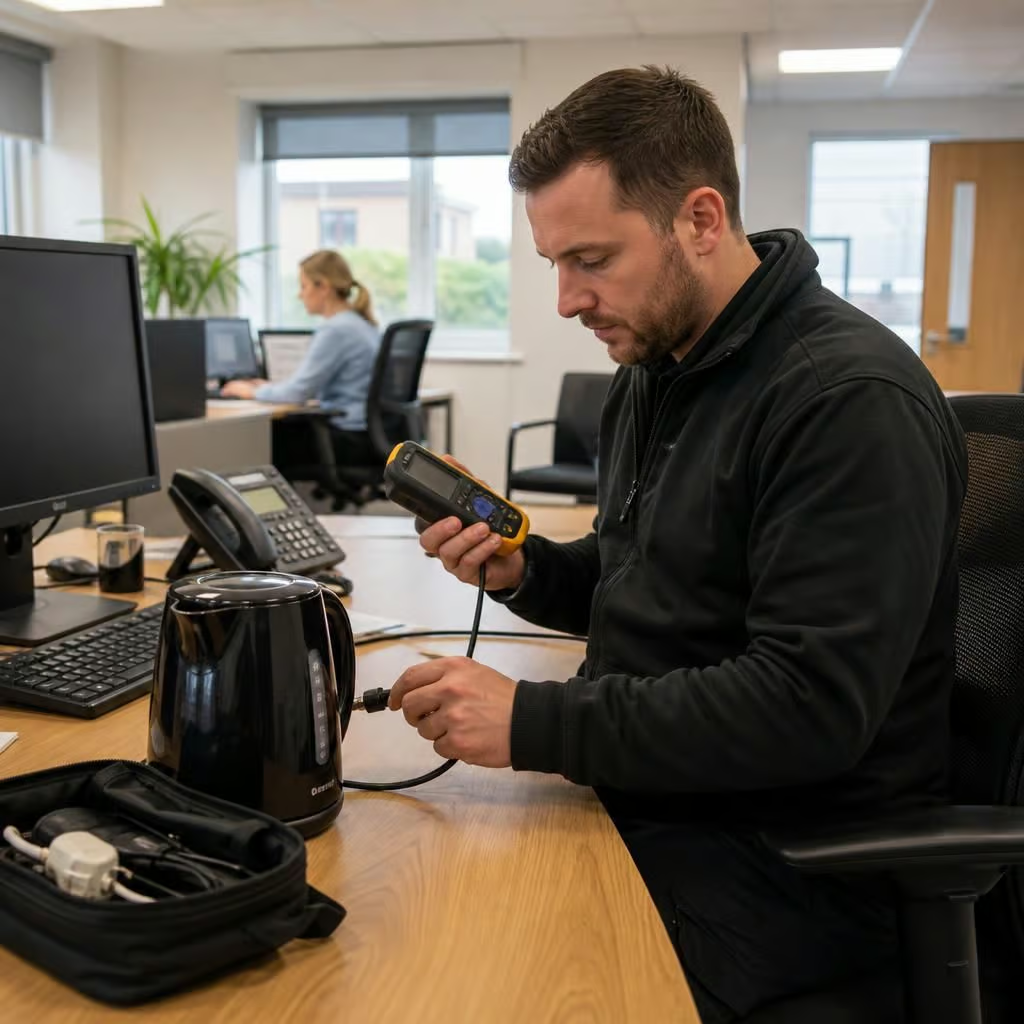
Occupied premises do not need a general electrical shutdown for PAT testing. The checks apply to portable and plug-in equipment, while the wider installation remains available for normal use.
This also helps keep the results clear. A PAT record shows which individual appliances were examined, rather than suggesting that the building’s fixed wiring has been tested. If you need the installation checked as well, that is a separate inspection.