
How do PAT test labels identify each appliance?
A PAT test label identifies each appliance with a unique reference or asset number, usually alongside the test date and result. That reference links the appliance to its entry in the PAT testing register, so it can be matched to its test record.
The identification comes from the asset reference printed on the label, not from the appliance’s make, model or appearance. We assign that reference to one item and use the same code in the PAT testing register.
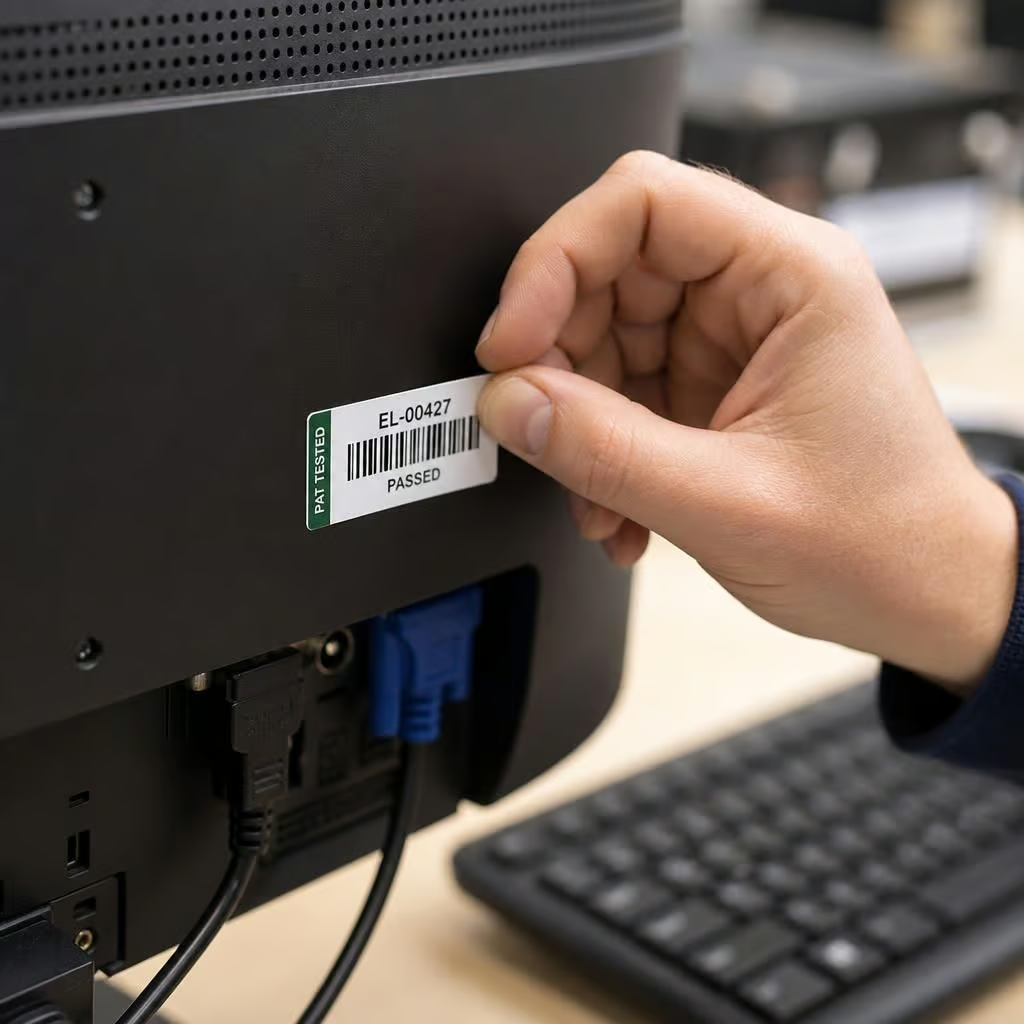
A label might show a number such as EL-00427, a barcode or a QR code. The format can vary between organisations. There is no single compulsory design for PAT labels, so the important point is that the reference is unique, readable and used consistently.
One appliance should have one identifiable record. A kettle, monitor, extension lead and power tool should not share one label simply because they are in the same room. If an extension lead is tested separately, it needs its own reference. This prevents a test result being attributed to the wrong item later.
Before applying labels, we record enough detail to distinguish similar equipment. The register may include:
- the asset reference shown on the label;
- the appliance type and description;
- the manufacturer, model and serial number where available;
- the room, building, department or property where it is located;
- the inspection or test date;
- the result and any remedial work carried out; and
- the date or period for the next planned inspection, where one has been set.
That extra information matters when several appliances look alike. For example, three identical monitors may have the same model number, but their asset references and recorded locations separate them. A serial number can support the identification, but it is not always present or easy to read. The asset reference gives the organisation a practical way to manage the item.
The code should identify the item without creating problems when it moves. A simple sequence such as “PAT-001” is often more useful than a code that permanently includes a room name. If equipment moves from an office to a workshop, the asset reference can remain the same while the location in the register is updated.
Some organisations use location-based codes, such as a building or department prefix. That can help staff recognise equipment quickly, but the register still needs updating when the appliance moves. A label should not be treated as proof that the item remains in the location printed in an old record.
Labels commonly also show the test outcome and the date of the inspection. A “passed” label indicates the result recorded at that inspection. It does not mean the appliance cannot develop a fault afterwards, and it does not replace sensible checks before use. A cracked plug, damaged cable, overheating smell or intermittent operation needs attention even when the label is still attached.
The label is usually placed where someone can see it without dismantling the appliance. On some equipment, that may be beside the power inlet or on the casing. A lead or plug may need careful labelling so the label does not interfere with use, insulation or the connection itself. We avoid covering safety information, manufacturer instructions or ventilation openings.
A missing or damaged label does not automatically mean the appliance has failed. It means the item may no longer be reliably linked to its record. We would check the register, compare the appliance details and location, and relabel it where the identity can be confirmed. If we cannot establish which record belongs to the item, it may need to be treated as unidentified and assessed again.
The same issue applies after repairs or replacement parts. If the appliance remains the same and its identity is clear, the register can be updated with the work carried out. If a complete replacement has been supplied, it should normally receive a new asset reference rather than inherit the old label. That keeps the test history attached to the correct physical item.
Labels are most useful when they form part of a maintained system. After equipment is bought, moved, disposed of or replaced, the register needs to reflect the change. During a later inspection, the reference on the appliance can then be checked against the register before the result is recorded.
For a home with a small number of appliances, a formal asset system may not be necessary. In workplaces, rented properties and larger buildings, clear references reduce confusion and help show which equipment was inspected. We can label the tested items and provide the associated paperwork so each appliance can be traced without relying on memory or visual similarity.
A useful asset code stays with the appliance throughout its working life. We avoid building the test result or inspection date into the reference, because both can change. A code such as “OFF-027” can continue to identify the same item after a later test, repair or move.
The register records those changing details separately. That means staff can identify the appliance from its label, then check its current result and inspection history without replacing the label each time.