
How long should I keep PAT testing certificates?
There is no fixed UK legal period for keeping PAT testing certificates. As practical evidence of maintenance, keep the current certificate and relevant previous records for as long as the appliance remains in use, and retain them longer if your insurer, landlord or contract requires it.
There is no fixed UK legal period for keeping PAT testing certificates. The sensible approach is to keep records for the life of each appliance, then retain older records for as long as your organisation’s insurance, contract or internal document policy requires.
PAT testing is not itself a legal requirement. The duty comes from the need to maintain electrical equipment so it remains safe to use. Under the Electricity at Work Regulations, maintenance must be suitable for the equipment, its use and the environment. PAT testing can form part of that maintenance programme, but the law does not prescribe a particular certificate-retention period.
That means a three-year or five-year rule is not a universal legal requirement. A retention policy should reflect the risks in the property and the evidence you may need to produce if someone asks how equipment was inspected and maintained.
For each appliance, keep enough information to link the record to the item. A certificate is more useful when it can be matched to the appliance through an asset number, barcode, location, description or serial number. Keep the following together where they are available:
- the PAT testing certificate or test report;
- the PAT testing register showing the appliances tested;
- the result for each item, including any visual inspection or electrical test;
- details of failed, damaged or restricted equipment;
- repair, replacement or disposal records;
- the name of the person or company carrying out the inspection;
- the date of testing and the recommended date or conditions for the next check.
A certificate covering a whole building may not show which appliance failed or what happened afterwards. Keeping the register and remedial records alongside it gives a clearer history. It also helps when staff move equipment between rooms or when a property changes hands.
Keep records until the appliance is no longer under your control. If a kettle, power tool, extension lead or other item remains in use, its latest record should remain accessible. When an appliance is repaired and returned to service, keep the failed-test result and the repair information with the later pass record. This shows why the item was removed from use and what changed before it was used again.
When an appliance is disposed of, sold or returned to its owner, mark the register accordingly rather than deleting its entry immediately. The old record may still help you explain an incident, investigate damage or show why an item was taken out of service. Your organisation can then apply its normal document-retention policy to equipment that has left its control.
Landlords and property managers should keep records for the tenancy or management period. A PAT certificate does not replace the checks required for the fixed electrical installation, such as an appropriate inspection of the wiring and accessories. It also does not prove that a tenant’s appliance was safe after the test date. The record should identify which landlord-owned appliances were checked and distinguish them from residents’ own equipment.
Commercial premises often need a more detailed audit trail. A facilities manager may need to show records to a client, insurer, auditor, enforcing authority or incoming contractor. Your retention policy should therefore match the building’s risk assessment, contractual requirements and insurance conditions. Sites with portable tools, catering equipment, public access or demanding environments may need more frequent checks and stronger records than a low-risk office.
The testing interval and the retention period are separate decisions. Keeping a certificate does not mean that an appliance remains safe until the next test date. The next inspection should depend on how often the item is used, who uses it, the likelihood of damage, its electrical class and the conditions around it. A visual check by users may also be appropriate between formal inspections.
Conversely, testing every appliance on an arbitrary annual cycle does not automatically create a suitable maintenance system. A risk assessment should explain why equipment is checked at a particular interval and what happens when it fails. The records should support that decision rather than simply show a repeated date stamp.
Digital records are acceptable if they remain complete, readable and accessible. Keep a backup, control who can edit the register and make sure older entries can be retrieved. Scanned certificates should still be legible, with the original date, appliance reference and result visible. If you use paper files, store them where damp, loss or unauthorised changes will not damage the record.
When we review PAT records, we look for the link between the certificate, the individual appliance and any action taken afterwards. That makes it easier to identify overdue items, remove failed equipment from service and produce a clear maintenance history when the property or equipment is inspected.
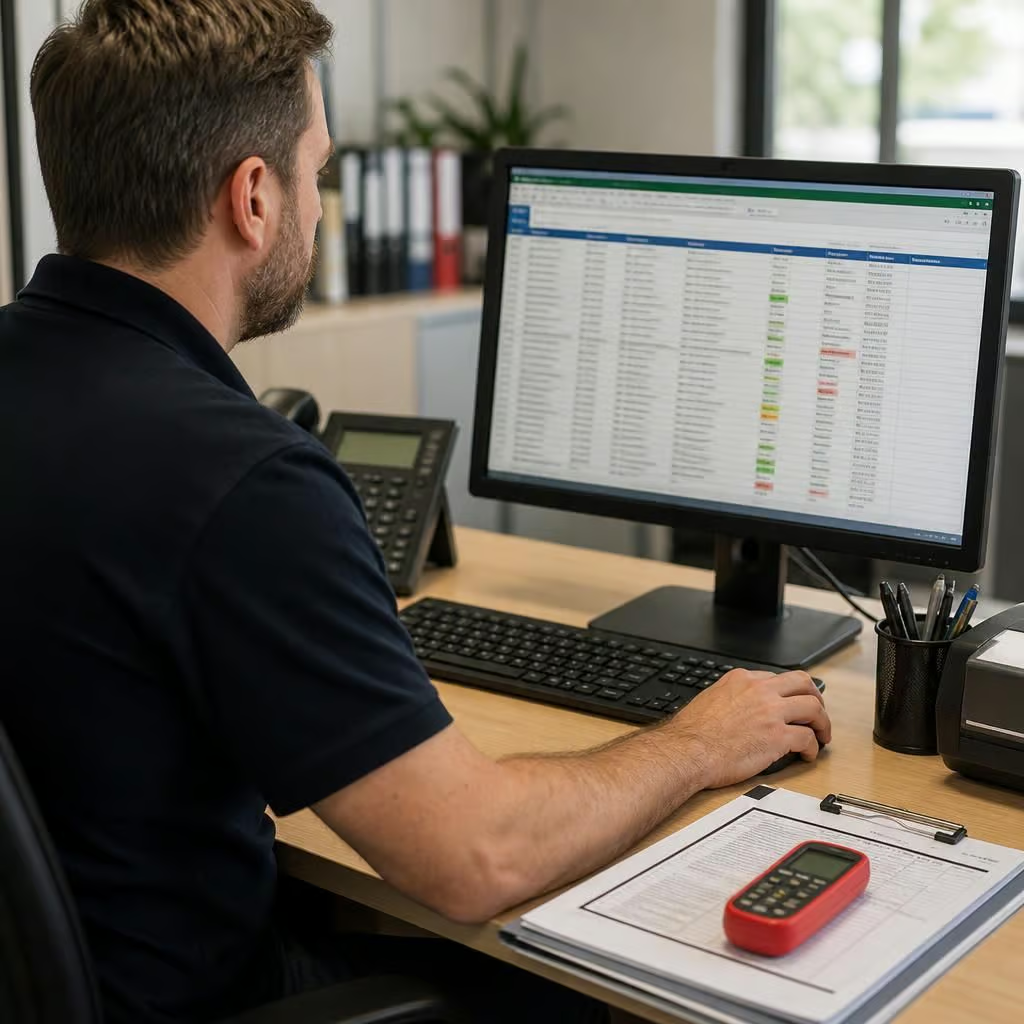
A separate certificate for every appliance is not the important part. What matters is a clear record showing which items were inspected, what the results were and what happened to anything that failed.
One dated test report and a linked register may cover several appliances, provided each item has a clear reference. We recommend keeping that record in the property or workplace file, rather than relying on loose labels or an isolated certificate. This makes the inspection history easier to understand when equipment is moved, replaced or checked by someone else.