
Can landlord PAT testing be completed between tenancies?
Yes. Completing landlord PAT testing between tenancies can make access easier and lets us check appliances, record the results and deal with any failed items before the next tenancy begins.
A gap between tenancies is often the clearest time to arrange PAT testing. The property is usually empty, access is easier to organise and we can inspect landlord-supplied appliances without interrupting a tenant’s use of them.
The test should take place after the outgoing tenant has removed personal belongings, but before the next tenant receives the keys. If cleaning, decorating or maintenance work is planned, we can coordinate the inspection so appliances are back in their normal positions. That gives the report a more accurate record of what the incoming tenant will find.
Before attending, it helps to identify which equipment belongs to the landlord. This can include:
- freestanding kitchen appliances supplied with the property;
- lamps, televisions and other electrical items included in the inventory;
- washing machines, tumble dryers and dishwashers;
- extension leads, chargers and other portable equipment supplied for use;
- electrical equipment in shared areas managed by the landlord.
PAT testing is not normally a blanket test of every electrical item in a rental property. A risk assessment helps decide what needs checking and how often. We can use the inventory, the type of appliance, its age, its condition and how tenants use it to create a sensible testing schedule.
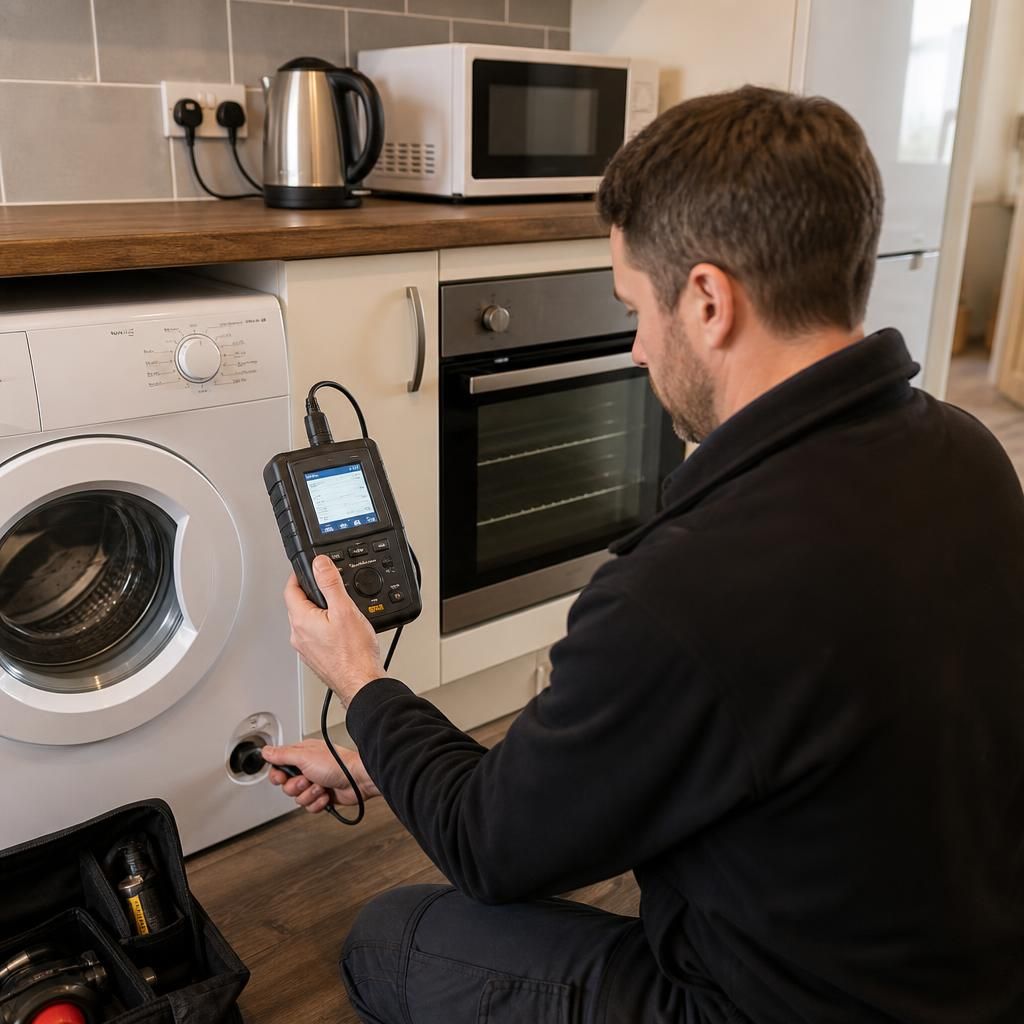
During the visit, we first identify each appliance and check its plug, cable, casing and visible condition. We then carry out the appropriate electrical tests for that item. The exact test depends on the appliance, because sensitive electronic equipment may need a different approach from a simple earthed appliance. We also look for damage that an electrical test alone would not show, such as a cracked casing, loose cable or unsuitable extension lead.
Each item can be recorded against its location or inventory reference. The resulting paperwork should show what we inspected, the result, any defect found and what needs to happen next. Labels may be useful for identifying tested items, but a label on its own is not a substitute for the test record.
Access is the main practical limitation when testing between tenancies. An appliance that is boxed away, stored in a locked cupboard or disconnected for a refurbishment may not be available for inspection. We record the items we can reach and identify anything that needs a further visit. Moving heavy appliances is not included automatically, so this should be agreed before the appointment where access depends on it.
If an appliance fails, we do not treat the result as a reason to leave it in service. We identify the fault and advise whether the item should be removed, repaired, replaced or tested again after repair. Where further electrical work is needed, we explain that separately before it starts. Our written quotation sets out chargeable work in advance rather than adding unexpected costs to the inspection.
PAT testing deals with portable appliances. It does not replace an Electrical Installation Condition Report for the fixed wiring, consumer unit, sockets or lighting circuits. Those are separate parts of a landlord’s electrical safety responsibilities and may need their own inspection.
We can arrange the inspection around the tenancy changeover and provide the records for the landlord, letting agent or property manager. The result is a clear list of the equipment checked, any items that were inaccessible and any action required before the property is occupied again.
A changeover is also a useful point to check that the final inventory matches the PAT record. If a replacement appliance has been bought during the void, it should be added before the next tenant moves in. An item removed from the property should be noted too, so the report does not continue to suggest that it remains in service.
We can update the records to reflect those changes and separate completed checks from items awaiting attention. That gives the landlord or agent a current appliance list to pass into the new tenancy, rather than relying on paperwork from the previous occupancy.