Can tenants remain in the property during landlord PAT testing?
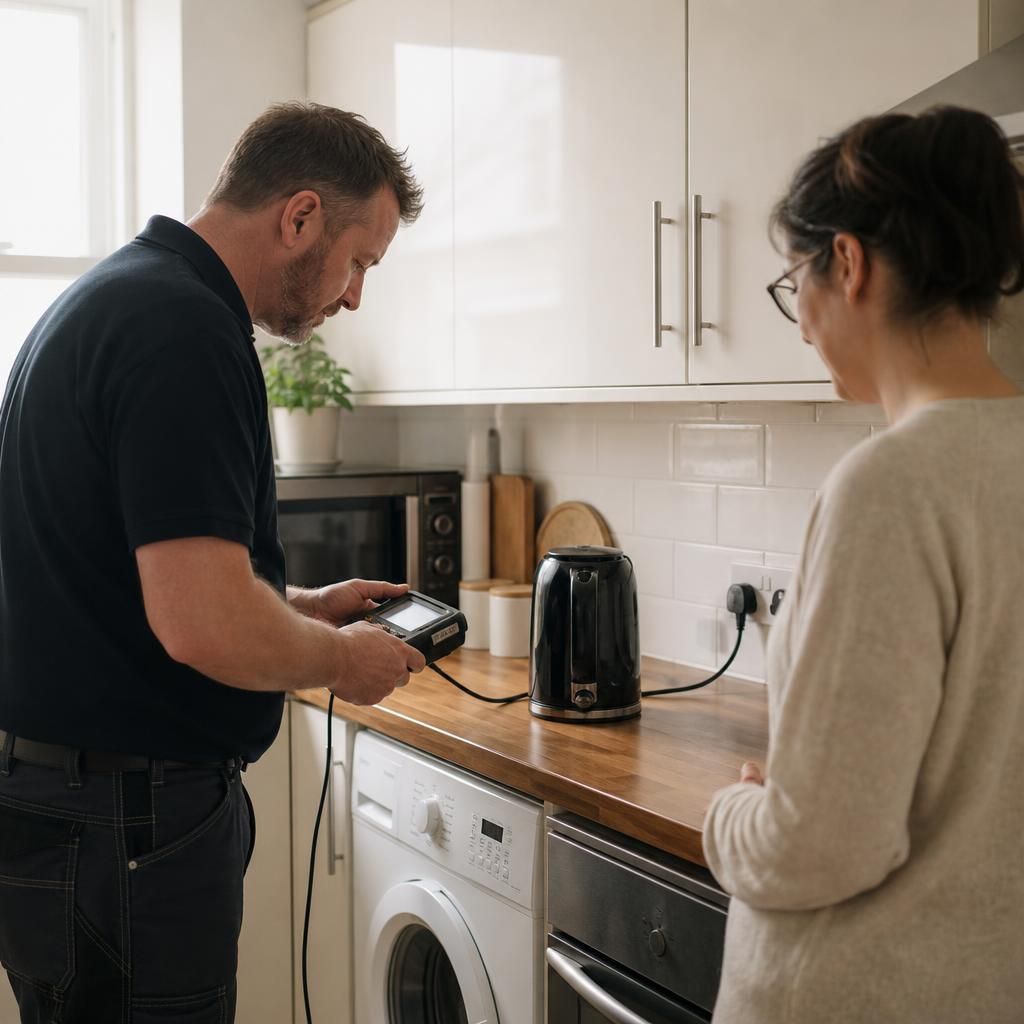
Yes. Tenants can usually remain in the property while we carry out landlord PAT testing, although they may need to give us access to rooms and appliances and avoid using equipment briefly during checks.
Tenants do not normally need to leave while we carry out landlord PAT testing. The visit can usually take place with someone at home, as long as we can reach the agreed appliances and work safely.
The landlord or managing agent should arrange access in line with the tenancy agreement and any notice requirements. We do not enter rooms without permission or treat a tenant’s presence as consent to access the whole property. If a tenant cannot provide access, the landlord will need to arrange another suitable appointment.
Before testing starts, we confirm which appliances are included. This normally means electrical items supplied by the landlord, such as washing machines, fridges, lamps, kettles or portable heaters. A tenant’s personal appliances are not tested unless the tenant and landlord have agreed this in advance.
The engineer carries out a visual inspection before using test equipment. We look for damage to the casing, plug, lead and socket, then check the appliance in a safe way. An appliance may need to be switched off, disconnected or moved slightly so we can inspect it properly.
Tenants can continue with their normal activities elsewhere in the property during the visit. They should keep children and pets away from the working area, and avoid using an appliance while we are examining or testing it. We will explain if an item needs to remain disconnected until the checks are complete.
Some appliances are built into units or connected in ways that make removal unsuitable during a routine portable appliance test. We record what we can safely inspect and tell the landlord if an item needs a different type of electrical check. PAT testing does not replace fixed-wiring inspection or repair work.
If an appliance does not pass, we identify the reason rather than simply marking it as failed. The item may have a damaged lead, loose plug, exposed wiring or another fault. We label or record the result so the landlord knows what needs attention. We do not leave a dangerous appliance available for use.
We keep the visit as orderly as possible. Leads and appliances are put back after testing, and any temporary disconnection is explained before we leave. If moving an item would risk damage to furniture, flooring or the appliance itself, we discuss the limitation with the person present and report it to the landlord.
The landlord receives the testing records for the appliances inspected. These show the property or location, the appliance details and the result, giving the landlord a clear record for maintenance and future tenancy checks. Tenants can ask the landlord or managing agent about any item that has been taken out of use.
For occupied properties, the most practical arrangement is for the landlord or agent to provide a list of appliances and agree access in advance. Tenants can then remain at home while we work, with only short interruptions where an appliance needs to be inspected or disconnected.
Tenants can usually carry on living in the property during PAT testing because the checks apply to individual appliances, not the home’s whole electrical installation. We don’t normally need to switch off the property’s power supply.
That means disruption is generally limited to the appliance being checked. A fridge, freezer or other essential item may be disconnected briefly, then returned to service once the test is complete. If a longer interruption is needed, we explain the reason to the person present before proceeding.