
Is cheap PAT testing suitable for my premises?
Cheap PAT testing may be suitable for a small, low-risk premises, but price alone does not show whether the testing is thorough or the records are acceptable. We assess the appliances, their use and the premises before recommending the level of inspection and testing needed.
Cheap PAT testing can be suitable where the equipment is limited, lightly used and kept in a low-risk environment. It is not suitable simply because the price is low. The decision should come from the risks in the premises, the type of appliances in use and the quality of the inspection.
PAT testing is not a fixed legal test that every business must carry out at the same interval. The requirement is to keep electrical equipment safe. A risk assessment should determine how equipment is checked and how often it needs a closer examination.
Low-cost testing may be reasonable when:
- Most appliances are office equipment with little movement.
- Plugs, leads and casings are easy to inspect.
- Equipment is used indoors in clean, dry conditions.
- Staff carry out sensible pre-use checks and report damage.
- The person arranging the work understands what the premises need to demonstrate.
A small office with computers, monitors and desk lamps may need a simpler approach than a workshop, commercial kitchen, care setting or agricultural building. Portable tools, extension leads and equipment exposed to water, dust, heat, impact or regular movement need closer attention.
The cheapest service may not include enough testing. Some providers only attach labels or carry out a quick visual check. A visual inspection can find damaged insulation, bent pins, loose plugs and scorching, but it cannot identify every electrical fault. Depending on the appliance, electrical tests may check the earth connection, insulation or leakage. We select the checks according to the equipment and its use rather than applying the same test to every item.
That matters for Class I appliances, which rely on an earth connection, and for double-insulated equipment, which uses a different protective arrangement. Extension leads, chargers, power supplies and appliances with detachable leads also need to be considered properly. A low price that treats every item as identical may leave important risks unchecked.
Ask what happens when an item fails. A useful service should identify the appliance clearly, explain the defect and prevent it from returning to use until someone has decided what to do. That might mean removing it, repairing it or replacing it. We do not treat a failed item as an administrative problem. We explain the electrical risk in practical terms so the person responsible can make a recorded decision.
The paperwork should help the business show what was examined and what happened afterwards. It should link each result to the appliance, room or asset reference, and include any failed items and remedial action. A folder of pass labels without an appliance list is difficult to manage when equipment moves between rooms or staff.
PAT testing does not cover the whole electrical installation. It checks portable and movable equipment. It does not replace an inspection of the fixed wiring, sockets, distribution boards or protective devices. If the premises need an Electrical Installation Condition Report, that is separate work. An RCD test, where relevant, is also a separate part of maintaining the installation and should not be assumed to be included in a cheap PAT price.
Responsibility can also be split between an owner, landlord, tenant and facilities manager. Before booking, check who controls the appliances, who carries out staff checks and who keeps the results. A low-cost visit may appear suitable but still leave gaps if nobody has arranged follow-up repairs or a review of the risk assessment.
We first establish what equipment is present, how people use it and what records the premises need to maintain. The price then reflects the items and work involved, rather than a label applied to an assumed number of appliances. Our quotation sets out the scope before work starts, so the person responsible can compare it with cheaper offers on more than the headline cost.
Cheap PAT testing is therefore suitable for some commercial premises, but only when the method matches the risk and the business receives useful results. If the provider cannot explain which inspections are included, how failed appliances are handled or what the records contain, the lower price may leave the business paying for a second visit later.
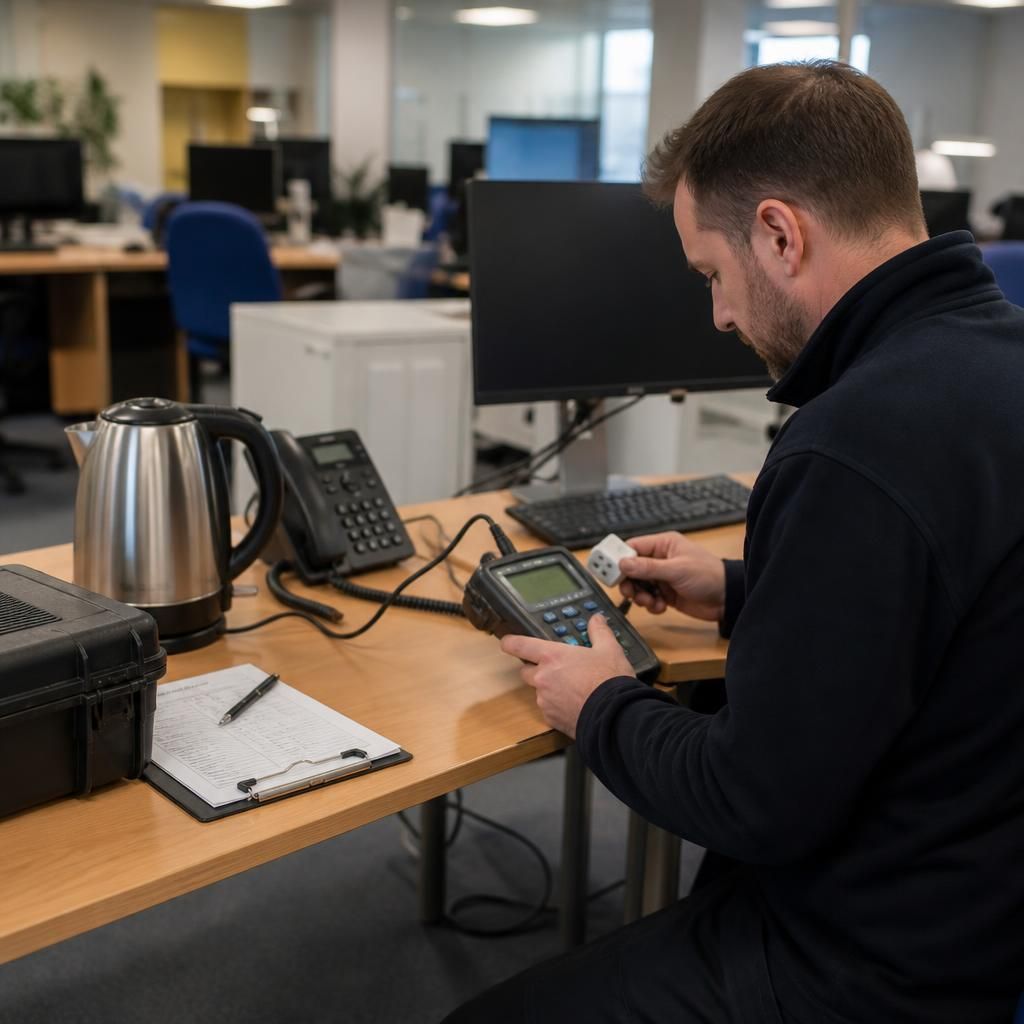
Cheap PAT testing may cover fewer appliances than you expect if equipment is locked away, hidden behind furniture or still in use. Before booking, ask how inaccessible items are recorded and whether someone must make them available.
We record equipment that could not be examined separately from equipment that passed. That leaves the responsible person with a clear list of outstanding checks, rather than treating an unseen appliance as safe.