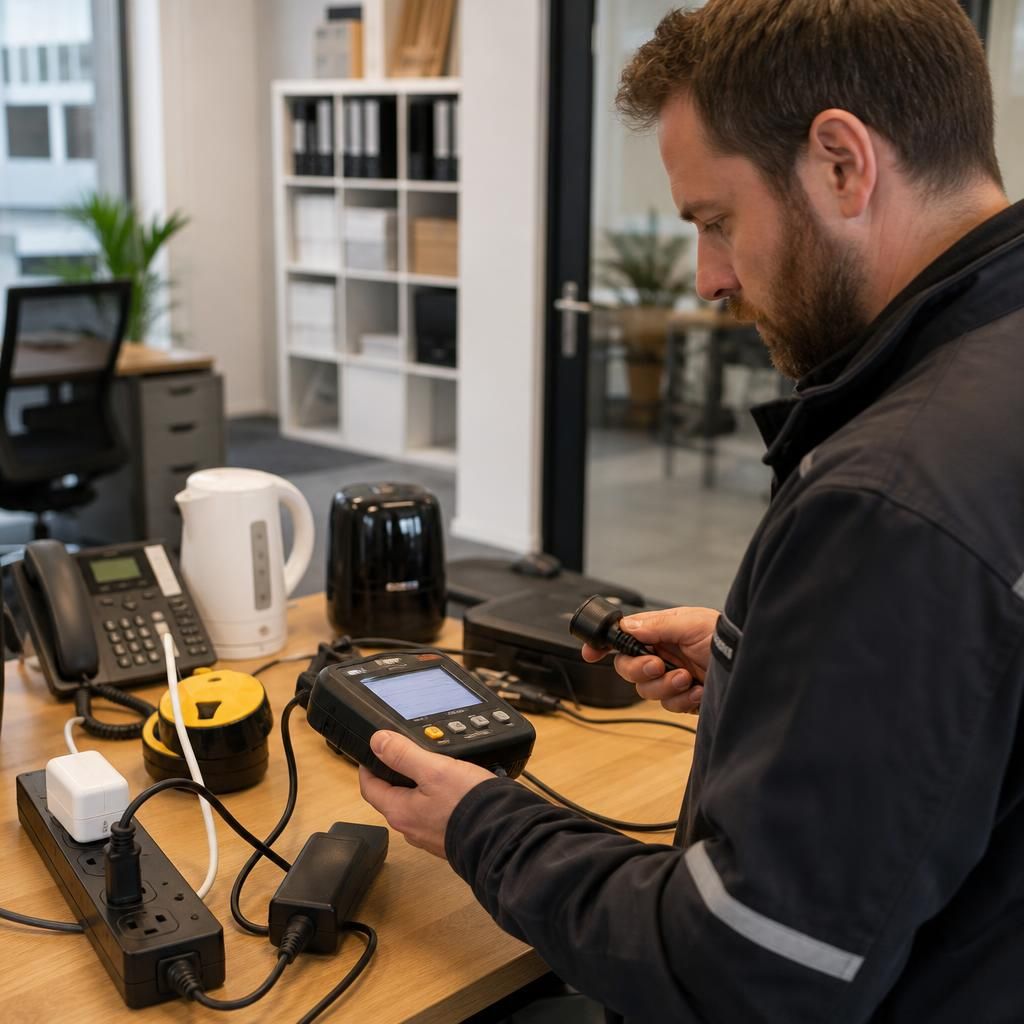
Is PAT testing charged per appliance or by the visit?
PAT testing can be priced per appliance or as a visit, depending on how many items need testing, where they are and what records you need. We use those details to provide a clear quotation before work starts, so you can see what the charge includes.
A per-appliance rate usually suits a large number of similar items in one place. A visit charge can be fairer when there are only a few appliances, several types of equipment or more time-consuming access arrangements. The important point is what the quoted price includes, not simply the charging label.
Per-appliance pricing is often used where the number of items is known and the work is repetitive. For example, a workplace with many desk appliances, extension leads and kitchen equipment may be priced using an agreed rate for each item. This makes the testing cost easier to estimate as the inventory changes.
That rate may not cover every part of the visit. Check whether the quotation also includes the engineer’s attendance, labels, results records and any minimum charge. A low item rate can give a misleading total if those costs are added separately.
Per-visit pricing charges for the engineer’s time at the premises rather than applying a separate rate to every appliance. This can work well for a smaller property or a mixed group of items. The same visit might include office equipment, kitchen appliances, power tools and extension leads, each requiring different checks.
A visit-based quote should still state the expected scope. Ask how many appliances the engineer expects to test during the visit and what happens if the count is higher. If the inventory takes longer than described, additional charges should be agreed rather than assumed.
A combined structure may be used when there is a visit charge plus a rate for each appliance, or a fixed allowance followed by an additional item rate. This can reflect the time needed to travel, set up, record results and pack away, while keeping the appliance element clear.
The number of appliances is only one part of the calculation. The following details can change the amount of work:
- Appliance type: a simple plug-in item may need less time than equipment with a longer lead, detachable parts or a more involved electrical test.
- Access: items spread across several rooms, buildings or floors take longer to locate, test and record.
- Availability: appliances may need to be switched off, unplugged or made accessible before testing can take place.
- Identification: unclear labels or an incomplete asset list can add time while items are matched to the results record.
- Condition: damaged plugs, leads, casings or signs of overheating may require the item to be taken out of use and recorded as failed.
- Documentation: a basic results record, individual labels, an asset register or a more detailed report may involve different amounts of administration.
Testing and repair should also be treated as separate parts of the quote. If an appliance fails, the test result can be recorded and the item identified for attention. Repair, replacement or a later retest may carry a separate charge unless the quotation specifically includes it. A clear quote should say this before work starts.
For a useful comparison, give each tester the same information: the number of appliances, their types, the number of rooms or buildings, access arrangements and the records required. Then compare the full total and exclusions rather than comparing the headline rate alone.
It is also worth checking whether the price includes:
- visual inspection and electrical testing where appropriate;
- pass or fail labels;
- a results schedule or electronic report;
- identification of failed or unsafe items;
- travel, setup and attendance time;
- retesting or remedial work, if required; and
- any minimum charge or additional time rate.
We ask for the appliance count, equipment types and layout before preparing a quotation. That helps separate the testing itself from access, recording and any work that may follow. The quotation sets out what is included before the visit, so the final charge does not depend on an unclear per-item assumption.
For electrical testing, our NICEIC and ECA credentials support a properly documented service, with results that can be used for maintenance records or property compliance. The practical value is a clear record of what was examined, what passed and what needs attention.
A quoted appliance count should refer to portable equipment, not every electrical point on the premises. Plug-in appliances, extension leads and power tools may be included, while sockets, lighting circuits and consumer units are separate electrical work.
If some equipment is fixed in place, tell us before we price the visit. We can then define which items are part of the PAT schedule and avoid charging for work that belongs in another inspection.