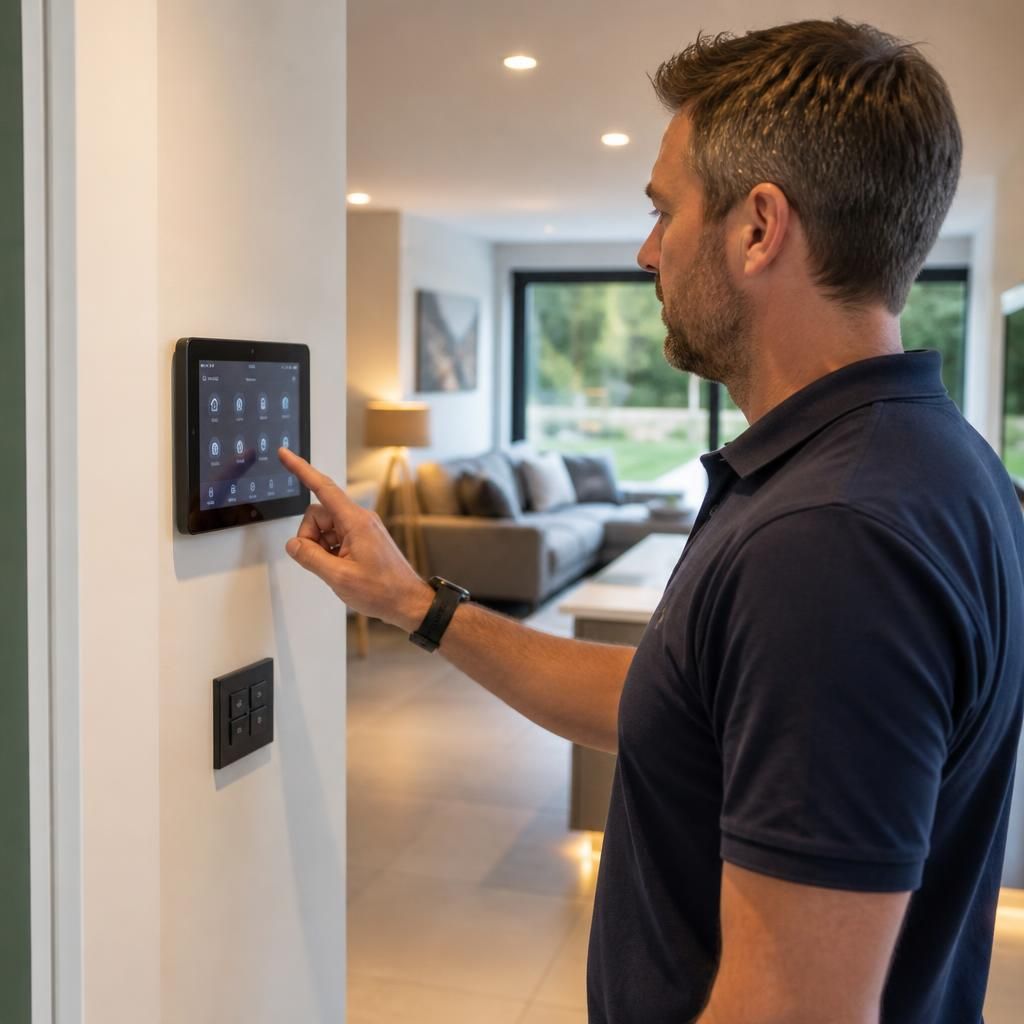
How much does smart home automation installation cost?
Smart home automation installation cost depends on the number of rooms, devices and controls, plus whether your home needs new wiring or can use its existing systems. We assess the property and provide a written quotation covering the equipment, installation and any electrical work before anything starts.
Smart home automation installation can cost relatively little for one controlled function, or considerably more when several systems need to work together. The main difference comes from the scope of the system: lighting alone needs less equipment and programming than a setup linking lighting, heating, security, blinds and access control.
An online device price rarely reflects the complete installation. The final cost also needs to allow for electrical checks, mounting, configuration, testing and any changes needed to make the equipment work safely with the existing home.
The equipment you choose
Smart switches, dimmers, sensors, thermostats and door controls each add to the equipment cost. A central controller may add more, but it can give the system a consistent interface and allow several functions to work together.
A simple arrangement might control lights from an app or voice assistant. A larger installation could use movement sensors to trigger lighting, reduce heating when the property is empty and send an alert when a door opens. Each extra function brings more devices to supply and more settings to configure.
Some products work mainly through the home network. Others need a dedicated hub or controller. We look at compatibility before specifying equipment, so you don’t pay for devices that cannot communicate properly with the rest of the system.
The condition of the existing electrics
Your existing switches and wiring may accept smart controls with little alteration, but older installations need checking first. Some products need particular conductors, deeper back boxes or enough space behind the switch. A missing neutral conductor, crowded accessory box or outdated wiring can change the amount of electrical work involved.
If the consumer unit, circuits or earthing arrangements need attention, we explain that separately rather than hiding it within an automation price. That work may not be caused by the smart system, but it can affect whether the installation is safe and compliant.
Electrical work forms part of the installation when the system needs new circuits, additional power supplies or changes to existing accessories. Our NICEIC and ECA registration covers the electrical work, so the controls are not treated as separate from the wiring that powers them.
Wireless and wired installations
Wireless controls can reduce cable installation in some rooms, while wired equipment may suit a larger project or a property being renovated. Neither approach suits every building. Thick walls, outbuildings, long distances and limited network coverage can affect wireless reliability.
Older solid-wall houses, barn conversions and listed properties often need more thought around cable routes and the appearance of switches and sensors. We can discuss the least disruptive route during the survey, but the building itself determines how much work the installation needs.
Programming and commissioning
Hardware is only part of the cost. We also configure rooms, users, schedules, scenes and sensor responses. A lighting scene might combine several circuits, while a heating control may need separate settings for occupied and unoccupied periods.
We test each control from the switch, app or other agreed interface. We also check what happens when a sensor does not respond or the network connection fails. That testing helps you understand which functions remain available locally and which depend on an internet connection.
Time spent setting up the system matters particularly when several devices need to work together. A lower equipment price does not necessarily mean a lower installed cost if the system needs extensive programming or repeated adjustments.
What happens during the assessment
We start by discussing the problems you want the system to address. You may want easier lighting control, better heating management, alerts when someone enters the property or a way to control several rooms from one place.
We then look at the wiring, consumer unit, network position, wall construction and proposed device locations. If you want heating included, we check the existing controls and the equipment they operate. That matters in older homes, where a new controller may need to work alongside established wiring and heating components.
The quotation should show the equipment, electrical work, installation, configuration and testing as separate elements. It should also identify assumptions, such as suitable network coverage, accessible wiring and any work that falls outside the proposed system. We provide that written breakdown before work starts, so you can compare the scope rather than just the headline equipment price.
Costs after installation
Some automation products work without a continuing payment. Others may offer optional cloud storage, remote access or monitoring through a subscription. We identify any ongoing charge associated with the specified equipment before you decide.
Future changes can also affect the overall cost. Adding one room later may be straightforward if the original system has spare capacity and compatible equipment. Replacing the controller or mixing unrelated platforms can make an extension more complicated, so we discuss likely future additions during planning.
How to keep the project within scope
- Start with the functions that matter most. Controlling every device at once can make the system harder to use and more expensive to install.
- Separate essential work from optional upgrades. Any electrical safety work should remain distinct from convenience features.
- Choose a system that can expand. A compatible controller can make later additions simpler, provided the wiring and network can support them.
- Allow for the building. Cable access, wall construction and outbuildings can influence labour more than the price of an individual device.
- Ask what happens without the app. Local switches and practical fallback controls can be important in a busy household or an older property.
The most useful way to establish smart home automation installation cost is to define the functions, inspect the property and separate equipment from the work needed to install and configure it. That gives you a realistic basis for deciding whether to automate one room, phase the project or connect several systems at the same time.
If several devices are already in place, replacing everything may not be necessary. We map what each switch, thermostat and sensor does before recommending additions. Sound wiring and useful controls can then remain, keeping the quotation focused on the functions that will make a practical difference.
That approach also gives you a clearer comparison between a targeted upgrade and a complete installation. You can see which part of the cost adds a new function, rather than paying to remove equipment that still works.