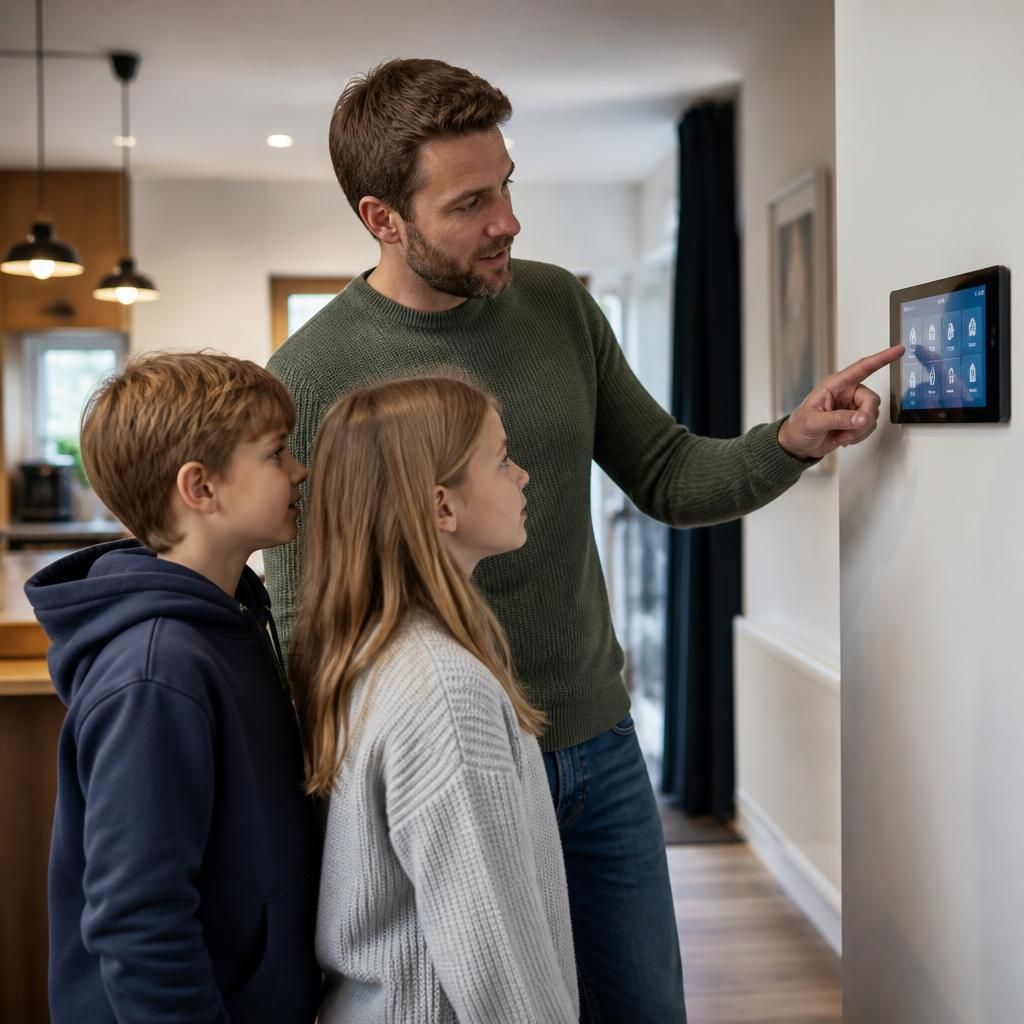
Are smart home automation systems difficult to use?
No, most smart home automation systems are designed for straightforward everyday use. We configure the controls around how you use your home and explain them clearly, so adjusting heating, lighting or security doesn’t become a technical task.
For most households, smart home automation is straightforward once the system has been planned around the way the property is used. The difficult part is usually choosing sensible controls and linking devices correctly, not operating them day to day.
Good automation removes decisions rather than adding them. A heating schedule can follow the household routine. Lighting can respond to occupancy or a simple scene button. Blinds, ventilation and security devices can be controlled separately or grouped together. Each function should still have a clear manual control, so nobody has to reach for an app for a basic task.
Your household may include people with different levels of confidence around technology. We can keep everyday controls simple, with labelled switches, ordinary thermostats or a small number of clearly named scenes. More advanced settings can remain available without appearing in the controls used each day.
The system becomes harder to use when several apps, duplicate commands or unclear device names are involved. We reduce that problem during the design stage by checking which equipment needs to communicate and deciding where each control belongs. A room-by-room plan helps prevent a wall panel being placed where it is inconvenient, or a useful function being buried inside a menu.
Your existing wiring and equipment also affect the final experience. Older properties may have limited cable routes, unusual room layouts or heating controls that were added at different times. We assess those practical details before recommending an arrangement. That can mean using existing switches where appropriate, adding new control points during electrical work or keeping some equipment independent instead of forcing every function into one system.
Before we leave, we commission the controls with you. We show which button, sensor or screen operates each function and explain the settings that are likely to matter. We can also label rooms and devices in plain language, so a command such as “downstairs lights” means exactly what you expect.
Some households want only a few useful automations. Others prefer more detailed control of heating, lighting, energy use and security. Starting with the routines that solve a real problem usually makes the system easier to understand. Additional functions can then be added later if the equipment and wiring allow it.
- Heating: schedules and temperature changes can be organised around occupancy, rather than adjusted repeatedly at the wall.
- Lighting: one control can operate several lights together, while separate manual switching remains available.
- Energy use: monitoring can make generation, storage and household demand easier to understand.
- Security: sensors and alerts can be arranged around the entrances and areas that matter to you.
If a setting seems confusing after installation, we can identify whether the issue is the control, the device or the way the system has been programmed. We keep the handover focused on the functions you will actually use, rather than expecting you to learn every available option.
The right level of automation depends on the household, the property and the equipment already installed. A short discussion about daily routines, access needs and preferred controls gives us a better starting point than adding features simply because they are available.
Not everyone in the household needs the same level of access. We can keep everyday controls available to everyone, while leaving programming and technical settings with the people who manage the system.
That means a visitor can operate the lights or adjust the temperature without navigating an app. The person responsible for the home can still review schedules, alerts and energy information when needed. Clear access arrangements help the system stay practical as household members, tenants or regular visitors change.