
Can I control smart lights with voice commands?
Yes. With compatible smart bulbs, switches or a lighting hub, you can turn lights on and off, dim them and sometimes select scenes using spoken commands.
The exact commands depend on the voice assistant and lighting system, so we check compatibility before installation and set up the controls to suit your household.
Voice commands work through a smart bulb, smart switch or lighting hub that can communicate with the voice assistant in your home. Once the system is linked, you can control individual lights, rooms or groups using ordinary phrases rather than finding the switch or opening an app.
Your lighting needs clear names before voice control feels natural. We set up room names and groups such as “kitchen lights” or “upstairs”, then configure scenes for common routines. A single command might turn off the downstairs lights, dim the sitting room or switch on the lights used when you arrive home.
Simple commands usually include:
- Switching a light or group on and off
- Setting a particular brightness level
- Increasing or reducing brightness
- Activating a scene, such as evening or reading
- Controlling lights in a named room
The equipment you choose affects what the system can do. Smart bulbs are straightforward when you want to control individual lamps, but they must remain powered at the wall. If someone switches that circuit off, the bulb cannot hear a voice command. Smart switches keep the normal wall control available and can suit rooms where several fittings need to operate together.
Your existing wiring also matters. Older homes may have two-way switching, limited space behind the back box or no neutral conductor at a switch position. Some smart switches need a neutral connection, while others use a different arrangement. We identify this before recommending equipment, so the voice control does not depend on an unsuitable switch or an unreliable LED load.
Dimming needs particular care. A voice command can request a lower brightness, but the lamp, driver, dimmer and control system must all support one another. If they do not, the light may flicker, fail to dim smoothly or switch off at lower settings. We check the fitting and dimming method rather than assuming that every LED lamp will work with every smart control.
Internet access is commonly needed for voice assistants to process commands, especially when you are controlling the lighting remotely or using cloud-based scenes. The wall switch should still provide a practical manual fallback. We test both methods, including commands for separate rooms and groups, so a family member does not need to remember the exact phrase used during setup.
Several people can usually use the same lighting system, but each person may need access through the relevant household account or app. We can help organise permissions and naming so that duplicated room names do not confuse the assistant. Privacy settings remain controlled through the voice assistant account, including microphone controls and voice-history options.
During installation, we check the selected fittings, switch positions, wireless signal and access to the lighting controls. We then pair the devices, name the rooms, configure scenes and test commands from the places where they will normally be used. You end up with voice control that complements the existing switches rather than leaving the lights dependent on a single method of control.
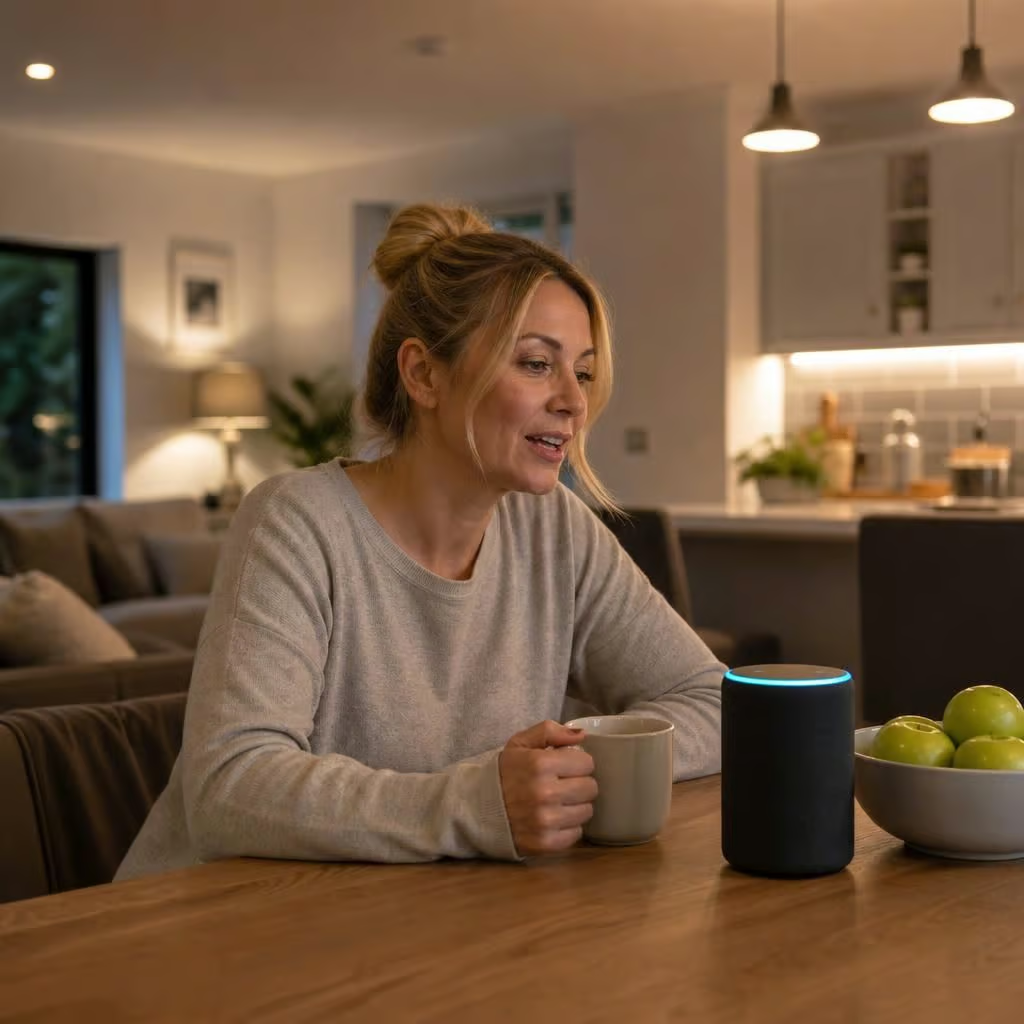
Voice control doesn’t require a microphone in every light. The assistant hears the command through a compatible speaker or phone, while the switch, bulb or hub carries it to the lighting circuit.
That keeps the arrangement easier to understand: the voice assistant provides the command, and the lighting control still decides whether the light switches, dims or runs a scene. We explain which part does what during setup, so you know what to check if a command isn’t recognised.