
Can smart lighting control be added without replacing every light?
Yes. We can usually add smart lighting control by fitting compatible smart switches, relays or bulbs while keeping suitable existing fittings, replacing only lights or switches that cannot support the chosen control system.
In most homes, smart control can be added around the existing lights. The main decision is whether the control belongs at the wall switch, inside the ceiling or back box, or in the lamp itself.
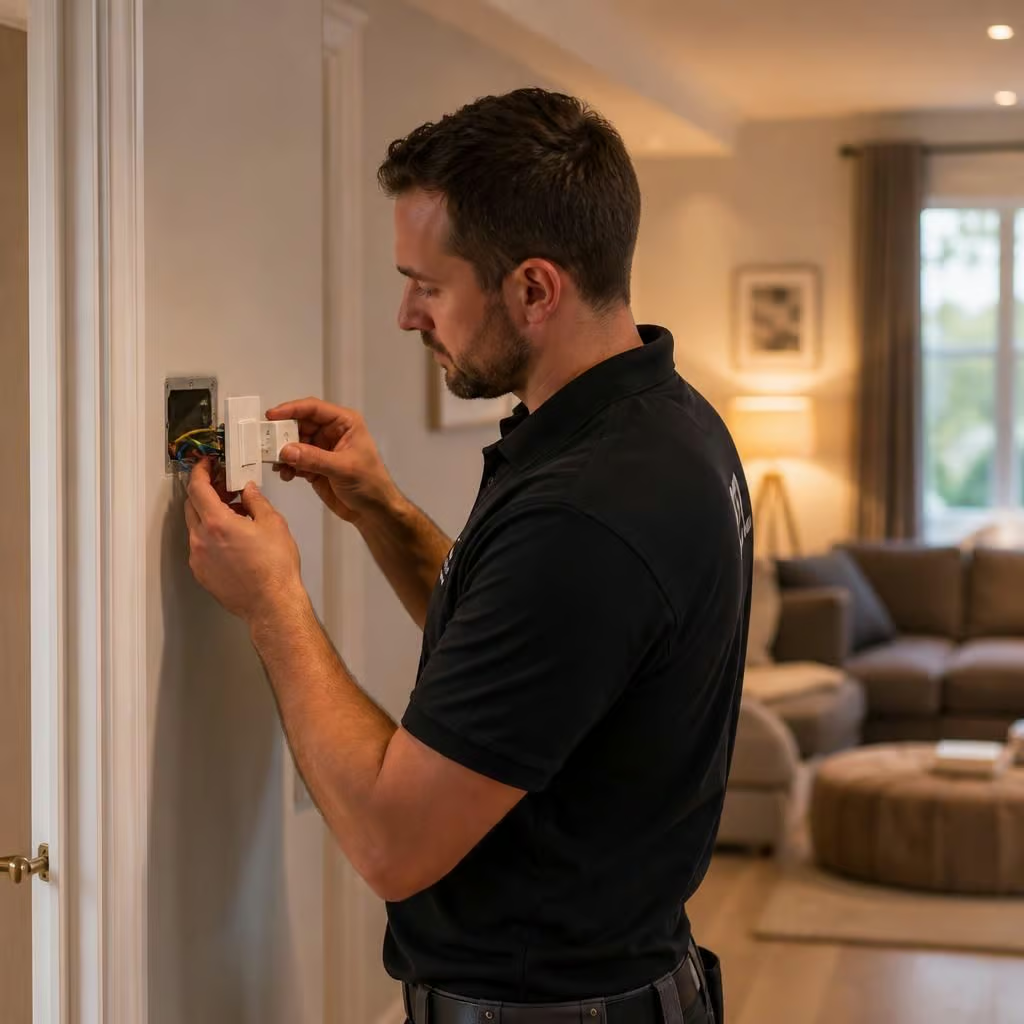
Smart modules behind existing switches are often the least visible option. They leave the wall plate and light fittings in place while adding app control, schedules and scenes. This suits rooms where the existing switches are in good condition and there is enough room for the module.
A smart switch replaces the existing switch plate. It can be the better choice when the current switch is worn, when you want a clearer control layout, or when several lighting circuits need to work together. The lights stay in place, but the switch must suit the circuit and the type of load it controls.
Smart lamps are another route. They work well when you want colour control or individual lamp adjustment without changing the fixed wiring. The wall switch must remain on for the lamp to receive power, so this approach may not suit a busy family room or a light that people regularly turn off at the wall.
LED lighting needs particular care. Some LED lamps draw too little current for older dimmers or smart controls, which can cause flickering, buzzing or a lamp that glows when it should be off. Dimmable LEDs also need a compatible dimmer and a suitable minimum load. A fitting that works perfectly on a standard switch may therefore need a different control module.
Older wiring does not automatically rule out smart control. Some devices need a neutral connection at the switch, while older lighting circuits may not have one there. We identify the wiring arrangement rather than assuming that a like-for-like switch will work. Where a wall-mounted device is unsuitable, a different module position or a wireless control can avoid unnecessary changes to the lighting circuit.
Two-way switching needs its own assessment. A landing light controlled from both ends of the stairs cannot always accept a standard smart switch at one location. We check how the switches are linked and choose equipment that preserves control from both positions. Multi-way arrangements, borrowed neutrals and older alterations can all affect which method is safe and reliable.
The existing back box can also limit the choice. A shallow box may not hold a module behind the switch, particularly where several cables are present. We check the available space and the cable terminations before recommending a device. If the box needs to be deeper, we explain the work before anything is changed.
- The current switches and fittings can often remain.
- Only the circuits that need smart control need to be altered.
- Traditional switching can usually be retained where the chosen equipment supports it.
- Unsuitable lamps, dimmers or transformers can be identified before they create faults.
- The finished controls can be grouped by room, circuit or scene rather than replacing every fitting.
For a period property, listed building or home with unusual lighting alterations, retaining the visible fittings can be especially useful. We can keep the character of the room while changing the control method, subject to the condition and arrangement of the wiring. Decorative fittings with electronic transformers or integrated LEDs need individual checks because their internal components may not accept every type of smart control.
The work normally involves isolating the relevant circuit, checking the switch and load, fitting the selected control, and testing each switching position. We also check that the lights operate correctly from their physical controls before setting up the smart functions. You do not need to replace unaffected fittings simply because one circuit needs a new control.
Electrical alterations are carried out by our NICEIC- and ECA-registered team. That means the wiring changes are assessed as electrical work, not treated as a plug-in gadget installation. If a circuit condition or previous alteration makes the upgrade unsuitable, we explain what needs correcting instead of fitting equipment that the existing installation cannot support.
The result may be a mixed installation: some rooms using smart modules, another using smart lamps, and ordinary lights left unchanged. That is often more practical than forcing every fitting into one arrangement. We can set out which lights can be upgraded, which need a compatible lamp or control, and which are better left on their existing switches.
If you want one room to switch together, the lamps do not all need individual smart functions. A suitable module can control a compatible lighting circuit as a group, while the existing fittings stay in place.
Individual smart lamps are mainly useful when you need separate colour or brightness settings. We establish whether room-wide switching or individual control matters most, then avoid adding costly smart components where they would make no practical difference.