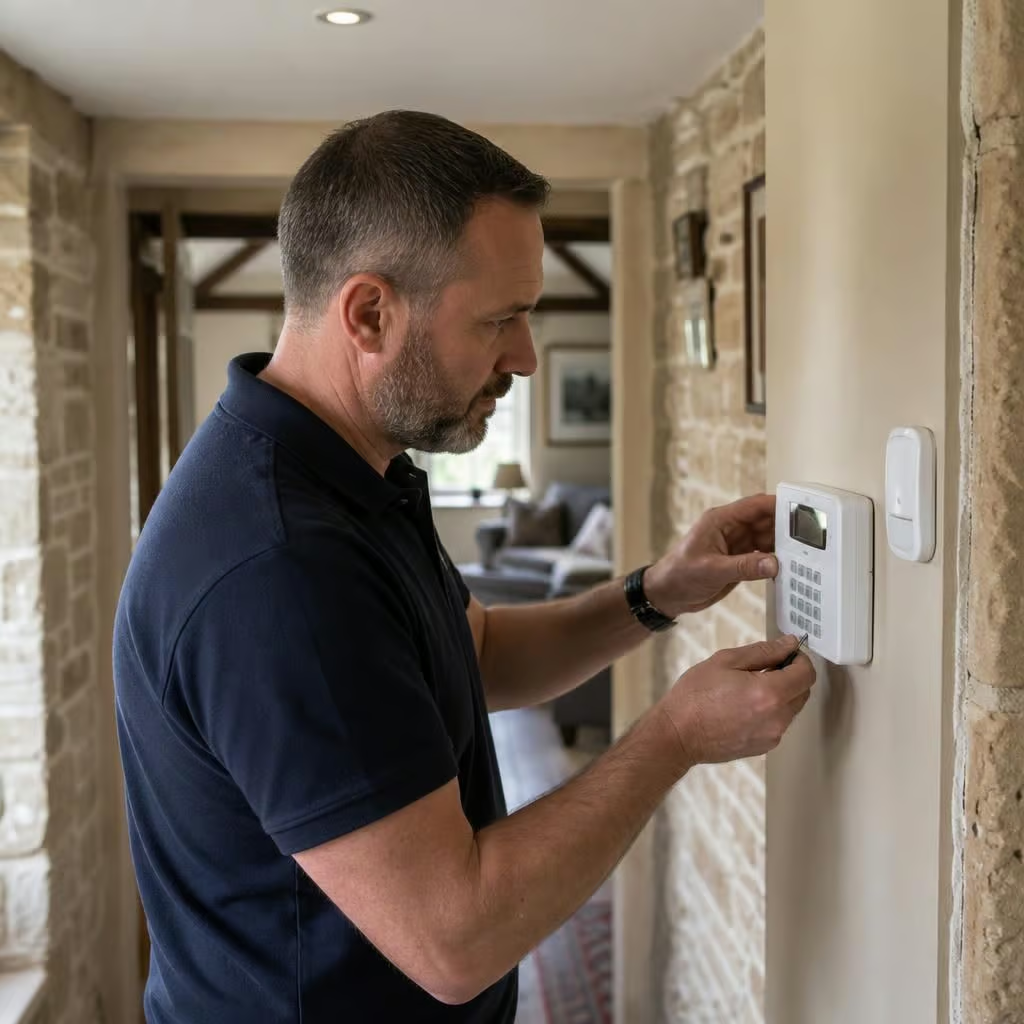
Will a smart alarm work in an older house with thick walls?
Yes, a smart alarm can work in an older house with thick walls, but standard wireless signals may struggle between rooms. We check the building layout and use suitable sensor positioning, signal repeaters or wired connections where needed, so every device communicates reliably.
The important factor is the radio path between each detector and the alarm hub, rather than the age of the house on its own. Dense stone, solid brick, metal-backed insulation, steel lintels and several floors can all weaken that path. A reliable installation therefore starts with the building layout and the position of every device.
Why older houses can be more challenging
Many older properties have thick external walls and internal partitions that do not follow a simple modern layout. A detector at the back of a stone house may need to communicate through several dense walls before reaching a hub beside the front door. A sensor in a converted barn, cellar or detached garage may be further away than the floor plan suggests.
Foil-backed insulation, metal ducting, large appliances and consumer units can create additional obstacles. A cupboard may look like a convenient place for the hub, but a metal enclosure or dense services around it can make the wireless route worse. A centrally positioned hub usually gives more even coverage across the house.
Where the alarm hub should go
Your hub needs a clear and consistent route to the sensors, not simply a strong signal in the room where the installer first switches it on. We look at the floors, wall construction, entrances and rooms that need protection before choosing its position.
A central hallway or landing often works well, but it is not right for every property. A hub hidden inside a cupboard, placed against a thick outside wall or positioned beside large metal objects may perform poorly. We also consider access to power, the broadband router and the route for any discreet cable.
The external siren and keypad need separate consideration. Their positions affect both radio communication and practical use. You should be able to unset the alarm without crossing a protected area, while the siren should be visible and securely fixed.
When a signal extender is appropriate
An extender can help when one part of the property sits beyond the useful range of the hub. It should sit where it still receives a strong signal, rather than inside the weak area itself. Putting it at the end of a long corridor or behind the final thick wall will not necessarily solve the problem.
Large or irregular houses may need more than one radio path. The system’s design determines whether extenders can relay signals reliably and how many can be used. We test the proposed arrangement rather than adding equipment simply because the house has thick walls.
When wired connections are the better choice
A remote garage, workshop, outbuilding or basement can be difficult to cover wirelessly. If a dependable cable route exists, a wired detector or a hybrid alarm panel may be more suitable than repeatedly extending the wireless signal.
Wiring can also make sense for an important entrance or a point separated by several solid walls. In an older or listed property, we plan the route carefully to avoid unnecessary damage to plaster, stonework or original features. You will know where cables need to run and what access the work requires before installation starts.
Alarm radio is not the same as home Wi-Fi
Smart alarms commonly use a dedicated radio link between the hub and its sensors. The app may use the home’s broadband connection for notifications and remote control, but that is a different part of the system. A weak Wi-Fi signal in a bedroom does not automatically mean that the alarm detector will fail there, and strong Wi-Fi does not prove that the alarm radio link is reliable.
We check both connections where app control is part of the installation. This helps separate a sensor communication problem from a router or broadband problem. The system should also report a lost detector connection or low battery clearly, so a fault does not remain unnoticed.
How we check coverage in an older house
-
Your priorities determine which doors, rooms, outbuildings and access routes need protection.
-
The building layout shows where stone, brick, floors, extensions and detached structures could interrupt the signal.
-
We choose a provisional hub position and test the route to each proposed detector location.
-
We test difficult points with doors closed and the equipment in its intended position, rather than testing only in an empty room.
-
Where the readings are unsuitable, we change the hub position, use a correctly placed extender or plan a wired connection.
-
After fitting, we test every zone again and show you how the alarm reports a communication fault or low battery.
This matters because a system can appear to work during a quick demonstration while one back door or upstairs sensor has an unreliable connection. Testing the final positions gives a more useful result than testing the equipment on a workbench.
What happens if the house has thick internal walls?
Thick internal walls do not mean every sensor needs wiring. The front and rear of a property may communicate well while a single extension, loft room or detached building needs a different arrangement. We design around those weak points instead of treating the whole house as unsuitable.
Sensor placement matters as well as signal strength. A door contact needs to sit accurately on the door and frame. A motion detector needs a clear view across the room without being aimed at a radiator, window or moving curtain. Correct positioning reduces false alarms and can let the system protect the property with fewer devices.
Ask what has been tested
For an older house, ask whether the installer has tested the actual sensor positions after fitting. It is also worth checking where the hub and any extenders will go, which areas will use cable, and how the system identifies a lost connection.
We explain those choices before work begins. The result should leave you knowing which parts communicate wirelessly, where any cable runs, how to use the app and what the alarm will tell you if a device needs attention.
Older homes often need a mixed approach rather than an entirely wireless alarm. Existing cable routes, loft spaces or accessible floor voids may allow us to connect a few critical devices without disturbing finished walls. Other sensors can then remain wireless where the radio path is reliable. This keeps the system practical while limiting drilling and visible cable runs in rooms with exposed stone, original plaster or timber features.