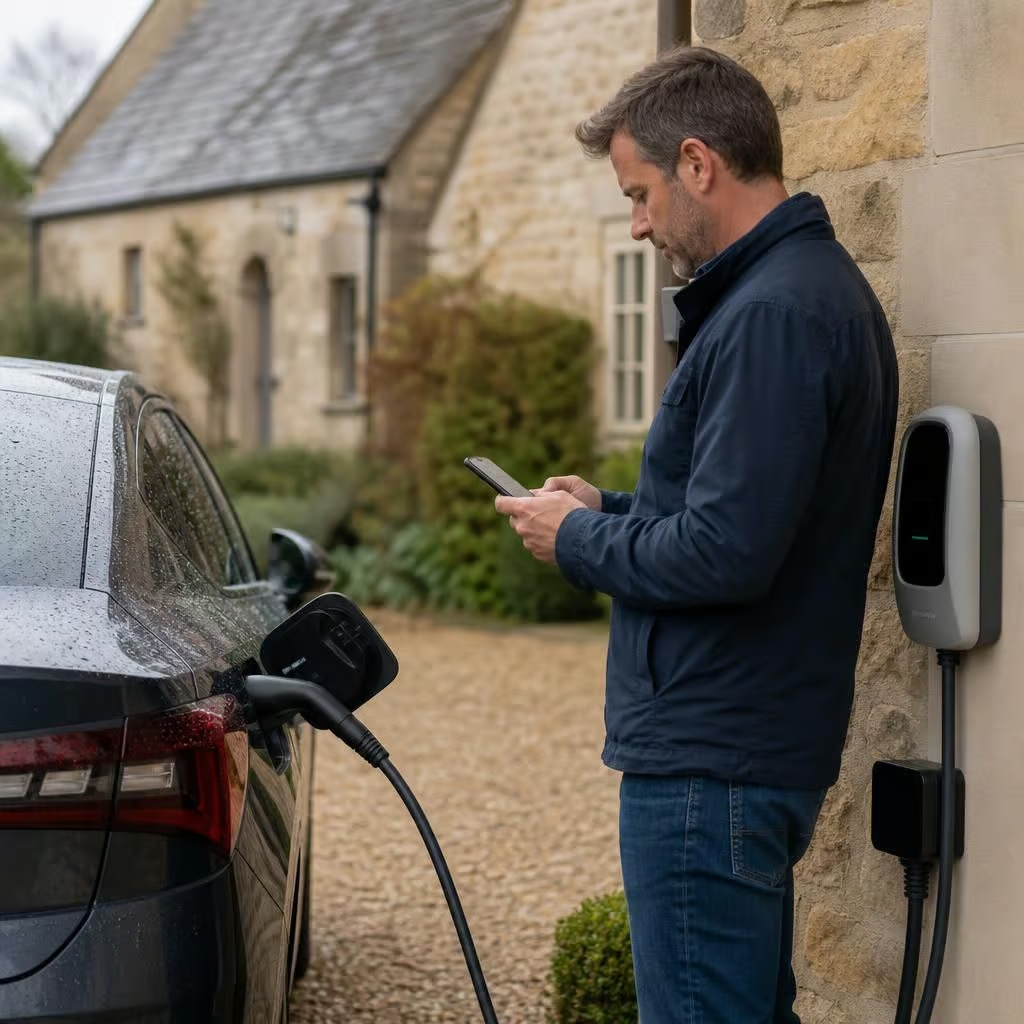
How much does a 22kW EV charger installation cost?
A 22kW EV charger installation cost depends on the charger, cable route, existing electrical supply and any required upgrades. We assess these factors before work starts and provide a written quotation covering the equipment, installation and any additional electrical work.
A 22kW EV charger installation usually costs more than a standard home charger because it may need a three-phase supply, heavier electrical equipment and more extensive installation work. The charger itself is only one part of the price. The final cost depends on the property, the vehicle and the route between the supply and the charging point.
The main parts of the installation cost are:
- Charger equipment: the price varies between models and features. Some chargers include app control, access control, energy monitoring or load management.
- Electrical protection: the installation may need a suitable circuit breaker, residual current protection, isolator and other protective equipment.
- Cable route: a short route through an accessible garage or utility area costs less to install than a long route around the outside of the house.
- Consumer unit work: the existing board may need space, additional protection or replacement if it cannot safely support the new circuit.
- Supply alterations: a 22kW charger normally needs three-phase electricity. If the property has a single-phase supply, changing the supply can become the largest part of the installation cost.
- Building work: drilling, trenching, ducting, surface protection or reinstatement can add to the labour and materials.
Check the electricity supply before comparing charger prices. Most homes have a single-phase supply, while a 22kW charger normally draws power across three phases. A charger can be advertised as 22kW, but that does not mean every house can use it at that rate. We check the incoming supply, the available capacity, the earthing arrangement and the existing distribution equipment before confirming that the installation is practical.
If the property has no three-phase supply, the electricity network operator may need to assess an upgrade. That process can involve separate application, design and connection charges. The work may also require changes to the meter position or the main distribution equipment. We explain any network-related requirement separately rather than treating it as a standard charger installation.
The vehicle matters as well. Some electric cars cannot accept 22kW AC charging, even when the charger and property can provide it. In that situation, the car limits the charging rate and a higher-rated unit may not reduce charging time. We check the vehicle’s onboard AC charger before recommending 22kW equipment.
The cable route has a direct effect on the price. A charger close to the consumer unit may need less cable and fewer fixings. A detached garage, outbuilding or parking space at the far side of the property may need armoured cable, external containment or a trench. At an older property, concealed cable routes can also involve more investigation and careful making-good.
Load management can affect the equipment cost too. If the house has an electric heating system, solar panels, battery storage or other high-demand appliances, we may recommend controls that reduce the risk of the charger competing with the rest of the electrical load. This can be preferable to paying for a larger supply upgrade, but the right approach depends on how the property uses electricity.
An older consumer unit does not automatically prevent installation. It does need to provide suitable protection and have enough capacity for the new circuit. We may identify remedial electrical work before the charger can be connected. The quotation should show this work clearly, so the cost of making the installation safe is not hidden inside an installation allowance.
A longer cable run or a more complicated route does not necessarily make the charger unsuitable. It changes the labour, materials and sometimes the planning of the work. We can explain whether surface-mounted cable, underground ducting or another route is the most appropriate option for the building and parking position.
For an older, listed or converted property, the installation may need more care around masonry, visible cablework and protected parts of the building. The charger still needs to be positioned where the cable reaches the vehicle without creating a trip hazard. We discuss the practical route before work begins rather than assuming a standard modern house layout.
A useful quotation should identify the charger model, cable length or route allowance, protective equipment, consumer unit work, testing, commissioning and any exclusions. If a three-phase connection or network upgrade is needed, that should appear as a separate item. This lets you compare like with like instead of comparing one equipment price with another complete installation.
We carry out the electrical work under NICEIC and ECA standards, then test the circuit and provide the relevant installation paperwork. The result should be a charger that suits the vehicle and the property’s electrical capacity, rather than simply the highest-rated unit available.
The most reliable way to establish the cost is to assess the supply, parking position, cable route and existing consumer unit together. Once those points are known, we can separate the charger cost from any electrical, building or supply-upgrade work in the written quotation.
The most expensive option is not always the most useful one. If the car is parked for several hours, a lower-rated charger may meet your needs without the extra supply or installation work associated with 22kW charging. We compare the car’s AC charging limit with how you use it, so the quotation reflects a practical charging rate rather than the highest available specification.