
Is a 22kW home charger suitable for an older property?
A 22kW home charger may suit an older property, but only if the car accepts 22kW AC charging and the property has a suitable three-phase electricity supply. We check the incoming supply, earthing and existing wiring before advising whether 22kW is practical or a lower-power charger is the safer choice.
Yes, an older property can take a 22kW home charger, but the age of the house is not the deciding factor. The important points are the condition of the electrical installation, the available capacity and the route from the supply to the parking space.
An older consumer unit may not provide the protection expected for a modern EV charging circuit. We inspect the board, earthing and bonding, cable condition and existing circuits before deciding what needs changing. That does not automatically mean a full rewire. In many homes, the work is limited to upgrading the consumer unit or correcting specific faults.
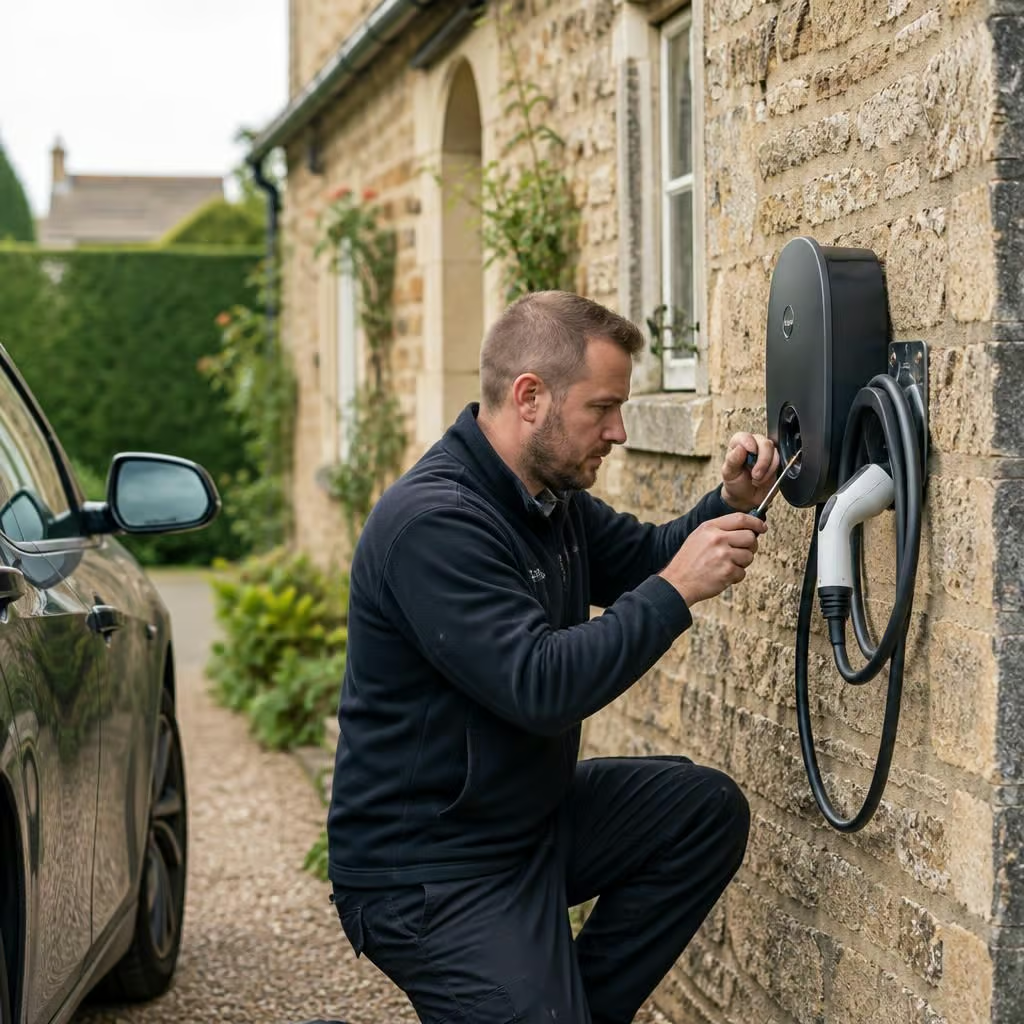
The charger needs its own correctly protected circuit. If the parking space is close to the house, we may route the cable through the wall and along an external surface. A detached garage, barn or driveway can require a longer route, buried ducting or additional protection against damage. Older rural properties often need more thought here because the consumer unit and parking area may be in separate buildings.
The main electrical supply also needs to cope with the charger alongside the rest of the house. Electric cooking, immersion heaters, heat pumps, electric heating and workshop equipment can all contribute to the maximum demand. We assess how those loads operate together rather than looking at the charger in isolation.
Where the available capacity is limited, load management may help by reducing the charging rate when other large appliances are running. That can make a suitable installation practical, but it does not create extra supply capacity. If the property cannot safely support the required load, we explain the alternatives rather than fitting equipment that would overload the installation.
- Consumer unit condition: We identify outdated equipment, missing protection and any faults that need attention first.
- Earthing and bonding: Older installations may need remedial electrical work before a charger can be connected safely.
- Cable route: We plan the route around walls, floors, outbuildings, driveways and exposed areas, keeping disruption proportionate to the job.
- Parking position: The cable must reach the vehicle without creating a trip hazard or crossing a route where it could be damaged.
- Existing demand: We consider the way the house is heated and used, including other high-power equipment.
Solid-wall houses, barn conversions and listed properties can still be suitable. The installation may need a carefully chosen cable route to avoid unnecessary chasing, visible damage or changes to significant fabric. If consent is needed because of the building or its setting, we flag that before work begins.
A solar PV system or home battery does not automatically make a 22kW charger suitable. The charger still needs an appropriate connection and protection. We can consider the wider electrical system so that the charger, generation and storage work together safely, but we do not treat a battery as a substitute for the required supply capacity.
Our survey starts with the incoming supply and consumer unit, then follows the proposed cable route to the parking space. We discuss any remedial work, access requirements and visible equipment before providing a written quotation. If the installation needs more than a charger and cable, you will know what that work is for and what it changes.
For an older property, a safe installation may therefore involve a charger circuit only, a consumer unit upgrade, improvements to earthing and bonding, or a wider supply assessment. The correct answer depends on the installation in front of us, not simply on the age of the building.
Electrical work for the charger is carried out by our NICEIC- and ECA-registered team. That means the inspection covers the existing installation as well as the new charging equipment, with the relevant electrical certification provided when the work is complete.
A 22kW charger only delivers 22kW if the car’s onboard AC charger can accept it. If the car is limited to a lower rate, upgrading an older property’s electrical supply will not make it charge faster.
We therefore check the vehicle’s charging specification before recommending electrical work. A lower-power charger may provide the same practical result without unnecessary changes to the incoming supply.