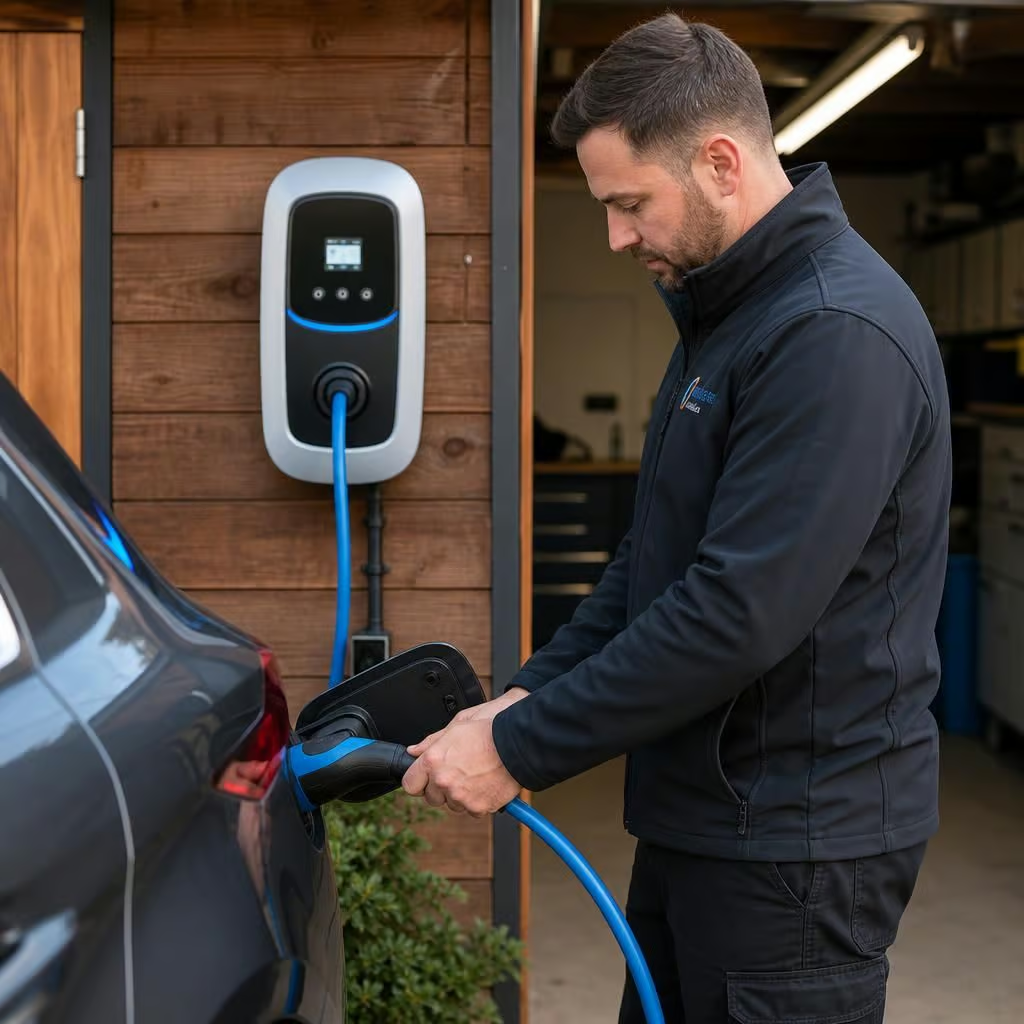
What information do you need to recommend a 3-phase EV charger accurately?
We need details of your electrical supply, parking position, vehicle, charging pattern and any major electrical loads. We then assess the existing installation and cable route, so we can recommend a 3-phase charger that fits the property and how you use it.
The most useful information is a clear picture of the electricity supply, the parking arrangement, the vehicle’s charging capability and how you expect to charge. We use those details to recommend a charger that fits the property rather than selecting a unit from its output rating alone.
Your electricity supply
We need to confirm that the property has a genuine three-phase supply, not simply a large single-phase supply. A recent electricity bill, meter photograph and a photograph of the incoming supply equipment can help us make an initial assessment. We also need to know whether the supply serves a house, a workshop, an agricultural building or more than one property.
A three-phase charger can still be unsuitable if the available capacity is already used by other equipment. Tell us about electric heating, an air source heat pump, an immersion heater, solar panels, battery storage, machinery, hot tubs and other high-demand appliances. The time at which those loads operate matters too. We use this information when considering the charger rating and whether load management should form part of the installation.
Your vehicle and charging habits
The car determines how much power it can accept through its AC charger. Some vehicles cannot use the full output available from a three-phase unit, so we need the make, model, battery size and model year where possible. The vehicle handbook or manufacturer’s specification can confirm its maximum AC charging rate.
Tell us how far you normally drive, when the car is usually parked and how much charge you expect to add during a typical day. Someone who charges overnight after a short commute has different requirements from someone who returns with a low battery and needs to leave again soon. We can then compare the vehicle’s limits with the supply and recommend an appropriate charging rate.
It also helps to know whether more than one electric vehicle may use the installation. A second charger, a future vehicle or visitors’ vehicles can affect the position of the equipment, cable arrangement and demand management.
The parking position
We need to know where the vehicle will normally park, not just where the electricity meter is located. A photograph or simple sketch showing the house, garage, driveway, carport or parking bay gives us a useful starting point. Shared drives, communal parking and rented properties may require permission from another owner, a managing agent or a landlord.
If the charger will be outside, we consider exposure to rain, vehicle impact and the route taken by the charging cable. A garage installation may need a different enclosure or cable position, particularly if the car is parked outside the garage door. The final position should allow the cable to reach the vehicle without crossing a public path or creating a trip hazard.
The cable route
Photos from the proposed charger position back to the meter or consumer unit help us identify the likely installation method. We look for external walls, loft spaces, floors, outbuildings, driveways, gates and other structures that may affect the route.
A long route may require additional protection, more substantial cable support or trenching across a driveway. We also need to know whether the route crosses land that is shared, rented or subject to restrictions. If you have building plans, previous electrical drawings or details of underground services, send them before the survey.
Existing electrical equipment
Photographs of the consumer unit, meter area and any existing outbuilding distribution board help us identify the age and arrangement of the installation. We look for available space, existing protective devices, cable condition and evidence of earlier alterations.
We may need to inspect the earthing arrangement and test the installation before the charger can be connected. If the existing equipment cannot provide the required protection, we explain the necessary upgrade before work begins. This may affect the position of the charger and the overall installation cost.
Documents and practical details
- The property address and postcode help us check the installation setting and access arrangements.
- A recent electricity bill or supply information can help confirm the connection details.
- Photographs of the meter, consumer unit, parking area and proposed cable route show what may not be clear over the telephone.
- Details of solar panels, a battery, an existing charger or other electrical work help us understand how the systems interact.
- Information about listed-building status, planning restrictions, a lease or shared access can affect the proposed equipment position and cable route.
We then carry out a site survey where the photographs and documents cannot answer everything. We check the supply and earthing, measure the route, assess the mounting surface and consider how the charger will be used in practice. The recommendation sets out the charger type, protective equipment, cable route and any work needed before installation.
For electrical work, our NICEIC and ECA registration reflects the inspection and certification requirements that apply to the installation. You receive a written quotation before work starts, with any required upgrade shown clearly rather than added as an unexpected charge.
The charger’s rating is only part of the decision. Your car’s onboard AC charger controls how much power it can accept, so a higher-rated 3-phase unit cannot make the vehicle charge beyond that limit.
We match the equipment to the car’s actual AC capability and the supply available at the property. That avoids specifying a charger whose extra capacity the vehicle cannot use, while leaving the installation suitable for the way you intend to charge.