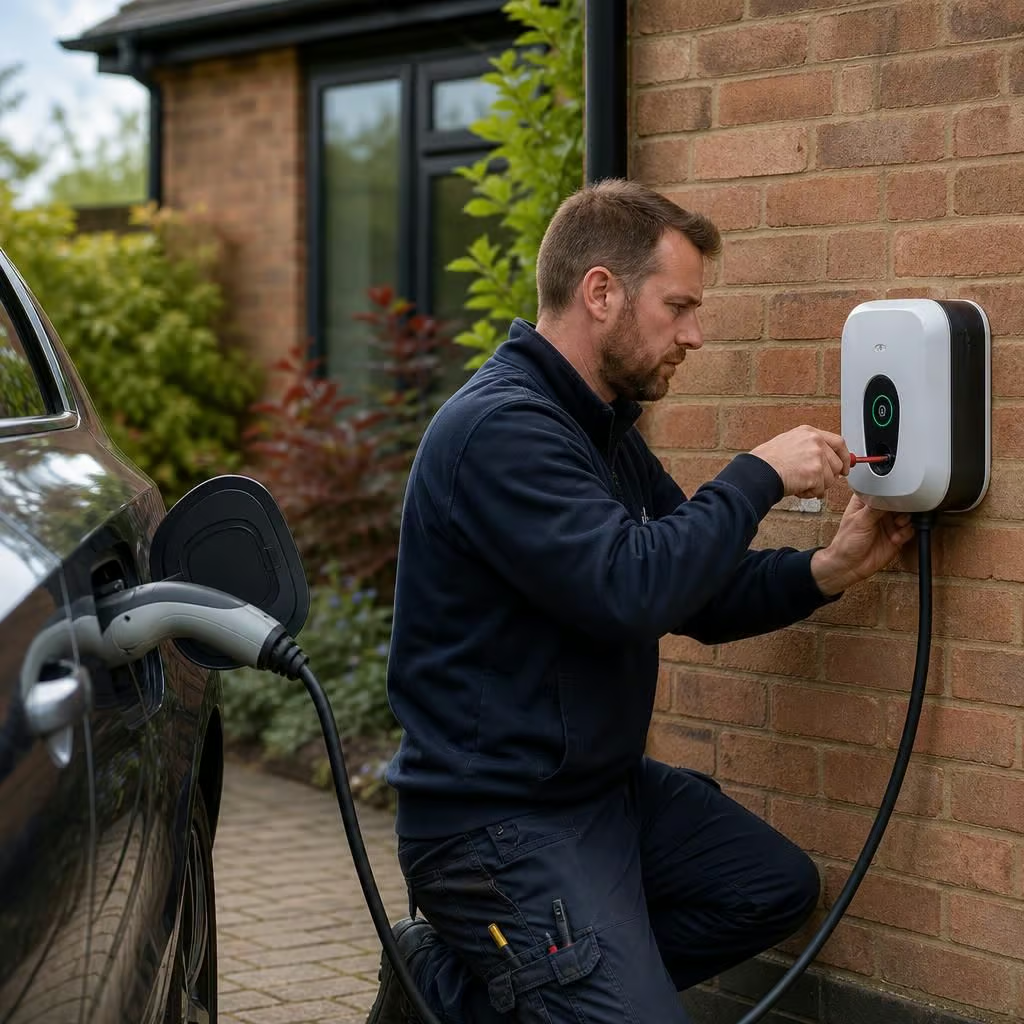
How much does a 7kW EV charger installation cost?
A 7kW EV charger installation has no single fixed price: the total depends on the charger, cable route, consumer unit and any electrical upgrades needed. We assess these points first, then provide a written quotation showing the equipment and labour costs before work starts.
There is no dependable single price for a 7kW EV charger installation. The total depends on the charger selected, the electrical work needed and the distance between the consumer unit and the charging point. A straightforward installation costs less than one involving a long cable route, an outbuilding or an upgrade to the home’s electrical supply.
What the installation price normally includes
The equipment is only one part of the cost. A quotation may include the charger, mounting, cabling, protective devices, testing and certification. It should also show any additional work needed to connect the charger safely to the existing installation.
Your charger may need a dedicated circuit from the consumer unit. We size the cable and protective equipment for the route, rather than assuming that an existing outdoor socket can support a 7kW load. The final price can also include drilling, surface cable containment, making good and external weatherproof fittings.
Ask for the quotation to distinguish the charger itself from installation labour and any electrical upgrades. That makes it easier to compare like with like. A low equipment price can become less attractive if essential protection, cable work or testing appears as an extra later.
The cable route has a major effect
A charger mounted close to the consumer unit usually needs less cable and less installation work. The route becomes more involved when the parking space is at the far side of the house, beyond a garage or beside an outbuilding.
- A short internal route may use existing accessible spaces, with limited visible cabling.
- A longer external route may need conduit, clips or other protection against weather and impact.
- A detached garage can require a separate supply, additional protective equipment or trenching.
- A listed, solid-wall or older property may need careful routing to avoid unnecessary disturbance.
Where the cable crosses a driveway, garden or other ground, excavation and reinstatement add work. We explain the proposed route before installation, including where the cable will be visible and what access the work needs.
Your existing electrics can change the price
An older consumer unit may not have enough space for the charger’s protective devices. It may also lack the required level of protection or show other defects during inspection. In that case, fitting the charger without addressing the wider issue would not be responsible.
We check the condition and capacity of the relevant electrical installation. If the board needs work, the quotation identifies that separately. Sometimes the answer is a new circuit and protective device. In other cases, the consumer unit or part of the supply needs upgrading first.
Some homes also need an assessment of the incoming supply. A 7kW charger can place a substantial additional load on a domestic installation, particularly when the cooker, immersion heater, heat pump or electric heating is operating at the same time. Load management can reduce the risk of the installation exceeding its available capacity, but it must be selected and set up for the property’s actual demand.
Charger choice affects the total
Different 7kW chargers offer different controls, monitoring and energy-management features. A simpler unit may suit a home that only needs reliable overnight charging. A household with solar panels may want charging to respond to generation and household demand. Smart scheduling can also matter if the car needs to charge at particular times.
Those features can affect both the equipment price and the installation requirements. The charger still needs a suitable electrical connection, protective equipment and a stable communications setup where its functions depend on an internet connection. We discuss what you actually need rather than adding features that will not be used.
Solar panels and batteries may add installation work
If the property has solar PV or battery storage, the charger may need to work alongside the existing energy system. The installer must understand how the systems are connected and how energy flows through the consumer unit and meter.
Your preferred charging behaviour affects the design. Charging only from surplus solar may produce different requirements from charging at any available time. We consider the existing equipment, the intended charging schedule and the home’s electrical capacity before including any controls in the quotation.
What happens before the quote
We need information about the car, parking position, consumer unit, cable route and any solar or battery equipment. Photographs can help with an initial discussion, but they do not always show the condition of the electrical installation or the full route.
At the property, we look at the proposed charger position, the distance to the consumer unit, access to the cable route and the condition of the relevant circuits. We also consider whether the charger will be mounted on the house, a garage or another structure.
The written quotation then sets out the equipment and work required. If the installation needs a consumer unit upgrade, trenching or additional protection, that is explained rather than hidden within a generic installation price. We provide the quotation before work starts, with no surprise charges.
Testing and paperwork are part of the job
Once the charger is installed, we test the circuit, protective devices and charger operation. The installation needs appropriate electrical certification and notification where required. We also explain the basic controls, scheduling and isolation arrangements before leaving.
Our electricians are NICEIC- and ECA-registered. That means the electrical design, installation and testing are handled against the standards expected for domestic charging equipment, rather than treating the charger as an ordinary outdoor socket.
For an accurate 7kW EV charger installation cost, the useful comparison is not just the price of the wall unit. It is the complete installed price for the cable route, electrical protection, any supply work, testing and the features you intend to use. A property assessment gives you that figure before you commit to the installation.
The lowest-cost charger position isn’t always the most practical one. If the cable will not reach the usual parking space, you may end up paying for a second installation later.
Tell us where the car normally parks and how you expect to charge it. We can then assess the position, cable length and access together, so the quotation reflects an arrangement you can use every day rather than simply the shortest route.