
Will a 7kW charger work with my solar panels?
Yes. Your solar panels can charge your car through a 7kW charger, but they won’t always produce 7kW, so the charger may use electricity from the grid when generation is low.
Yes. A 7kW EV charger can use electricity from solar panels, but the panels will not usually supply the charger’s full rated power. The charger can take available solar power first and draw the balance from the grid when needed.
The 7kW figure is the charger’s maximum rate. It does not mean the charger always needs 7kW from one source. Solar generation changes with the time of day, season, cloud cover, shading and the condition of the panels. Your car can therefore charge at different rates during a single session.
For example, your panels might produce less electricity than the car is asking for. A suitable energy control system can combine the solar generation with a small amount of imported electricity. If the panels produce more than the car needs, the surplus can go elsewhere, such as a home battery, or export to the grid, depending on the system settings.
There are three main ways to charge from solar:
- Solar-assisted charging: the car charges whenever the charger is available, using solar power where possible and grid electricity for the shortfall.
- Surplus-solar charging: the charger starts or increases charging when spare solar electricity is available. It may reduce or pause charging when the panels cannot provide enough.
- Scheduled charging: the car charges at set times, which may suit an electricity tariff or your usual driving routine. This can use grid electricity even when solar generation is low.
The best setting depends on how often the car is at home during daylight, how much energy the household uses, and whether a battery is already installed. A solar-only setting can reduce grid imports, but it may take longer to add the charge you need. A solar-assisted setting gives more predictable charging when the car needs to be ready by a particular time.
Your home battery also affects the result. If the battery is set to charge before the car, surplus solar may fill the battery first. The charger then uses any remaining generation. If the car has priority, the battery may receive less energy during the day. We review those priorities rather than assuming that every system should operate in the same way.
Some batteries and energy management systems can coordinate the panels, battery, household demand and EV charger. Others work independently. We check the existing inverter, battery controls and monitoring equipment to see what the system can support. An older solar installation may need additional control equipment before it can manage surplus charging reliably.
Your existing solar panels do not need to produce 7kW for the charger to be worthwhile. The charger can still use available generation at a lower rate. The important questions are when the car is parked, how much energy the panels usually produce at those times, and whether you want to prioritise solar use over charging speed.
Winter needs particular consideration. Shorter days and lower generation may leave little surplus for the car, especially in a home with high daytime electricity use. Solar charging can still work, but grid charging will usually remain part of the plan. We work out the likely operating pattern from the property’s generation, household demand and driving routine instead of presenting solar charging as completely independent from the grid.
A solar-compatible charger still needs a proper electrical installation. We assess the cable route, consumer unit, earthing arrangement, existing solar connection and available capacity. The charger must be connected and protected correctly, and the controls must be able to respond to solar generation without interfering with the rest of the installation.
On the day, we configure the charger and energy controls around the way the household uses the car. We can check that surplus charging starts correctly, that grid assistance works when solar output falls, and that the battery or export settings behave as intended. You should also receive clear instructions for changing between solar-first, scheduled and faster charging modes.
If the panels, inverter and charger cannot communicate directly, that does not automatically rule out solar charging. It may limit which charging modes are available, or require a separate monitoring device. We explain the limitation before work starts so the equipment and expected charging behaviour are clear.
For a property with an existing solar PV system, the useful next step is an installation assessment. We review the solar and battery equipment, the EV’s charging requirements and the home’s electrical arrangements, then recommend a charging setup that matches the energy available rather than simply specifying the highest charger rating.
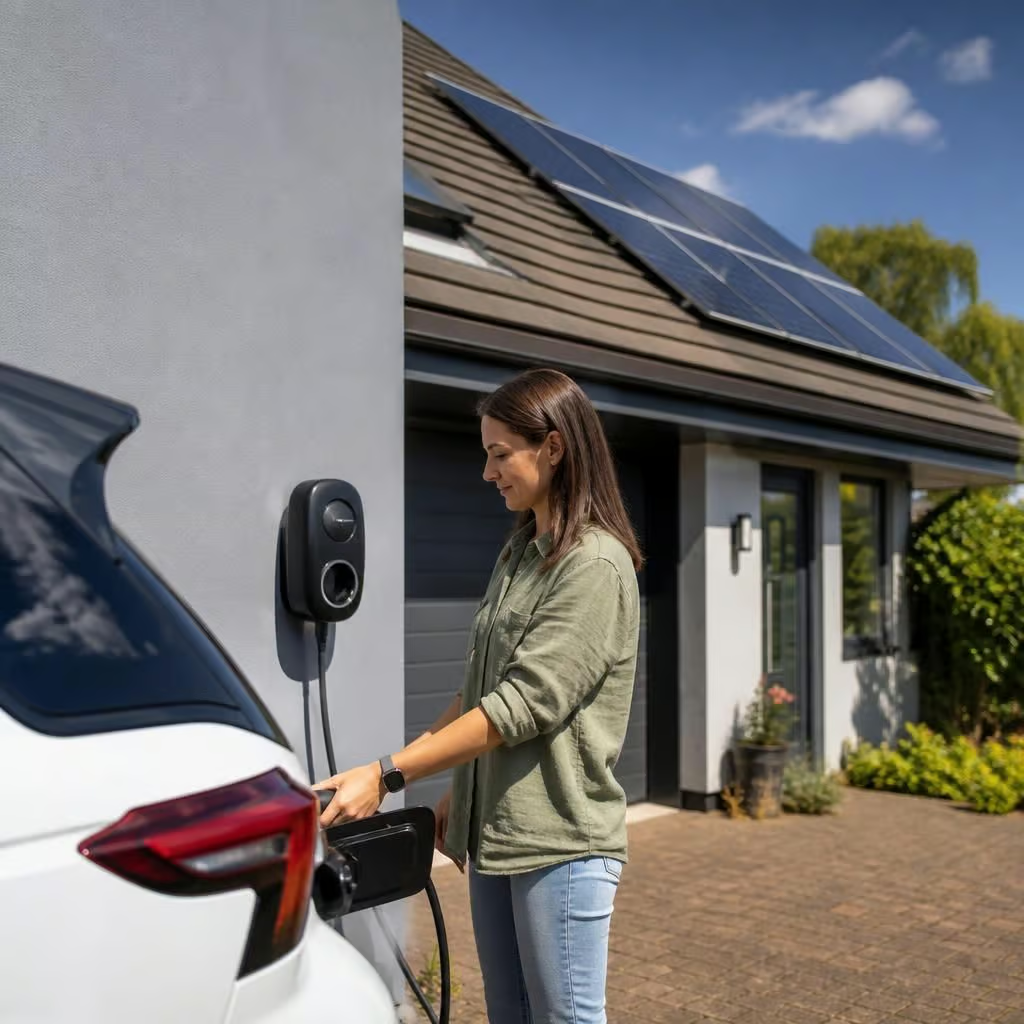
If your solar panels were installed before the EV charger, they don’t usually need replacing. The panels feed electricity into the home through their inverter, and the charger draws from the same electrical system as the rest of the house.
The important part is measuring where that electricity is going. We check the inverter, export meter and control equipment, then position the monitoring device so the charger can recognise surplus generation accurately. That stops it treating ordinary grid electricity as solar power.
If the existing system cannot provide that information, we explain what additional control equipment would be needed. You’ll know before installation whether the charger can offer solar-first charging, scheduled charging or grid-assisted charging, rather than finding out after the work is complete.