
Can a Level 3 electric car charger be installed at home?
In most homes, a Level 3 DC rapid charger is not practical because it needs a much larger electrical supply than a standard domestic connection. We can assess the available supply and recommend a Level 2 AC charger, which is usually the more suitable option for regular home charging.
In most cases, no. A Level 3 charger is usually a DC rapid charger designed for high-power commercial use. A domestic property may be able to accommodate one only where the electricity supply, incoming equipment, earthing arrangement and available space can support it.
The term Level 3 is used mainly to describe direct-current charging. Unlike a typical home charger, it can send DC power directly to the vehicle’s battery rather than passing power through the car’s onboard AC charger. That is why it can charge much faster, but also why the equipment and electrical supply are substantially more demanding.
A suitable car is not enough on its own. The vehicle must accept DC charging through the correct connector, and the property must have enough electrical capacity. We also need to consider the cable route, the position of the charger, protection equipment, ventilation, isolation and the effect of the charger on the rest of the installation.
What a domestic Level 3 installation may require
- A suitable incoming supply: many homes have a single-phase connection that cannot provide the power a rapid charger needs. A three-phase supply may be necessary, but having three-phase electricity does not automatically make the installation suitable.
- Approval from the electricity network operator: where the proposed load is greater than the existing connection can support, the network operator may need to assess the application. Reinforcement or an alteration to the service may be required before the charger can be connected.
- Space for larger equipment: a DC charger is generally bigger and heavier than a domestic AC unit. The location must leave room for safe access, cable handling and maintenance.
- Suitable cabling and protection: the cable size, route, voltage drop, fault protection and earthing arrangements all need to be designed for the charger rather than guessed from its label.
- A practical parking position: the cable must reach the vehicle without crossing an unsafe route or creating a trip hazard. Long underground runs can add excavation, ducting and reinstatement work.
These requirements can make a home rapid charger difficult or uneconomic, particularly where the property has a constrained supply, a long distance between the meter and parking space, or limited room for equipment. A battery installed for solar self-consumption does not normally remove the need for a suitable grid connection. It cannot automatically provide the sustained power required by a Level 3 charger.
Why a Level 2 charger is normally the better home choice
Most homes are better served by a Level 2 AC charger. It uses the vehicle’s onboard charger and works with the type of supply found at many domestic properties. Charging can take place while the car is parked overnight or during other longer periods at home, rather than relying on rapid charging for every journey.
Your household may also be using an electric shower, heat pump, cooker, immersion heater or other high-load equipment. We assess how those demands overlap with vehicle charging. Where appropriate, we can specify load management so the charger adjusts its demand instead of placing the whole installation under unnecessary strain. That assessment matters more than choosing the highest number on a charger specification sheet.
What we check before recommending any charger
- We establish the vehicle’s AC and DC charging capabilities, including the connector required.
- We inspect the consumer unit, meter position, incoming supply and earthing arrangement.
- We measure the proposed cable route and check whether walls, driveways or outbuildings create access issues.
- We consider existing and planned electrical loads, including solar panels, batteries and other high-demand equipment.
- We confirm whether the proposed demand needs a network operator application or other approval.
- We explain the practical alternatives if a Level 3 installation would require disproportionate changes to the property.
An older house does not automatically rule out home EV charging. The important point is the condition and capacity of the electrical installation. A consumer unit upgrade, additional protection or remedial electrical work may be needed before any charger is fitted. We identify that work during the survey rather than leaving it as an unexpected issue on installation day.
How much does a home Level 3 charger cost?
There is no useful standard domestic price. The charger itself is only part of the cost. The final figure depends on the supply capacity, network operator requirements, cable length, excavation, protective equipment, alterations to the consumer unit and any work needed to create a suitable parking connection.
We set out the required work in a written quotation before it starts. If a conventional home charger is the sensible option, we explain why and show which parts of the installation affect the price. If a Level 3 charger is not practical, you are not left with equipment that the property cannot safely support.
Our NICEIC and ECA electrical experience covers the design, installation and testing of domestic charging equipment. That means the charger is assessed as part of the whole electrical installation, not treated as a separate appliance. After the work, we provide the relevant test and certification paperwork for the completed installation.
For most homeowners, the right next step is a survey of the property and vehicle rather than a search for the fastest charger available. We can then confirm whether a domestic rapid charger is technically possible and, if not, specify a Level 2 installation that suits the supply and the way you use the car.
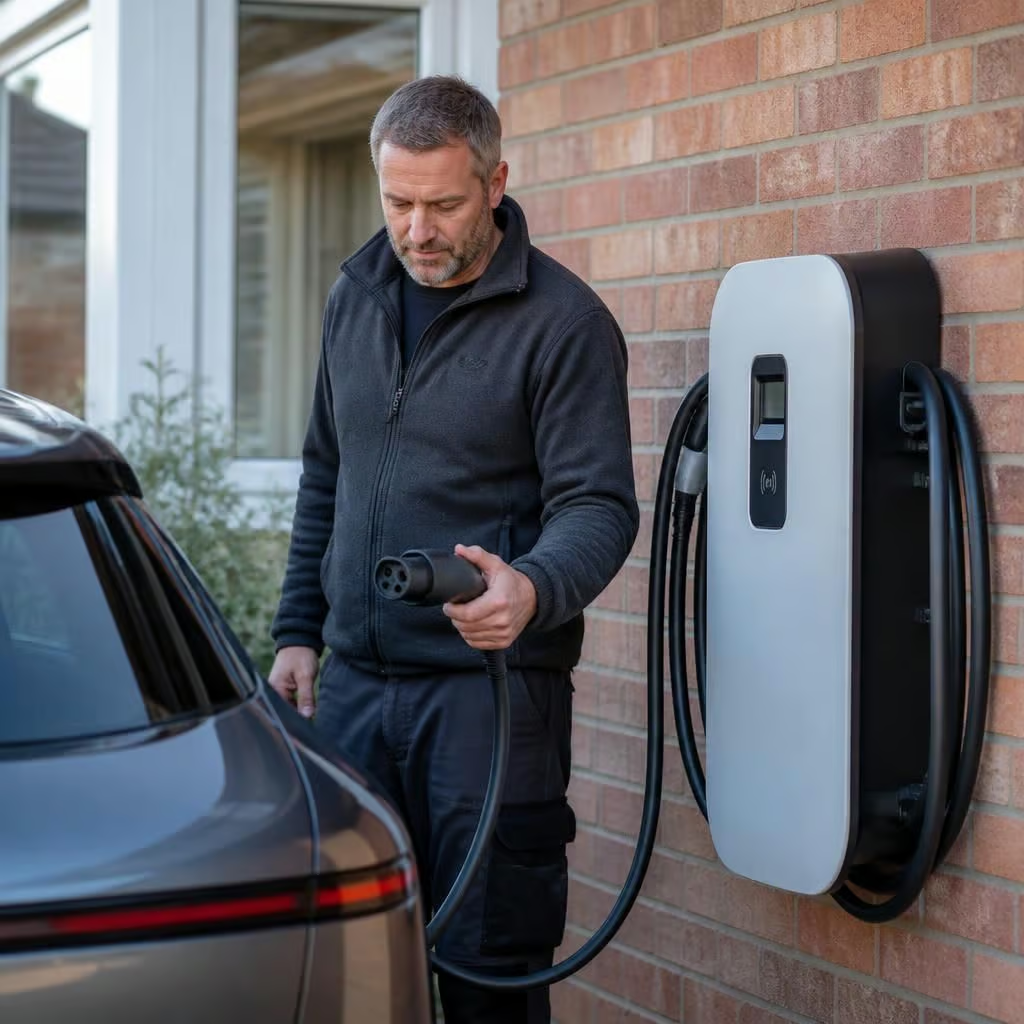
The charging speed shown in a car brochure doesn’t, by itself, determine what belongs at home. A vehicle may accept a high DC rate at public sites while using a slower AC connection at home.
The car’s battery management system controls the rate, which can reduce as the battery fills or conditions change. We match the proposed equipment to the car’s actual charging capability, so you don’t pay for capacity the vehicle cannot use.