
Is a 3-pin EV charger suitable for regular home charging?
A 3-pin charger can suit occasional or overnight home charging, but it’s usually not the best choice for regular use. A dedicated home charger delivers power more safely and consistently, with better control over charging times and energy use.
A 3-pin EV charger is suitable for regular home charging when the car is driven modest distances, the battery can charge over several hours, and the socket and circuit are in good condition. It becomes less suitable when you need to add a large amount of range frequently, or when the socket is shared with other high-load appliances.
Portable 3-pin charging leads are often called granny chargers. They use a standard domestic socket and are useful when you are away from home, staying somewhere without a dedicated charger, or charging an electric car occasionally. They are also a practical starting point if you are still learning how much energy your car uses each day.
The main drawback is the charging rate. A domestic socket supplies less power than a dedicated home charger, so a substantial recharge can take much longer. That may not matter if the car is parked overnight after a short daily journey. It matters more if you regularly drive long distances, have a larger battery, or need the car ready again within a short period.
Regular charging also places a sustained load on the socket. A socket that copes with ordinary household use may show a problem when it supplies high current for several hours. Loose terminals, ageing wiring, damaged accessories or a poor connection can create heat.
- Use a sound socket that is suitable for the charger and connected directly to the fixed wiring.
- Do not use an extension lead, multi-way adaptor or plug-in timer with the charging lead.
- Keep the plug, control box and connections dry, and follow the vehicle and charger manufacturer’s instructions.
- Check the plug and socket periodically for heat, a burning smell, discolouration or damage.
- Stop charging if the socket becomes unusually warm or shows any sign of overheating.
An outdoor socket needs particular care. Rain protection at the socket does not make every portable charger suitable for being left exposed. We look at the socket position, cable route and protection provided by the electrical installation before advising whether outdoor 3-pin charging is appropriate.
Your consumer unit and earthing arrangement also matter. Older properties may have circuits that need upgrading before they can support repeated EV charging safely. We assess the circuit, protective devices, cable condition and available capacity rather than assuming that any convenient socket will do.
A dedicated home EV charger is usually the better long-term choice when charging forms part of your normal routine. It can deliver more power, provides a fixed connection and keeps the charging equipment in a planned location. The installation also gives us the opportunity to check the consumer unit and add the protection required for the charger.
A dedicated charger does not automatically make every property suitable. The cable route, parking position, consumer unit, earthing and supply capacity still need checking. In an older or rural home, we may need to plan carefully around long cable runs, outbuildings or a supply that already serves electric heating, a heat pump or other high-load equipment.
Load management may help where the property has limited spare capacity. This can control the charging load alongside other electrical demand, rather than allowing several high-power appliances to operate at their maximum simultaneously. We would establish whether that approach suits the installation during the assessment.
Your electricity bill depends on the vehicle’s consumption, the amount of energy added and the tariff used at the time of charging. A slower 3-pin charge is not automatically cheaper than a dedicated charger. The charger mainly changes how quickly energy reaches the car; the tariff and driving pattern have more influence on the cost.
If you use a 3-pin charger every day, keep an eye on the condition of the socket and have the circuit checked if it is old, damaged or has never been assessed for sustained charging. Our NICEIC-registered electricians can inspect the existing installation and explain whether continuing with a portable charger is reasonable or whether a dedicated unit would be more suitable.
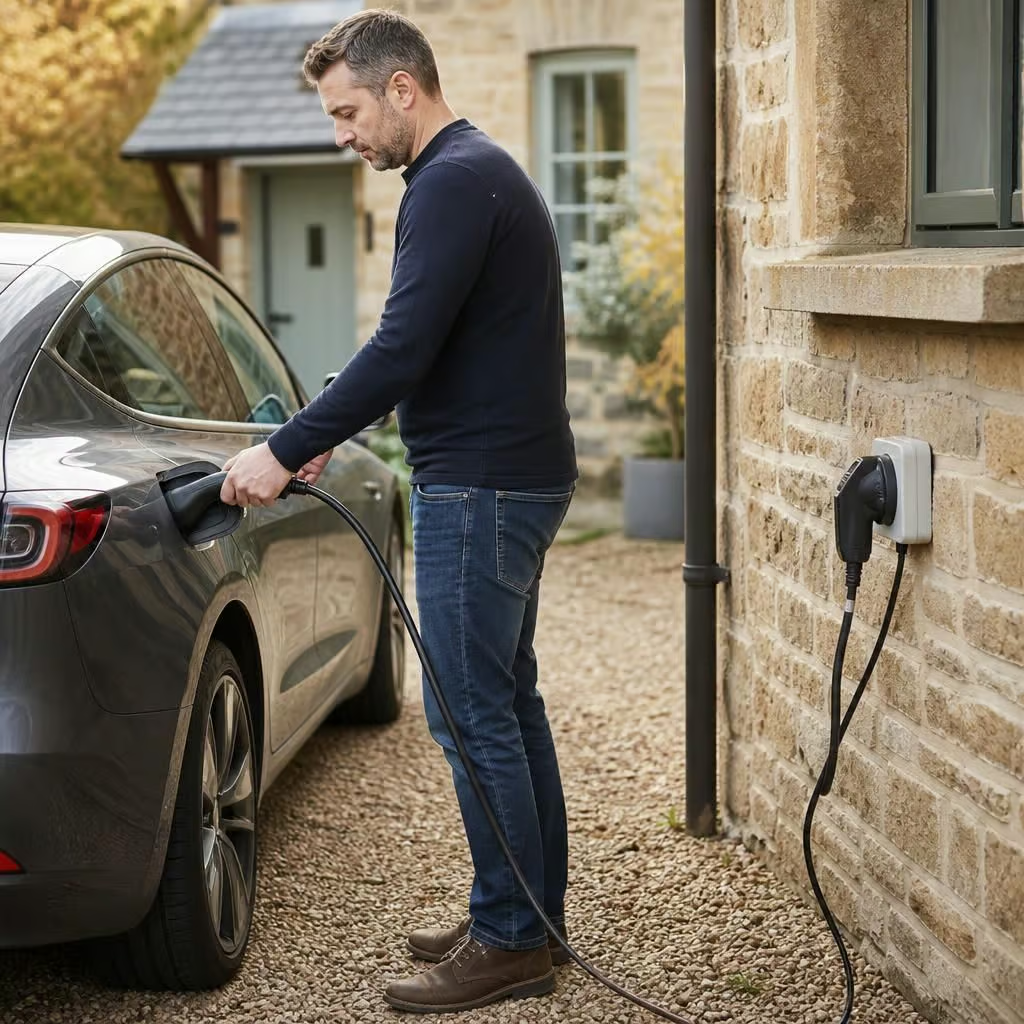
If the car is parked beside the house and the cable can reach without crossing a path, a 3-pin charger may fit your routine. A lead that runs across a walkway, through a doorway or where vehicles can drive over it is not a sensible permanent arrangement.
Some households use a portable charger while they decide where a fixed unit should go. If plugging in involves moving the cable, opening windows or relying on a distant socket each day, the inconvenience is usually a sign that a dedicated home charger would suit the property better.