
What does Level 2 charging mean for an electric car?
Level 2 charging uses a dedicated AC charger, usually a wall-mounted home charge point, rather than a standard three-pin socket. It charges an electric car considerably faster than Level 1 charging, while remaining slower than DC rapid charging used at public charging stations.
In the UK, Level 2 charging means charging an electric car from a dedicated AC charge point rather than a household socket. It is the usual choice for regular home charging and is also used at workplaces, hotels and public car parks.
The charge point sends alternating current to the car. The car’s onboard charger then converts it into the direct current needed by the battery. This means the charge point does not decide the full charging speed on its own. The car’s onboard charger, the charge point’s output, the battery’s condition and the property’s available electrical capacity all matter.
A larger-rated charge point will not necessarily charge every car faster. If the car can only accept a lower AC rate, it will limit the supply itself. Charging may also slow as the battery fills, or when the battery management system reduces power to protect the cells.
Level 2 charge points normally provide features that a three-pin socket cannot. Depending on the model, these can include:
- a dedicated cable or a socket for the car’s charging lead;
- scheduled charging, so the car charges at times that suit your tariff or routine;
- an app or display showing charging status and energy use;
- access controls for a workplace or shared parking area;
- load management, which adjusts the charge when other electrical equipment is using the supply;
- protection that disconnects the circuit if an electrical fault occurs.
The car normally connects to a Level 2 unit using a Type 2 connection in the UK. Some charge points have the cable permanently attached, while others have a socket and require you to carry the cable in the car. A tethered unit is convenient for one regular parking space. An untethered unit can be neater where different cars may use the point.
Home charging does not usually require a three-phase electricity supply. A suitable single-phase supply can support a domestic Level 2 installation, subject to the car, charge point and property’s electrical capacity. Three-phase power becomes more relevant where a higher charging rate is needed, several vehicles charge together or a commercial site has a larger fleet.
Your existing electrical installation is the starting point. We check the consumer unit, earthing, cable route, supply capacity and the position of the parking space before recommending equipment. If the cable has to cross a long drive, pass through an outbuilding or be concealed within an older property, that route affects the work and the quotation.
Load management can help when the house already has a heat pump, electric heating, solar panels, a battery or other high-demand equipment. Instead of allowing the total demand to exceed the property’s capacity, the charge point can reduce or pause charging while other equipment is running. That can avoid an unnecessarily large supply upgrade, but it depends on the equipment and the way the systems can communicate.
A Level 2 installation is more than fixing a box to an outside wall. We install a dedicated circuit, select the appropriate protective devices and test the completed work. The cable needs mechanical protection where it could be damaged, and its route must be planned carefully around doors, drives, outbuildings and other services.
If the consumer unit has no suitable space or the existing installation needs attention, we explain that before work starts. A consumer unit upgrade, additional protection, cable replacement or supply assessment may be needed. We include any required work in the quotation rather than treating it as an unexpected extra after installation has begun.
Older and rural properties can still be suitable for Level 2 charging, but the installation may need more thought. A detached garage, a long driveway, an external outbuilding or an older supply cable can make the cable route more involved. We look at the actual property rather than assuming that a standard wall-mounted installation will fit.
The installation is generally less disruptive than wider electrical work. The main disruption comes from routing and securing the cable, and from making any necessary changes at the consumer unit. We agree the cable route with you before starting, work tidily and leave the area as we found it.
For a home, the right charge point is usually the one that matches the car and the way you park, rather than the one with the highest stated output. We consider:
- the maximum AC charging rate accepted by the car;
- how far the car is parked from the electrical intake or consumer unit;
- whether the car normally remains parked for several hours;
- the demand from heating, cooking, solar generation, batteries and other large loads;
- whether more than one vehicle may need to charge;
- the need for scheduled charging, access control or remote monitoring;
- the available space for the unit and the appearance of the cable route.
For a workplace, landlord or shared parking area, the design also needs to consider who can use the point, how usage is recorded and whether several charge points need to share the available supply. The electrical design should allow for present demand without overlooking future vehicles.
We can assess the charging location, explain what the car can accept and provide a written quotation before work starts. Our NICEIC-registered electricians carry out the electrical installation and testing, giving you the records needed for a safe, compliant charging circuit.
Level 2 is therefore not a guarantee of one universal charging speed. It is the category of dedicated AC charging that gives an electric car a properly designed supply at home or at a workplace. The useful question is how that supply fits the car, the property and your normal parking pattern.
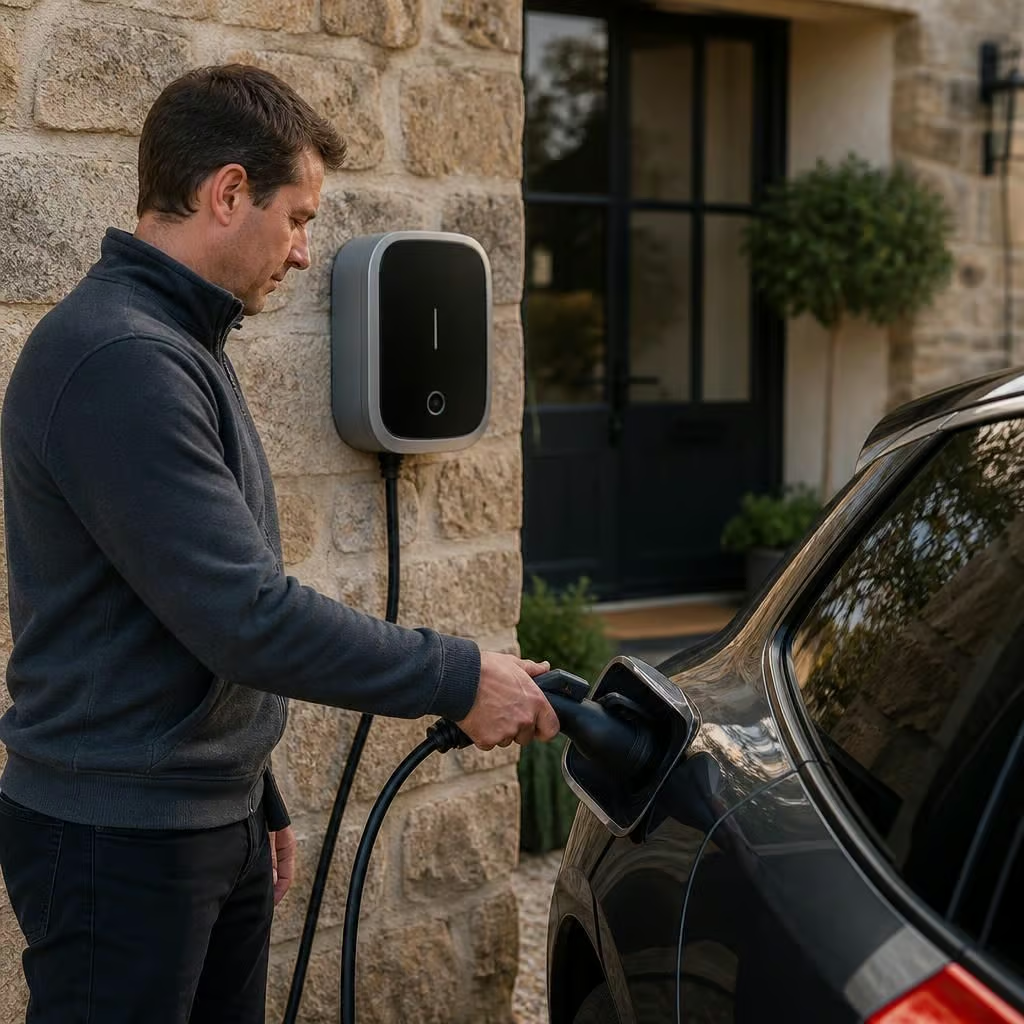
Level 2 charging uses alternating current, so the electric car’s onboard charger remains part of the process. It is designed for charging while the car is parked, rather than for a rapid top-up during a journey.
That makes it different from Level 3 rapid charging, which supplies direct current to the battery through specialised equipment. For most homes, a dedicated Level 2 point provides the practical balance between charging speed, installation requirements and the time the car spends parked.