
Can your electricity supply support an EV charger?
Usually, but not every home can support an EV charger without electrical changes. We check the incoming supply, consumer unit, earthing and available capacity, then explain any required upgrade before installation.
Most homes can support an EV charger, but the answer depends on the supply’s available capacity and the condition of the equipment already in place. A suitable charger is selected after we understand how the property uses electricity, not simply from the car’s maximum charging rate.
Your home may already have several large electrical loads. An immersion heater, electric heating, cooker, shower, heat pump, solar inverter or battery can all affect the spare capacity available for charging. We consider those loads together and assess when they are likely to operate at the same time.
A standard home charger commonly operates from a single-phase supply. A higher-powered charger may need three-phase electricity, which many houses do not have. That does not automatically mean installation is impossible. A lower charging rate or a charger with automatic load management may suit the property better.
Load management reduces the charger’s output when the house is using more electricity elsewhere. It can then increase charging again as demand falls. This helps prevent the supply from being overloaded without requiring the charger to run at its maximum rate at all times. The car still charges safely, although the time needed may vary with the home’s electricity use.
Some properties have a restricted incoming supply, particularly older homes, converted buildings and houses with several extensions. A long cable run to a detached garage can create a separate design issue. We assess the distance, cable size, route and protection needed rather than assuming the existing garage wiring is suitable.
The consumer unit also needs to be suitable for the new circuit. We look at its age, spare capacity, protective devices and overall condition. If it needs attention, we explain whether the work is essential for the charger or advisable because of a wider electrical safety concern. A charger should not be connected to an unsuitable or overcrowded board simply to avoid an upgrade.
The incoming service equipment belongs to the distribution network operator rather than the homeowner. If the available supply is not sufficient, we cannot simply change the main fuse ourselves. We explain when an application to the network operator may be needed and separate that process from the electrical installation work at the property.
Properties with solar panels or a battery need a slightly different assessment. The charger can be set up to work alongside those systems, subject to the equipment and controls already installed. We consider whether charging should prioritise available solar generation, use the battery, or draw from the grid under the chosen control settings. The right arrangement depends on how the household drives and how the existing system is configured.
Older rural properties often have outbuildings, detached garages or unusual wiring routes. Listed buildings and barn conversions may also limit where cables and equipment can be placed. We take those practical constraints into account before recommending a route, so the finished installation does not depend on assumptions about hidden wiring or modern construction.
Our assessment normally establishes:
- the type and capacity of the incoming electricity supply;
- the likely demand from existing appliances and electrical systems;
- whether the consumer unit can accept a dedicated EV charging circuit;
- the cable route, length and protection required;
- whether load management would make the installation workable;
- whether the network operator needs to be involved; and
- how the proposed charger will work with solar panels, batteries or other large loads.
There may be more than one practical route. We might recommend a standard charger, a managed charging system, a lower output, alterations to the consumer unit or an application for a supply upgrade. If the proposed position is not sensible, we explain why and set out the alternatives rather than installing equipment that the property cannot use properly.
Once the design is clear, we provide a written quotation before work starts. It sets out the proposed equipment, cable route and any required electrical upgrades, so you can compare the cost of the charger with the cost of making the supply ready for it. Our electricians carry out the work directly, with the installation tested and the relevant paperwork completed afterwards.
Electrical work for an EV charger is carried out by our NICEIC- and ECA-recognised team. That means the supply assessment and installation are treated as part of the wider electrical system, rather than as a standalone appliance connection.
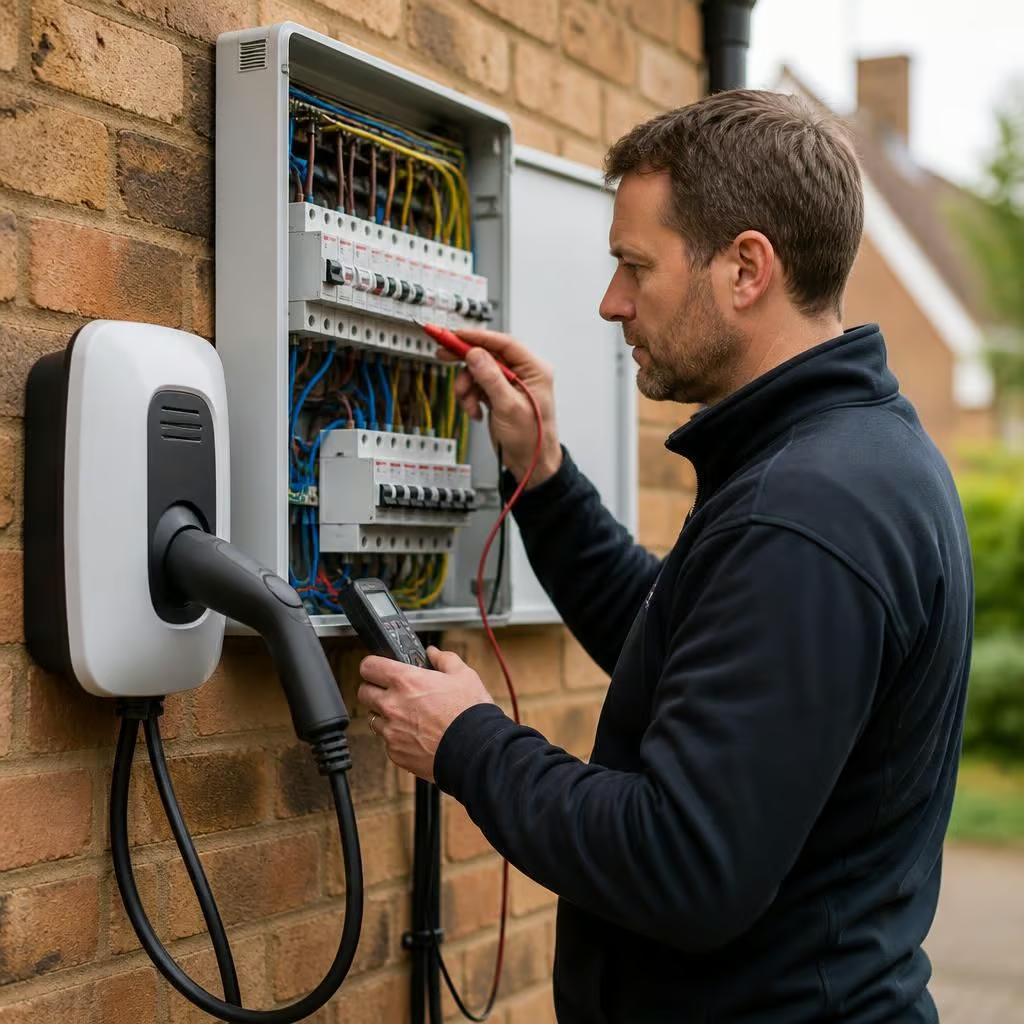
A home can use relatively little electricity overall yet still have a constrained supply at the moment charging begins. An EV charger adds a sustained load, rather than a brief demand like a kettle or hairdryer.
That is why we look at the pattern of use as well as the equipment fitted. The result is a charging arrangement that matches the electricity available at the property, rather than a charger rating the supply cannot reliably support.