
How long does commercial EV charger installation take?
Commercial EV charger installation can take from a single installation visit to several stages, depending on the number of chargers, the electrical supply and any approvals required. We confirm the timetable after surveying the site, checking the proposed equipment and agreeing any necessary electrical work.
The installation day is only one part of the programme. The total time depends on what the site needs before the chargers can be connected safely and legally. A small installation with a suitable supply and a clear cable route is simpler than a multi-point scheme involving new distribution equipment, groundworks or network approval.
We normally establish the programme in the following stages:
- Initial information: We review the number of vehicles, expected charging demand, operating hours and who needs access to the chargers. This helps us assess whether the site needs simple charging or a managed system that shares available power between vehicles.
- Site survey: We inspect the intake position, consumer units, distribution boards, earthing, spare capacity and the proposed charger locations. We also measure cable routes and check whether walls, ceilings, car parks or service yards affect the work.
- Design and quotation: The survey findings are turned into a clear scope of work. The quotation sets out the charger locations, protective equipment, cable routes, groundwork, testing and any access equipment required. It also identifies anything that could affect the programme.
- Approvals and permissions: Some sites need the electricity network operator to approve a change to the maximum import capacity. A landlord, managing agent, freeholder or highways authority may also need to approve work in a shared or public area. We allow for these decisions before confirming the installation date.
- Preparation: If the cable route crosses a car park or service yard, contractors may need to excavate, install ducts, pour bases or reinstate surfaces. We also arrange suitable access, parking controls, shutdowns and any traffic management needed to keep people safe.
- Installation and commissioning: We fit the chargers, protective devices, cabling, signs and any load-management equipment. We then configure the controls, test each outlet and check that the system operates as designed.
A straightforward site usually has fewer programme stages. If the existing electrical installation has enough capacity, the charger positions are close to the supply and no permissions or groundworks are needed, there is less to arrange before the engineers attend. The work still includes inspection, testing and commissioning rather than simply connecting a unit and leaving it in service.
A larger fleet installation needs more coordination. Several chargers may require a new distribution board, upgraded protection, larger cable runs or a power-management system. We may need to phase the work so the business can keep using part of the car park. The final programme must account for delivery access, vehicle movements and any period when the electrical supply needs to be isolated.
The electrical supply can change the timetable. A site may have enough total electrical capacity but still need changes to its distribution equipment or protection. If the available capacity is not sufficient, we explain the options and identify whether the network operator must carry out further work. We do not treat approval as automatic, because the decision and any construction work sit outside our control.
The car park layout matters as much as the charger. A wall-mounted unit beside the intake is relatively direct. Chargers in a separate parking area may need long underground cable routes, protective bollards, ducting, drainage checks or concrete bases. Listed surfaces, shared access roads and landscaped areas can add permissions and reinstatement work before charging can begin.
Occupied premises need a practical installation plan. We agree where engineers can work, which areas need to be kept clear and when an electrical isolation is acceptable. For a shop, office, hotel, farm or managed property, this reduces avoidable disruption and gives staff clear instructions about using the chargers once they are live.
After installation, we test the protective devices, charging outlets, communications and load controls. We provide the relevant certification and explain the operating arrangements to the person managing the site. If access control or payment features are included, those settings also need to be checked before the chargers are handed over.
We confirm the programme after the survey rather than relying on a standard installation time. The quotation separates installation work from items such as network approvals, civil engineering and third-party permissions, so the business can see what is included and what could move the completion date.
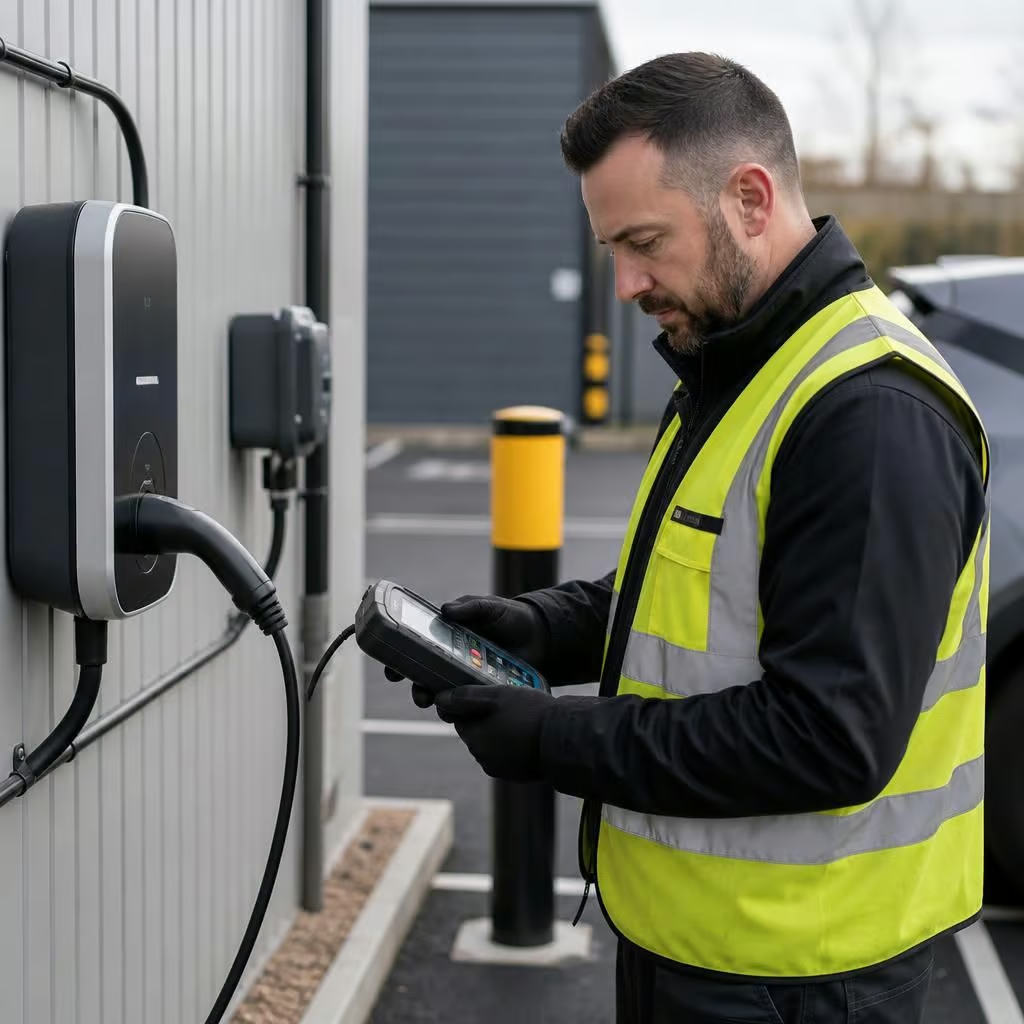
A charger that is fixed to the wall is not ready for use until the whole installation has been checked. We test each charging point, protective device and communication connection before we hand the site back.
If staff use access controls or drivers pay to charge, we also check the user settings and explain the process to the person managing the site. This final handover is part of the installation programme, so the business receives a working, documented charging system rather than equipment that still needs configuring.