
Who maintains our commercial EV chargers after installation?
Alderminster Group maintains the commercial EV chargers it installs, providing planned servicing, fault support and advice on ongoing compliance. We keep the charging equipment, electrical connections and supporting paperwork under review, so faults can be identified before they disrupt site users.
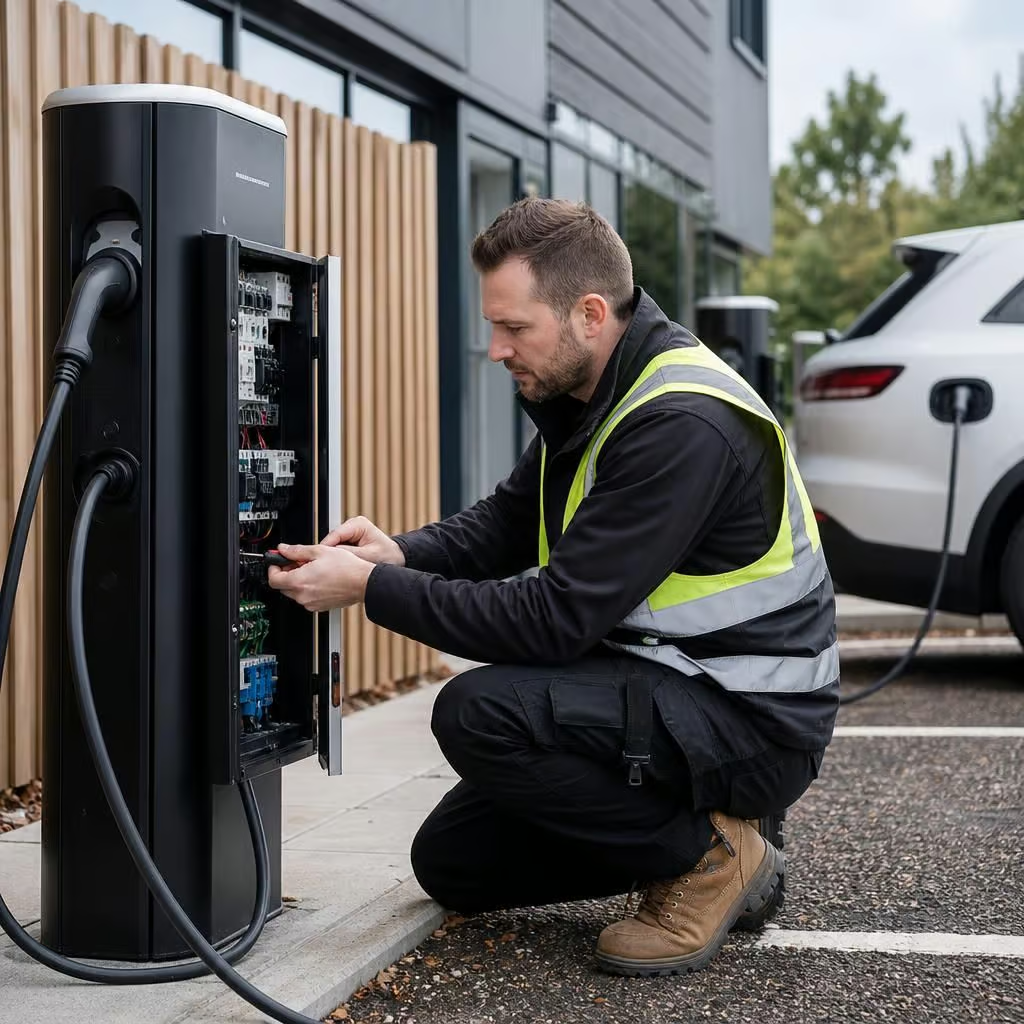
Alderminster Group’s directly employed electrical engineers maintain commercial EV chargers after installation. We inspect the charging equipment, test the associated electrical installation, investigate faults and record any remedial work needed. The maintenance plan is based on the charger type, site conditions, usage and the manufacturer’s instructions.
Commercial charging equipment works harder than a domestic charge point. Staff, visitors, tenants or fleet drivers may use it repeatedly throughout the day, while vehicles and weather expose the cables and connectors to damage. A planned inspection helps identify wear, impact damage, overheating or electrical problems before the charger is taken out of service.
During a maintenance visit, we typically check:
- the charger enclosure, display, status lights and physical fixings;
- charging cables, plugs, sockets and cable storage;
- signs of impact, water ingress, corrosion, overheating or loose connections;
- the protective devices, earthing and other electrical safety measures;
- the charger’s operation and its connection to the site electrical supply;
- any faults reported by users or shown in the charger’s records; and
- the condition of labels, isolation points and safety information.
Where testing requires a charger to be isolated, we explain the work before starting and identify any practical effect on the charging bays. If one unit needs attention, we can assess whether the fault is within the charger, its cable, the protective equipment or the supply serving it. That prevents a software or electrical issue being treated as a simple component failure.
If a charger stops working, we start with the symptoms and the site history. A fault code, tripped protective device, failed connection or intermittent charging can each point to a different cause. We inspect the installation, carry out appropriate electrical tests and set out the repair required. If the problem relates to a communications service, payment platform or manufacturer-controlled system, we explain that distinction and identify the party who needs to act.
Our engineers can also deal with remedial electrical work connected with the charging installation. That may include replacing damaged accessories, correcting a connection, repairing protective equipment or addressing a problem with the cable route. We provide a written quotation before chargeable work starts, so the site owner or manager can decide what happens next without unexpected charges.
Every planned visit should leave the operator with usable records. We document the equipment inspected, tests carried out, faults found and work completed. Where we identify a remaining risk or recommended improvement, the report explains what needs attention and why. This gives a landlord, facilities manager or property agent a clear maintenance history rather than relying on a driver’s description of a fault.
Maintenance records support day-to-day management, but they do not automatically replace other inspections. A commercial property may still need an electrical installation condition report, periodic checks, or records required by its own safety procedures. We can explain how charger maintenance fits alongside those requirements and where a separate inspection is appropriate. NICEIC and ECA registration means our electrical work is carried out within recognised professional standards, with the testing and documentation matched to the work involved.
Responsibility is shared after installation. The site operator should keep the charging area clear, report damage and prevent continued use of equipment that appears unsafe. Drivers should not use a cable, plug or charger showing visible damage. Once a fault is reported, we can investigate the electrical and charging equipment and advise whether the unit should remain isolated until repair.
A maintenance arrangement can therefore include planned inspections, fault diagnosis, remedial electrical work and records for the site file. The right frequency depends on how the chargers are used and the environment they are installed in, so we recommend a schedule after reviewing the equipment and the way the site operates.
If responsibility for the site changes, the charging equipment still needs a clear maintenance contact. We can continue looking after the charger hardware and the electrical installation, rather than leaving the landlord, facilities manager or new operator to find another contractor.
Where a network provider, payment platform or charger manufacturer controls part of the service, we separate that responsibility from the electrical work. You receive a clear record of what we maintain, what another provider manages and who should be contacted when a fault appears.