
What should we prepare before a commercial EV charging station survey?
Before we arrive, have the site address, available parking and access arrangements, electricity supply details, and any building or site plans ready. We also need to know how many vehicles you expect to charge, when they are usually on site, and whether you anticipate expanding the charging provision.
The most useful preparation is to bring together the people, records and site information that affect how the charging station will be used. Before we attend, nominate one person to make decisions, collect any available electrical and building records, and note the practical rules drivers and visitors must follow.
Start with the intended operation. A workplace, depot, hotel, landlord-managed car park and farming business may all need different charging arrangements. Write down:
- Who will use the chargers, such as employees, tenants, visitors, customers or fleet drivers.
- When vehicles normally arrive, remain parked and leave.
- Whether charging needs to be available to the public or restricted to named users.
- Who should be able to start a session and who will manage access if a charger has a fault.
- Whether drivers need payment, cost allocation or usage records between departments, tenants or customers.
- Any future plans that could increase demand, such as more electric vehicles, additional parking or changes to the building.
This gives us a basis for assessing the charging arrangement rather than simply counting parking spaces. It also helps avoid installing equipment that suits today’s vehicles but limits how the site operates later.
Choose a person who knows the site. The survey is more useful when someone can explain how the premises work. That person might be a facilities manager, landlord, estate manager, farm manager or business owner. They should know which areas are private, which are shared and where vehicles can safely park.
If the business rents its premises, involve the landlord or managing agent before the survey. Written permission may be needed for work to the building, car park, intake position or shared electrical infrastructure. On a managed development, the freeholder, residents’ management company or other occupiers may also need to approve the proposal.
Collect existing records where they are available. We can assess a site without a complete file, but the following information can reduce uncertainty:
- Previous electrical installation condition reports and records of remedial work.
- Records of recent electrical alterations, extensions or changes to the main distribution equipment.
- Details of existing solar PV, battery storage, generators or other equipment that exchanges power with the building.
- Maintenance records for the main switchgear and any private distribution equipment.
- Building, refurbishment or car park drawings showing work that is hidden below ground or behind finished surfaces.
- Any previous correspondence with the electricity network operator about capacity or connections.
Bring the originals or digital copies if you have them. We still verify the installation on site, because records may not reflect later alterations.
Tell us about physical constraints before we arrive. Charging equipment may need to cross a car park, pass through a wall or connect to electrical equipment in another part of the premises. Let us know about:
- Listed-building status, conservation restrictions or planned building work.
- Asbestos information, restricted plant rooms and areas that require an escort.
- Private roads, underground services, drainage, buried ducts or areas where excavation is not permitted.
- Security gates, height barriers, delivery schedules and rules for contractor vehicles.
- Flood-prone areas, exposed locations, agricultural conditions or places vulnerable to impact from vehicles.
- Existing lighting columns, walls, bollards or other structures that may affect charger positioning.
These details help us distinguish between a straightforward cable route and work that may require additional protection, civil engineering or approval.
Prepare the site rules and safety requirements. Send us the induction process, personal protective equipment requirements and any restrictions on working near staff, customers, residents or livestock. Tell us whether the car park must remain open and if certain spaces cannot be taken out of use.
For a workplace or public site, consider how charging bays will be marked, protected from impact and kept available for the intended users. If accessible parking, delivery areas or emergency routes are involved, identify those restrictions before we assess possible locations.
Include the people who will manage the system. The person approving the installation is not always the person who will deal with it afterwards. It helps to involve whoever will manage:
- Driver access and user enquiries.
- Payments, refunds and electricity cost allocation.
- Maintenance reporting and isolation during building work.
- Parking enforcement and the use of charging bays.
- Data, user accounts and any connection to existing property management systems.
They can explain what the business needs from the charging equipment and identify issues that are easy to miss during a purely electrical assessment.
Plan for the survey itself. The surveyor will need safe access to the proposed charger locations, the relevant electrical equipment and any route between them. Unlock plant rooms, arrange keys or access cards, and identify a contact who can accompany us through restricted areas. If roof spaces, service yards or external compounds are involved, make sure they can be reached safely.
Keep vehicles out of any areas that need to be inspected, where practical. We may need to follow cables, inspect distribution equipment and consider how drivers will approach the chargers. We will not assume that the shortest route is suitable if it creates a trip hazard, restricts access or exposes the cable to damage.
After the assessment, we can explain the practical requirements, including charger positions, cable routes, protection, groundwork and any electrical alterations identified during the survey. We will also flag matters that need confirmation from the network operator, landlord or another authority. Once the scope is clear, we provide a written quotation before work starts, so the cost is based on the conditions found rather than an unexamined assumption.
For electrical work, our NICEIC and ECA registration reflects the standards applied to the assessment and installation. The result should leave you with a clear view of what the site can support, what needs changing and which decisions still need to be made before you commit to the installation.
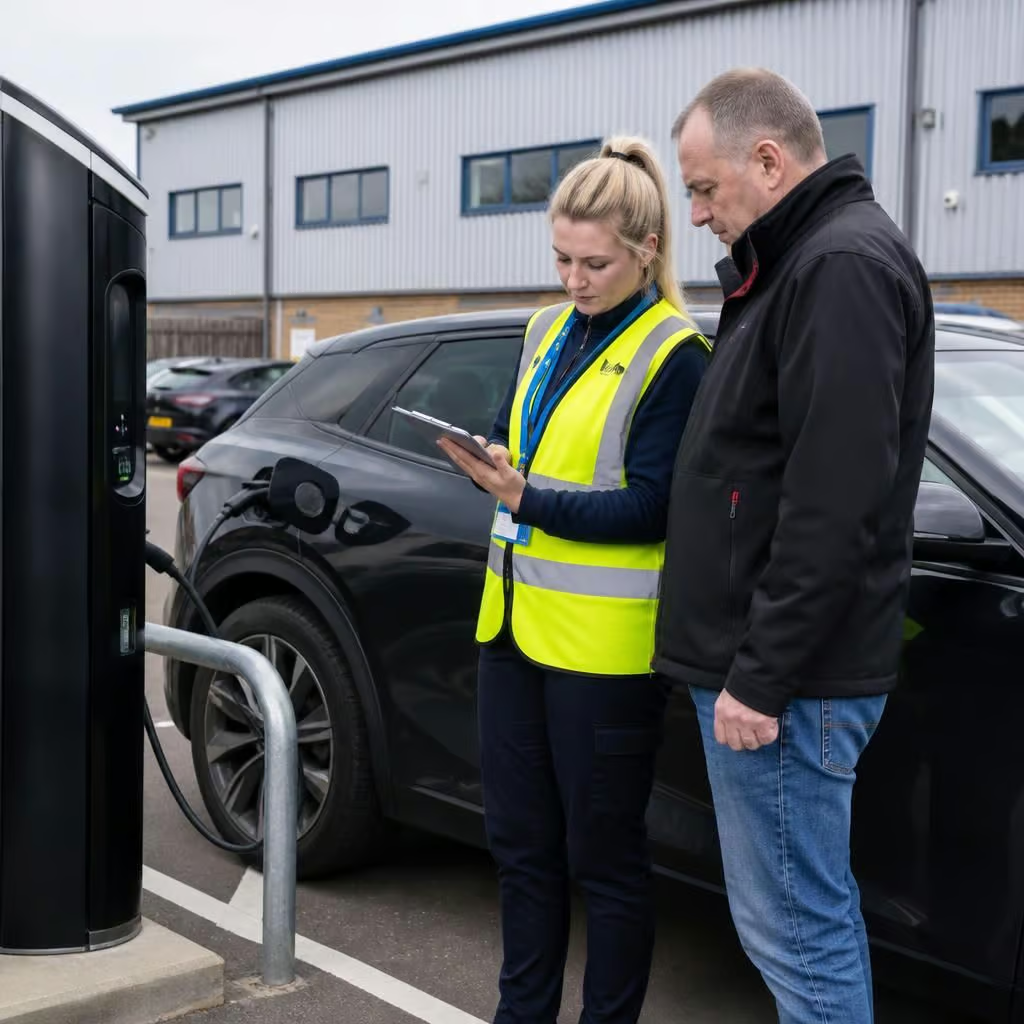
Your vehicles may need different charging arrangements, so gather their basic details before the survey. Note the makes and models, battery sizes where known, charge rates and whether drivers use tethered or untethered cables.
Fleet vehicles that return for short periods may need a different layout from cars parked all day. We use this information to compare charger output, bay positions and cable reach against the way vehicles actually use the site. That helps prevent a station being designed around a vehicle mix you do not have.