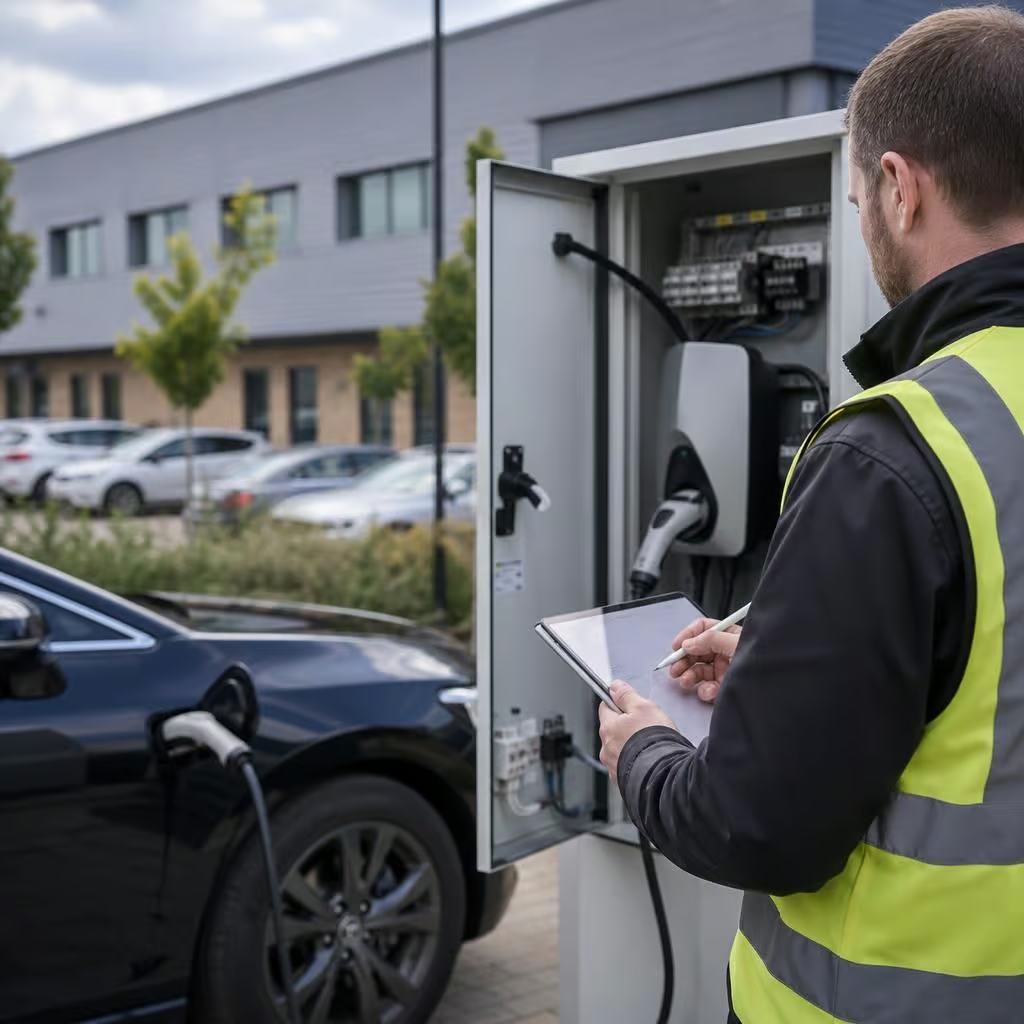
What standards should a business EV charging station meet?
A business EV charging station should meet current electrical and building requirements, with installation to BS 7671 and the IET requirements for electric vehicle charging equipment. It should also provide safe access, suitable protection and controls, clear user information, and a maintenance plan that keeps the equipment compliant and usable.
The main benchmark is BS 7671, including the requirements for electric vehicle charging installations in Section 722. A business charging station should also follow the current IET Code of Practice for Electric Vehicle Charging Equipment Installation, the manufacturer’s instructions and any requirements from the distribution network operator (DNO).
Those standards cover more than the chargepoint itself. They affect the incoming supply, earthing, protective devices, cable routes, parking layout, isolation, inspection and ongoing maintenance. The right specification depends on who will use the station and how the site operates.
The electrical design must suit the site
A fast charger can place a substantial demand on a commercial electrical installation. If the existing supply cannot provide that demand, installing the charger without further design work can cause nuisance trips, overheating or an unnecessary connection problem with the DNO.
We establish the available capacity and compare it with the building’s existing loads, such as heating, refrigeration, machinery and lighting. Where several chargepoints are planned, we look at how they will share the available supply rather than sizing each one in isolation.
Load management may reduce the need for a larger supply connection. It can limit charging demand when the building is using more electricity and release capacity when other loads fall. That control must be properly designed, commissioned and explained to the people responsible for the site.
Protection against electric shock and equipment faults
Each chargepoint needs suitable overcurrent protection, isolation and residual current protection. The arrangement depends on the equipment and its ability to detect direct current leakage. Some units include six-milliampere DC detection; others need a different residual current device, such as Type B protection.
The installation also needs protection against faults caused by the earthing arrangement. This is particularly important where a property has a PME supply, because a broken protective neutral conductor can create a dangerous voltage on exposed metalwork. The charger may need an approved protective device or a separate earthing arrangement, depending on the site assessment and equipment used.
We also consider surge protection, especially where the installation has long external cable runs, exposed equipment or other factors that increase the risk of transient overvoltage. The protection is selected as part of the wider design, not added as a substitute for sound earthing and circuit protection.
The cable route and physical equipment need to withstand business use
Commercial chargepoints are often positioned in car parks, yards or shared forecourts. Cables may cross areas used by vehicles, delivery equipment and pedestrians, so the route must reduce the chance of impact, crushing and trips.
We select suitable cable support, protection and containment for the location. A cable fixed to a wall may need a different treatment from one running across a plant room or along an exposed parking area. Bollards or other physical protection may be needed where vehicles could strike the charger.
The chargepoint should be mounted where users can connect safely without stretching the lead across a traffic route. The position should also leave enough room for doors, accessible routes and maintenance access. Equipment installed outdoors must have an enclosure and construction suitable for the environment, including rain, dust, cleaning methods and possible impact.
Users need clear information and safe access
Instructions should tell drivers how to start and stop a charge, identify the relevant connector and explain what to do if the equipment displays a fault. Labels should identify the charging circuit and isolation point for the people maintaining the electrical installation.
A workplace station should not create a barrier for employees, visitors or customers with disabilities. The operator should consider the space beside the bay, kerbs, gradients, surface condition, cable reach, controls and the height of displays or payment equipment. Accessible provision is a site-planning issue as well as an electrical one, and the Equality Act may be relevant to how customers and staff use the facility.
Publicly accessible chargepoints have additional obligations under the applicable UK public chargepoint regulations. These can include requirements for transparent pricing, payment methods, roaming arrangements, helpline provision and information shown to drivers. A station reserved for a company fleet or employees may be treated differently, so we establish the intended access before specifying the equipment.
Fire safety and emergency arrangements should be understood
The site’s fire risk assessment should account for the charging equipment, parked vehicles, cable routes and the location of isolation points. The responsible person needs to know how to disconnect the installation safely and how to report a fault.
Isolation should be accessible to authorised people without creating another electrical risk. It should not be hidden behind parked vehicles or placed where an emergency approach is difficult. The fire and site management teams should know which equipment is being isolated and which parts of the building remain energised.
Charging equipment must not be installed where its position conflicts with fire access, escape routes or other site safety controls. The electrical installation is only one part of the site’s risk assessment.
Inspection and certification are part of meeting the standard
After installation, the work should be inspected and tested before the station is put into normal use. The electrical installation certificate should record the design information, test results, protective devices and any limitations that affect future work.
For a commercial site, the handover file should also include the equipment instructions, emergency isolation details, circuit identification, commissioning information and maintenance recommendations. If the station forms part of a landlord’s or facilities manager’s electrical system, those records should sit with the site’s existing compliance documents.
Our NICEIC and ECA electrical work is completed with the testing and certification needed to show what has been installed. That gives the site manager something more useful than a charger model and an invoice: a record of the circuit, its protection and the checks completed.
The station needs a maintenance plan
Compliance does not end when the charger first operates. The operator should check the enclosure, leads, plugs, sockets, signage, physical protection and emergency controls at intervals suited to the site. Busy yards and public car parks may need closer attention than a lightly used staff facility.
Faults should be logged and investigated rather than repeatedly reset. Damage to a connector, water ingress, loose mounting or repeated protective-device trips can indicate a problem with the equipment or the installation. Planned electrical inspection should also fit into the site’s wider maintenance and safety programme.
Before work starts, we can record the intended users, charging pattern, supply capacity, earthing arrangement, parking constraints and maintenance responsibilities. That information determines whether the proposed station meets the relevant electrical rules and works safely within the business’s daily operation.
If the station forms part of a new commercial building or major renovation, the project may have additional requirements under Building Regulations, including provisions for electric vehicle charging. These obligations are separate from the electrical installation itself.
Tell us about the building work, parking numbers and intended users at the planning stage. We can then identify which requirements affect the chargepoint layout, electrical design and project paperwork, rather than treating the station as an isolated item added at the end.