
Can our existing electrical infrastructure support fleet EV charging?
Existing electrical infrastructure can often support fleet EV charging, but the answer depends on the incoming supply, available capacity and the number of vehicles charging together. We assess those limits, cable routes and protective equipment, then identify whether the site needs load management, staged charging or an electrical upgrade.
In many cases, an existing electrical installation can support fleet EV charging, but the answer depends on how much power the site can use at the same time. A site may have enough capacity for a small number of vehicles and still need changes before several vans or cars charge together.
The available electricity is only part of the assessment. Your fleet’s charging pattern matters just as much. Vehicles returning together, high-power chargers, refrigeration equipment, workshops, heating systems and machinery can create a much larger combined demand than the site’s normal daytime load.
We review how the site operates before choosing the charging equipment. The assessment considers:
- the incoming supply and main switchgear;
- the type and rating of the supply, including whether three-phase power is available;
- the site’s recorded and expected peak demand;
- the number, power rating and location of the proposed charge points;
- how vehicles arrive, depart and need to be charged;
- the distribution boards, submains, earthing and protective devices;
- the distance between the electrical intake and the charging bays;
- the condition and spare capacity of existing cables and equipment; and
- the effect of other planned electrical loads, such as heat pumps, solar generation or battery storage.
A lower-rated supply does not automatically prevent fleet charging. Managed charging can spread demand across the available capacity, give priority to vehicles with earlier departures and reduce charging power when the rest of the building is using more electricity. The system can restore charging capacity as other loads fall.
Load management must be designed around the fleet’s actual requirements. If every vehicle needs a full charge within the same short period, management alone may not provide enough power. If vehicles are parked for longer periods, charging can often be scheduled in stages without affecting the working day. We use the required departure times and daily mileage to determine how much charging the site genuinely needs.
We also check how the charging load is shared between phases. Uneven loading can restrict the usable capacity of a three-phase supply and place unnecessary stress on the installation. Current monitoring allows the charging system to respond to the building’s live demand rather than relying on an assumption about how the site will operate.
Some sites need electrical work before the charge points can be installed. This might include a new distribution board, larger submain cables, additional protective equipment, improved cable routes or changes to the main switchgear. Where the existing supply is not large enough, we can identify what a supply upgrade would involve and whether the network operator needs to approve a change to the connection.
The physical route to the parking area can affect the design as well as the cost. Long cable runs may require larger cables to control voltage drop. Outdoor equipment needs suitable protection, and parking layouts may require trenching, ducting, bollards or protection from vehicle impact. We include these details in the design rather than treating the charge point as an isolated wall-mounted appliance.
We explain the findings in practical terms. You will know how many vehicles the present installation can charge, what charging pattern it can support and which loads may need managing. If an upgrade is needed, the quotation separates the electrical work, charging equipment and associated groundworks so the scope is clear before work starts.
Where the site has older equipment or incomplete records, we allow for the checks needed to confirm its condition. A charge point should not be connected to an overloaded board or rely on protective equipment that no longer matches the installation. Our NICEIC- and ECA-registered electrical team designs and installs the work to leave the wider system safe and suitable for the planned fleet use.
The result may be a managed charging installation using the existing supply, an electrical upgrade, or a combination of both. The right choice comes from matching the infrastructure to vehicle numbers, charging speeds and operating schedules, rather than installing the highest-rated charge points the site can physically accommodate.
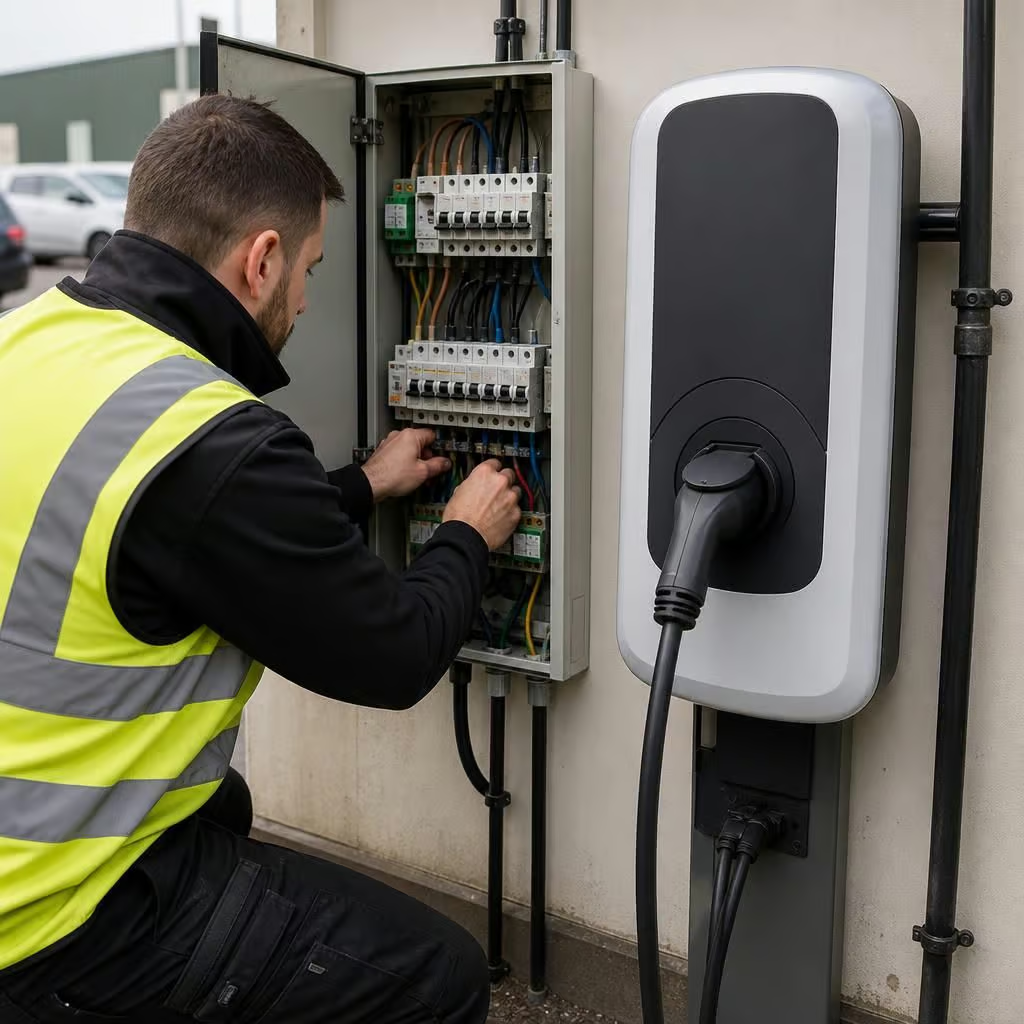
If the fleet is expected to grow, designing only for today’s vehicles can leave the site facing another round of electrical work later. We assess the likely future demand alongside the current requirement.
That may lead to a phased design, with suitable capacity reserved for additional charge points when they are needed. The first installation can then support the present fleet without committing the business to unnecessary equipment or disruption now.