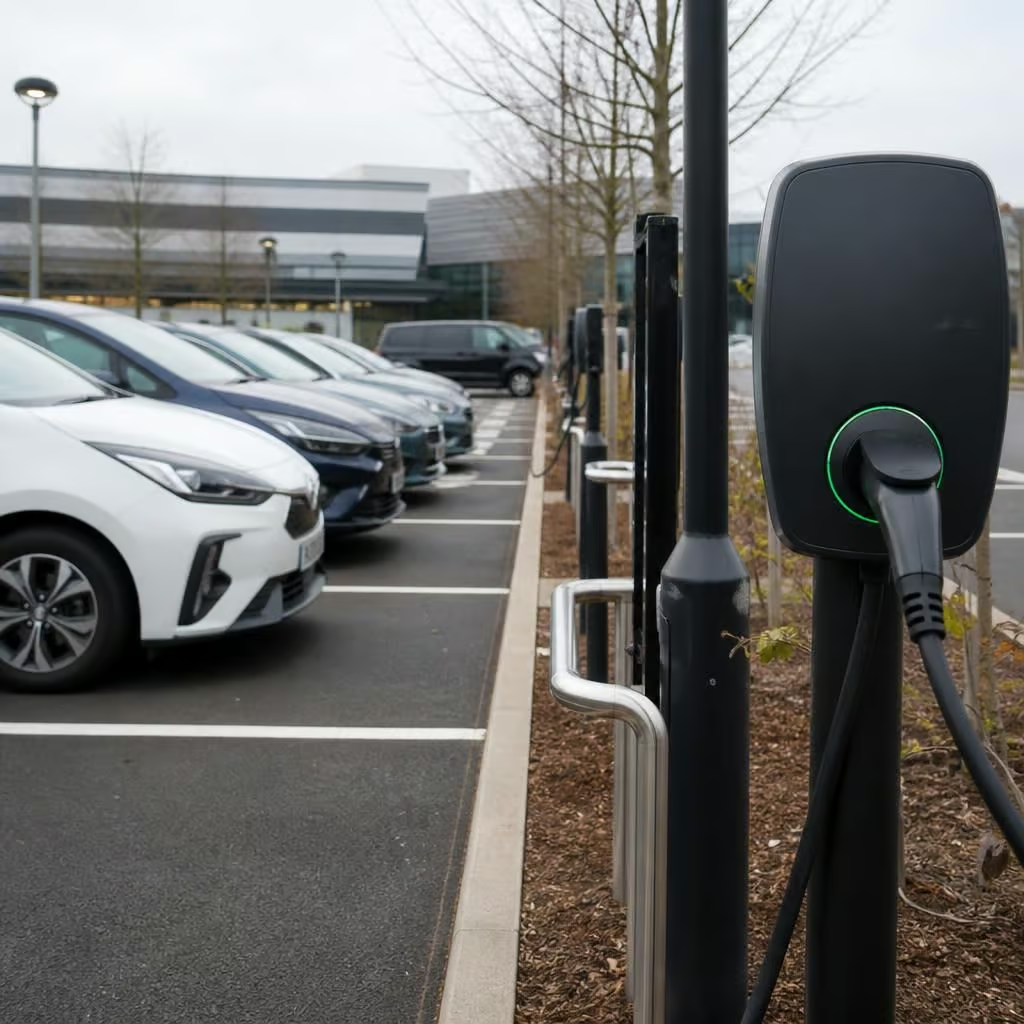
How many charge points does a commercial site need?
There’s no standard number: a commercial site may need one charge point or several, depending on vehicle numbers, daily mileage, parking patterns and how long vehicles remain on site. We assess present demand, available electrical capacity and planned fleet growth before recommending a charge point layout that can be expanded later.
The right number of commercial charge points is the number that covers your busiest realistic charging period without overloading the site. That may mean fewer chargers for vehicles parked all day, or more chargers where cars arrive together and leave within a short window.
Start with how the site is used
Your staff, visitors, residents or fleet vehicles may have very different charging needs. We establish:
- How many electric vehicles use the site now.
- How many vehicles may use it as adoption increases.
- When vehicles arrive and leave.
- How long each vehicle usually remains parked.
- How much driving each vehicle does between charging opportunities.
- Whether charging is for staff, visitors, pool cars, delivery vehicles or a managed fleet.
A workplace where most cars remain parked for the working day can usually serve more vehicles with fewer charge points. A depot where several vans return together has a different requirement. If vehicles need to leave again quickly, the site may need more charging capacity, faster charging or a combination of both.
Consider the charging window, not just the vehicle count
Ten electric vehicles do not automatically require ten charge points. If they arrive at different times and remain on site for several hours, the same charge points may serve several drivers. If they arrive together, all need a usable charge before leaving, or occupy short-stay spaces, the number may need to be higher.
We work through the busiest period rather than using the daily total alone. That shows whether a proposed installation supports normal use, or leaves drivers waiting for a space. It also helps avoid paying for equipment that will sit unused for much of the day.
Match the charger type to the parking pattern
Vehicles parked for several hours can often use AC charging, which suits workplaces, hotels, offices and longer-stay commercial sites. Short-stay users may need a different arrangement. Fleet vehicles with fixed routes may also need charging scheduled around their return and departure times.
Charging speed affects the number of points required, but a faster charger is not always the better answer. It can place greater demand on the electrical supply and may cost more to install. We compare the time vehicles are parked with the energy they need, then recommend a practical balance between charger quantity, charging speed and site capacity.
Check how the charge points will be counted
A unit with two sockets may allow two vehicles to connect, but its available power may be shared between them. We explain whether the proposal refers to individual sockets, charging units or vehicles charging at the same time. That prevents a quotation from appearing to provide more simultaneous charging than it actually does.
Load management can also distribute available power between connected vehicles. Your site may then support several charge points without giving every vehicle the full possible output at once. We assess whether that arrangement fits the expected parking and charging pattern.
Confirm the electrical capacity before choosing the quantity
Your existing supply may already serve lighting, heating, machinery, refrigeration or other equipment. Adding several charge points can increase the site’s maximum demand, particularly when vehicles charge at the same time.
We review the incoming supply, distribution boards, cable routes and available capacity during the site survey. Where the supply cannot support the preferred arrangement, we explain the available options. These may include load management, a phased installation or electrical upgrades. The number of charge points should be based on what the site can operate reliably, not just what fits on the parking plan.
Plan the parking layout around real use
The location of each space affects how useful the installation will be. We consider cable reach, vehicle movement, protection from damage, pedestrian routes, lighting and access for different vehicle types. A charger in an inconvenient space may be technically available but rarely used.
We also discuss accessible parking, visitor access and how drivers will identify an available point. If the site needs controlled access, user records or payment, those requirements form part of the equipment and operating plan.
Leave room for the next stage
Installing every possible point on day one is not always the most sensible approach. A phased design can provide the number needed now while allowing spare capacity, cable routes or positions for later expansion. That reduces the risk of having to redesign the installation when more vehicles begin using the site.
We base the future provision on your property and likely operating pattern rather than adding an unsupported forecast. The quotation sets out what we recommend initially, what the electrical system can support and what would be needed for further points later.
What we provide after assessing the site
You receive a recommendation tied to vehicle movements, parking duration and electrical capacity. It explains the proposed number of charge points, how many vehicles can charge together, how power will be shared and whether the installation should be phased.
That gives you a clearer choice between installing fewer points for longer-stay charging, providing more points for simultaneous use or combining both approaches. It also identifies electrical work before installation begins, so the quantity is based on a workable commercial charging arrangement rather than a guess.
A charge point is only useful when the space is available. If a vehicle remains parked after charging, the socket cannot serve the next driver. We therefore consider how long vehicles stay after reaching the required charge, not just how long charging takes.
Staff parking, visitor bays and fleet spaces may need different rules. We can help you plan which spaces are dedicated to charging, how drivers access them and how vehicles are moved when charging is complete. That operational detail can affect the number of points the site genuinely needs.