
How much does commercial EV charger installation cost?
Commercial EV charger installation has no fixed price: the total depends on the number and power of charge points, cable routes, groundworks and the site’s available electrical capacity. We survey the premises first, then provide a written quotation covering the equipment, installation and any required electrical upgrades.
There is no reliable single price for a commercial EV charger installation. A small workplace installation may need only charge points, protective equipment and a straightforward cable route. A larger depot or public site may also need an upgraded electrical supply, groundworks, load management, payment software and ongoing maintenance. Those differences can change the total more than the charger itself.
The most useful comparison is between the main parts of the project:
- Charge point equipment: The cost depends on how many points you need, the charging speed, connector type and whether the units include features such as user access control or energy monitoring.
- Electrical installation: This includes the distribution board, protective devices, isolators, cabling and containment needed to connect the chargers safely.
- Cable routes: A short route through an accessible plant room usually costs less than a route across a large yard, through several buildings or beneath occupied areas.
- Groundworks: Trenching, ducting, concrete bases, bollards and reinstatement add work where chargers stand away from the building.
- Electrical capacity: If the existing supply cannot support the proposed charging load, the project may need load management, a new connection or an upgrade to the site distribution system.
- Controls and administration: Network subscriptions, user payment systems, access cards, monitoring and reporting may form part of the installation or the ongoing running cost.
Your proposed number of charge points does not automatically determine the supply size. Several vehicles may charge at once, but they may not all need their maximum output at the same time. We can assess the expected vehicle movements and use dynamic load management where appropriate. That can help the site share available electrical capacity instead of paying for an unnecessary supply upgrade.
The right charger also depends on how the vehicles are used. Workplace cars and staff vehicles often suit AC charging during the working day. A fleet that returns for short periods may need a different arrangement, particularly if vans or other vehicles must leave again soon. Public-facing sites also need to consider access, payment, signage and the position of each bay. Faster charging equipment can require more substantial electrical infrastructure, so its purchase price is only one part of the decision.
A site with spare capacity and a nearby distribution board may have limited installation work. A rural yard, older commercial building or multi-occupancy property can require more investigation. Long cable runs, limited access for machinery, buried services, restricted parking and listed or protected structures can all affect the cost. We account for those conditions before we specify the equipment rather than adding them after work has started.
Our survey looks at:
- the incoming electrical supply and available capacity;
- the position of distribution boards and the proposed charge bays;
- cable routes, containment and the need for trenching or other groundworks;
- earthing, bonding and protection against electrical faults;
- vehicle access, parking arrangements and the risk of impact damage;
- how staff, visitors, tenants or fleet drivers will use the chargers;
- metering, billing, access control and any back-office requirements; and
- future expansion, so the first installation does not prevent additional points later.
If the site is leased, shared with other businesses or managed by a landlord, permissions can affect the programme and the cost. The electricity supply, parking spaces, external walls and ground may not all have the same owner. We can identify where consent or coordination is needed before the installation is booked.
Groundworks deserve particular attention. A charger beside the plant room may need a short protected cable route. A charger at the far side of a car park may need excavation, ducting, drainage checks and surface reinstatement. The finished work must also protect the cable from vehicles and leave the bays safe to use. We set out these requirements separately so you can see what is included.
Electrical upgrades are another significant variable. The existing board may need additional ways, upgraded protection or a dedicated sub-board. Where the supply is limited, we may recommend load management or discuss the implications of a supply upgrade. We will not assume that a larger charger is useful if the building cannot support it or the vehicles will not benefit from it.
For a landlord or property manager, the lowest installation price may not be the lowest overall cost. A charger that lacks suitable monitoring can make it difficult to divide electricity costs between users. A poorly planned cable route may make later expansion expensive. A site with no clear maintenance arrangement may also create uncertainty when a charger stops communicating or a vehicle cannot start a charge. We can separate installation costs from recurring network and maintenance costs, so the proposal is easier to assess.
We provide a written quotation before work starts. It sets out the proposed equipment, the number of charge points, the electrical work, cable routes, groundworks, commissioning and any exclusions. If the survey identifies an uncertain item, such as buried obstructions or a supply upgrade, we explain that before you commit. That gives you a clearer basis for comparing quotations than a low headline price with important work left out.
Commercial charging installations involve electrical design as well as physical fitting. Our NICEIC and ECA-registered electrical team completes the testing and certification needed for the work, with the results included in the installation paperwork. We can also discuss how the system should be operated and maintained after commissioning.
We carry out commercial EV charging work across Warwickshire, Oxfordshire, Gloucestershire and the North Cotswolds. The sensible next step is a site assessment based on your vehicles, operating pattern and available supply, rather than choosing equipment from a price list alone.
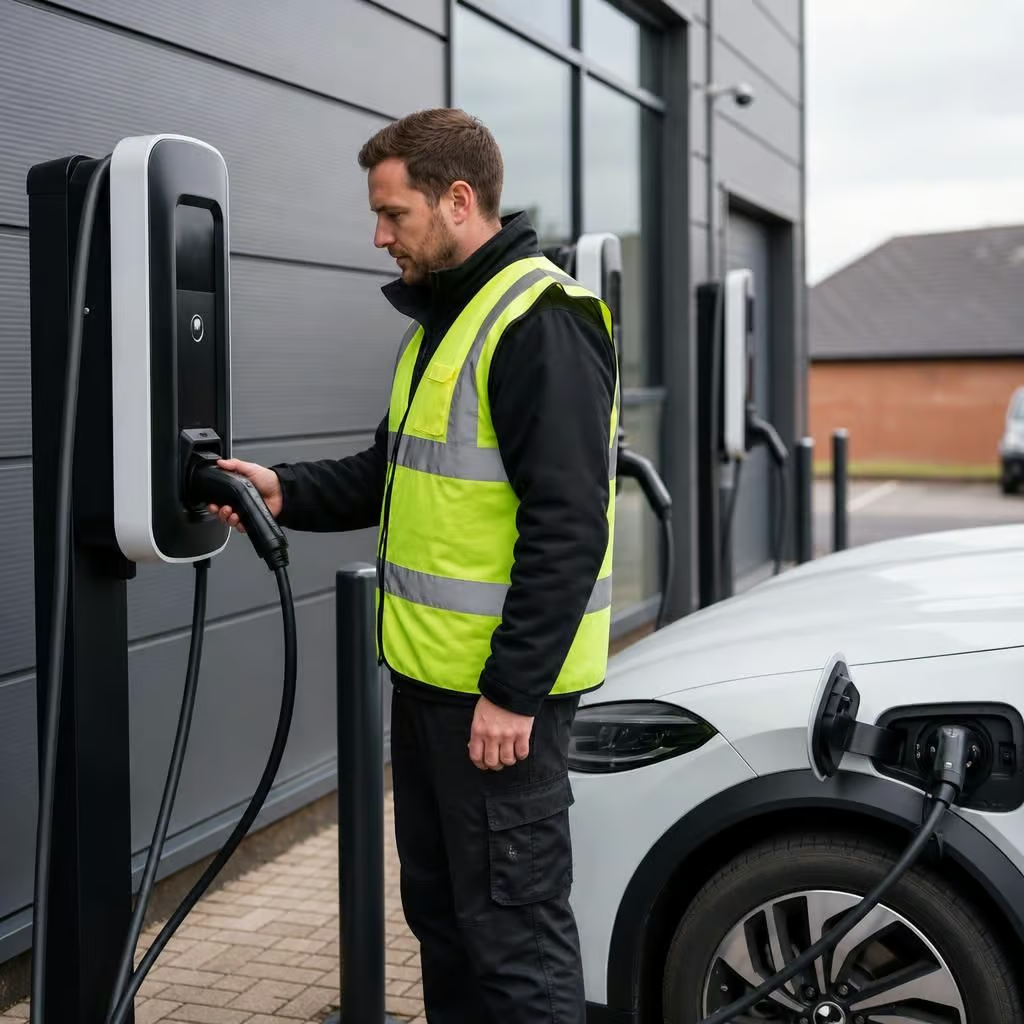
A low installation price may cover the physical charger but leave the system difficult to use. Staff may not know how to start a session, visitors may need a payment method, and managers may lack the records needed to check usage.
Ask what happens after the units are fixed in place. We configure the agreed access settings, test each charge point, check that the controls work as intended and explain the user process to the people who will operate the site. The quotation should show these steps separately from any ongoing software or maintenance charges, so you can compare the actual cost of putting the system into use.