What electrical upgrades might commercial EV charging require?
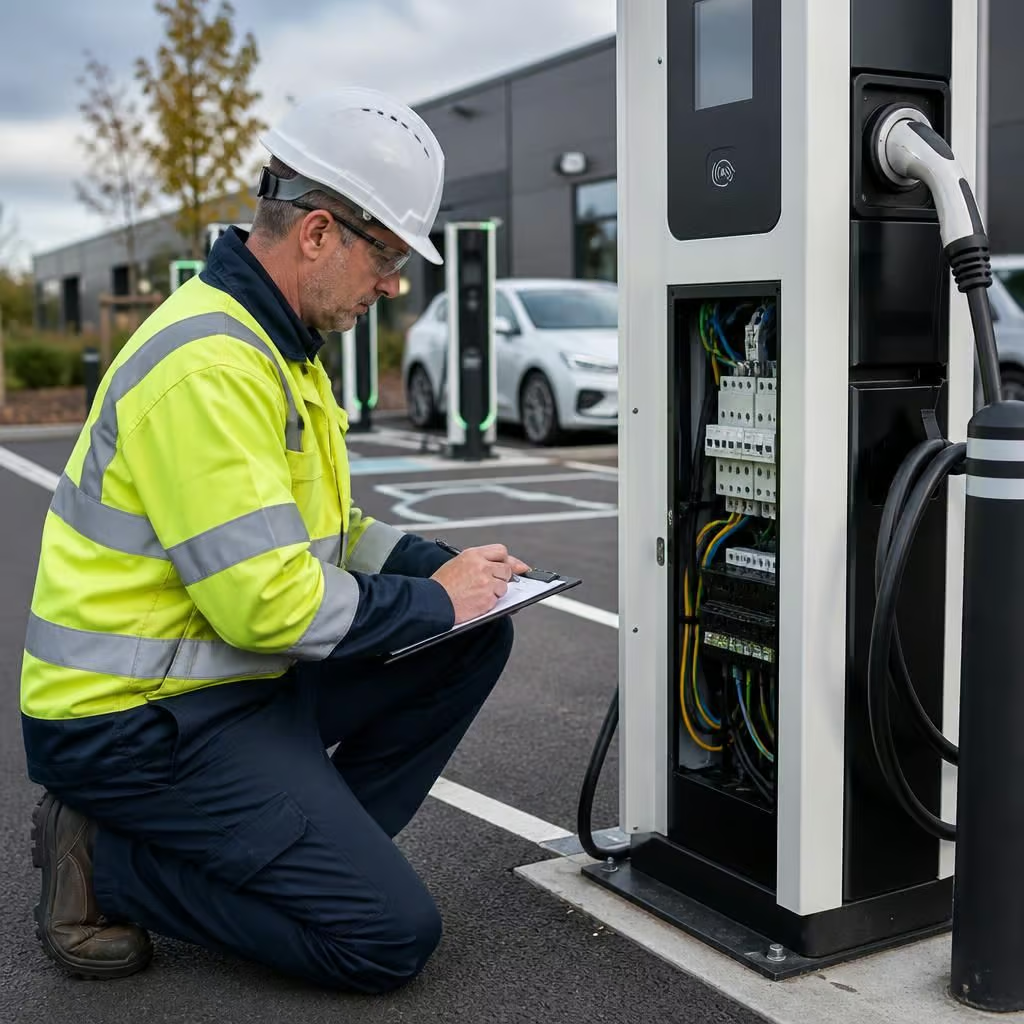
Commercial EV charging may require a capacity check, upgraded switchgear, larger cabling, additional circuit protection or changes to the distribution board. We assess the existing supply and charging demand first, then specify only the upgrades needed for a safe, compliant installation.
Not every commercial EV charging project needs a new electricity supply. Some sites can use the existing installation after we confirm its capacity and condition. Others need changes to the incoming supply, switchgear, distribution equipment, cabling, earthing or protection before charging can be added safely.
The right upgrade depends on three things: the power required by the charge points, the site’s existing electrical demand and the condition of the installation. A site with several high-power chargers, electric heating, refrigeration or workshop equipment has different requirements from a small office car park with a few lower-power points.
Incoming supply and available capacity
Your electricity supply may already be close to its maximum agreed capacity. We review the incoming supply, the main fuse arrangement, the meter position and the site’s normal peak demand. This shows whether the existing connection can support charging without affecting other equipment.
If the available capacity is insufficient, we can identify the next step. That may involve reducing the charge-point output, managing charging around the site’s other demand or asking the distribution network operator about a supply upgrade. A larger connection can involve new service equipment, additional cabling or work outside the premises, so we establish this before the installation is designed.
Main switchgear and distribution boards
Your existing switchboard may have no spare way, no suitable rating or insufficient space for the new circuits. Older switchgear may also lack the protection required for modern EV charging equipment. We check the board’s condition, fault rating, spare capacity and arrangement before deciding whether it can be retained.
Where the board cannot safely accommodate the chargers, we may install a new distribution board or charging-specific switchgear. This gives the circuits suitable isolation and protection, while keeping the charging load separate from unrelated equipment where practical. It also leaves the installation easier to inspect and maintain.
Cabling and cable routes
The distance between the electrical intake, distribution equipment and parking spaces affects the cable size and installation method. Long routes can create voltage drop, while external routes need protection from weather, impact and interference with vehicles or site operations.
We assess whether cables can run through existing ducts, service routes or plant areas. If not, the work may involve new containment, trenching, wall penetrations or protective barriers. We plan these routes around access, drainage, loading areas and pedestrian movement so the finished installation does not create a new site hazard.
Several charge points may need a larger shared supply cable rather than separate long runs from the main board. We design the arrangement around the site’s layout and the charging demand, rather than treating each point as an isolated domestic installation.
Protection, earthing and bonding
EV charging places particular demands on protective devices. Your existing earthing arrangement may need testing or improvement, especially where the building has older electrical work or a separate outbuilding supply. We check the earthing and bonding, confirm that protective devices are suitable and test for faults that could affect safe disconnection.
Each charging circuit needs appropriate residual-current protection and isolation. The exact arrangement depends on the charge-point equipment and the wider electrical installation. We specify and test the protection as part of the design rather than adding a standard device without checking compatibility.
Where the site has an older board, aluminium cabling, damaged equipment or inconsistent previous alterations, remedial electrical work may be needed before the chargers are connected. This is not an EV charger upgrade in itself, but it can be necessary to make the installation safe and compliant.
Load management can reduce the upgrade needed
Your site may have enough capacity for charging if the charge points share it intelligently with the rest of the building. Load management adjusts charging output when the building’s demand rises. That can help avoid unnecessary peaks and may reduce the need for a larger supply or major switchgear changes.
We assess this option against how the site operates. A workplace with predictable daytime demand, a fleet that returns at set times and a public car park with variable use will each need a different charging strategy. Load management does not create extra electricity capacity, so we still confirm that the underlying supply and protection are suitable.
Three-phase supplies and multiple buildings
Some commercial premises already have a three-phase supply, while others rely on a single-phase arrangement. The available phases affect how the charging load is distributed and whether the existing connection is appropriate for the proposed number of points.
If the parking area is remote from the main building, we also assess the supply to that building, the cable route between them and the local earthing arrangement. A separate garage, depot, farm building or staff car park may need its own distribution equipment rather than a simple extension of the existing circuit.
What happens before work starts
Our electrical survey records the incoming supply, main distribution equipment, existing demand, proposed charger locations and cable routes. We use that information to separate essential upgrades from optional improvements and explain any effect on cost, disruption and programme.
You receive a written quotation before work starts. If the site needs approval or a connection change from the distribution network operator, we explain that dependency before the installation is booked. We do not assume that a charger can be connected simply because a spare way appears to be available.
Once the work is complete, we inspect and test the upgraded circuits and charging equipment. Electrical work is carried out by our NICEIC and ECA-registered team, with the relevant test results and installation paperwork provided for the person responsible for the premises. That gives landlords, facilities managers and businesses a clear record of what was changed and how the charging installation was verified.
A site can appear to have enough capacity during a quiet visit, yet struggle when chargers operate alongside heating, refrigeration or machinery. We compare the proposed charging load with the building’s actual operating pattern, using available consumption records where they help.
This shows whether the electrical upgrade should support occasional peak demand or regular simultaneous charging. The result is a charging arrangement that fits the way the premises is used, rather than one based on the charger rating alone.