
What workplace EV charger installation standards must our site meet?
Your workplace EV charger installation must comply with BS 7671, the IET Code of Practice and the Electricity at Work Regulations, with suitable earthing, protection, isolation, cable routing and load management. We also check access, parking layout, signage and commissioning records, leaving the site with the electrical certification needed for safe operation and ongoing maintenance.
A compliant workplace EV charging installation must meet the requirements of BS 7671, the IET Code of Practice for Electric Vehicle Charging Equipment Installation, and the relevant workplace safety regulations. The site also needs suitable electrical capacity, controlled access, clear operating procedures and records showing that the installation has been inspected and tested.
The electrical design comes first. Each charging point needs its own correctly sized circuit, protective devices and isolation arrangements. We calculate the expected load rather than assuming that the existing distribution board can support the chargers. Several charge points may need load management so they share the available supply without exceeding the site’s agreed capacity.
Where the installation could affect the incoming supply, we check the connection requirements with the distribution network operator. A larger installation may need approval, a change to the site’s supply arrangement or upgrades to the main switchgear. That decision belongs in the design stage, before equipment is ordered or groundworks begin.
Protection against electric shock is essential. EV charging circuits require suitable residual current protection. The design must account for both alternating current and smooth direct-current leakage from the vehicle and charge point. Depending on the equipment, that means using a compatible Type A RCD with six-milliampere DC detection, or another arrangement allowed by the equipment instructions and BS 7671.
We also assess the earthing arrangement, including installations supplied by a PME earthing system. A fault involving the protective earth and neutral conductors can create a dangerous voltage on exposed metalwork. The charge point therefore needs the appropriate protective method, such as a device that detects the relevant fault condition or a separate earthing arrangement where the design requires it.
Surge protection and cable sizing form part of the design. We consider the length and route of each cable, installation method, ambient conditions, grouping with other circuits and the prospective fault current. This determines the conductor size and protective device. Surge protection is also assessed against the building’s electrical installation and the risk to connected equipment.
Every charge point must be installed to the manufacturer’s instructions as well as the wiring regulations. The equipment needs suitable ingress protection for its location, mechanical protection where vehicles or machinery could damage it, and ventilation or clearance where the product requires it. A unit mounted on an exposed wall, a car park column or a loading area may need a different arrangement from one installed inside a staff facility.
The layout must keep people and vehicles safe. We plan the position of the charging bays, cable routes, bollards and protective barriers together. Leads should not cross pedestrian paths or create a trip hazard. Where a cable must pass across a route, the design needs a proper protective method rather than loose cable ramps or an improvised fixing.
Workplace traffic also affects the installation. A bay beside a reversing area, delivery route or forklift path needs protection from impact. The layout should leave enough room for drivers to connect safely and should not obstruct fire exits, access routes, drainage points or other essential equipment. Signs and bay markings need to make it clear who may use the spaces and what restrictions apply.
The building and workplace duties still apply. The electrical work must be carried out and documented in line with the Electricity at Work Regulations and the applicable building control requirements. The responsible person for the premises must consider the installation within the site’s wider fire, traffic and electrical risk assessments.
That assessment should cover damaged cables, collision damage, water ingress, unauthorised use, emergency isolation and what happens if a charger develops a fault. Staff who operate or manage the equipment need clear instructions. Drivers should know how to report a damaged unit and when not to use it.
Smart charging and communications need checking too. Networked chargers require a reliable data connection and suitable arrangements for user access, software administration and fault reporting. Where smart-charge-point rules apply, the equipment and its settings must meet the relevant requirements. We confirm this from the chosen product’s technical information instead of treating every connected charger as identical.
Payment or access control does not replace electrical compliance. RFID cards, apps, employee accounts and billing records sit alongside the electrical installation. The organisation should decide who can use each bay, how energy use is allocated and who receives fault notifications before the chargers go live.
Testing and certification complete the installation. We test the circuits and charge points after installation, including protective conductor continuity, insulation resistance, polarity, earth fault loop conditions and RCD operation where applicable. We record the results and provide the electrical certification and operating information needed for the site’s records.
The documentation should identify the circuits, protective devices, charge-point locations and any load-management settings. It should also include equipment instructions, isolation points, test results and the recommended inspection arrangements. A facilities manager or landlord can then show what was installed, how it was tested and what maintenance it needs.
Maintenance is part of meeting the standard over time. A compliant installation can become unsafe if a lead is crushed, a pedestal is struck, a gland loosens or an RCD begins to trip repeatedly. The responsible person should arrange visual checks and planned inspection based on the site’s use and risk. Users should report heat damage, cracked housings, exposed conductors, repeated faults and signs of impact immediately.
Where grant funding is being considered, the scheme’s eligibility and evidence requirements should be checked before the installation is committed. We can identify what information the application needs, such as site details, charge-point specifications and completion records, but the funding body decides eligibility and may change its rules.
We design the installation around the building, supply and working practices rather than fitting a standard number of chargers by assumption. That gives the site a clear electrical design, documented test results and operating arrangements that can be managed after the installation is complete.
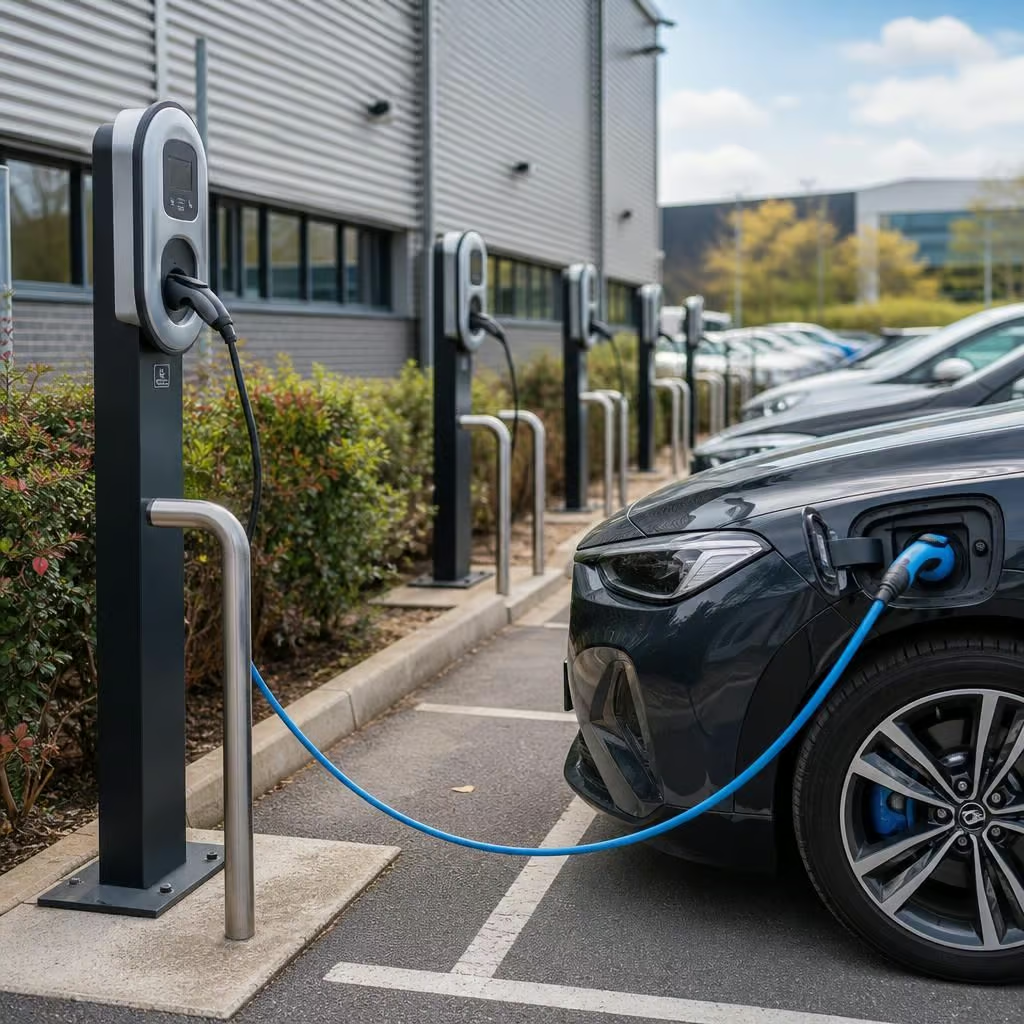
When chargers sit away from the main building, the buried installation matters as much as the visible unit. We trace the proposed route, check for existing services and choose suitable ducts, mechanical protection and cable sizes for the ground conditions. The route is planned around drainage, traffic and future access, so a fault does not require unnecessary disruption to the car park.
Groundworks also need to leave a clear record for the person managing the site. We identify cable routes, isolation points and charger locations in the handover paperwork, including any protection installed below ground. That information helps future contractors work safely and makes later expansion easier to assess.
Plan a compliant workplace EV charging installation
If you’re responsible for a workplace site and need to turn these requirements into an installation plan, contact us to discuss the chargers, access arrangements and records the site will need. We’ll explain the next steps before any work is proposed.