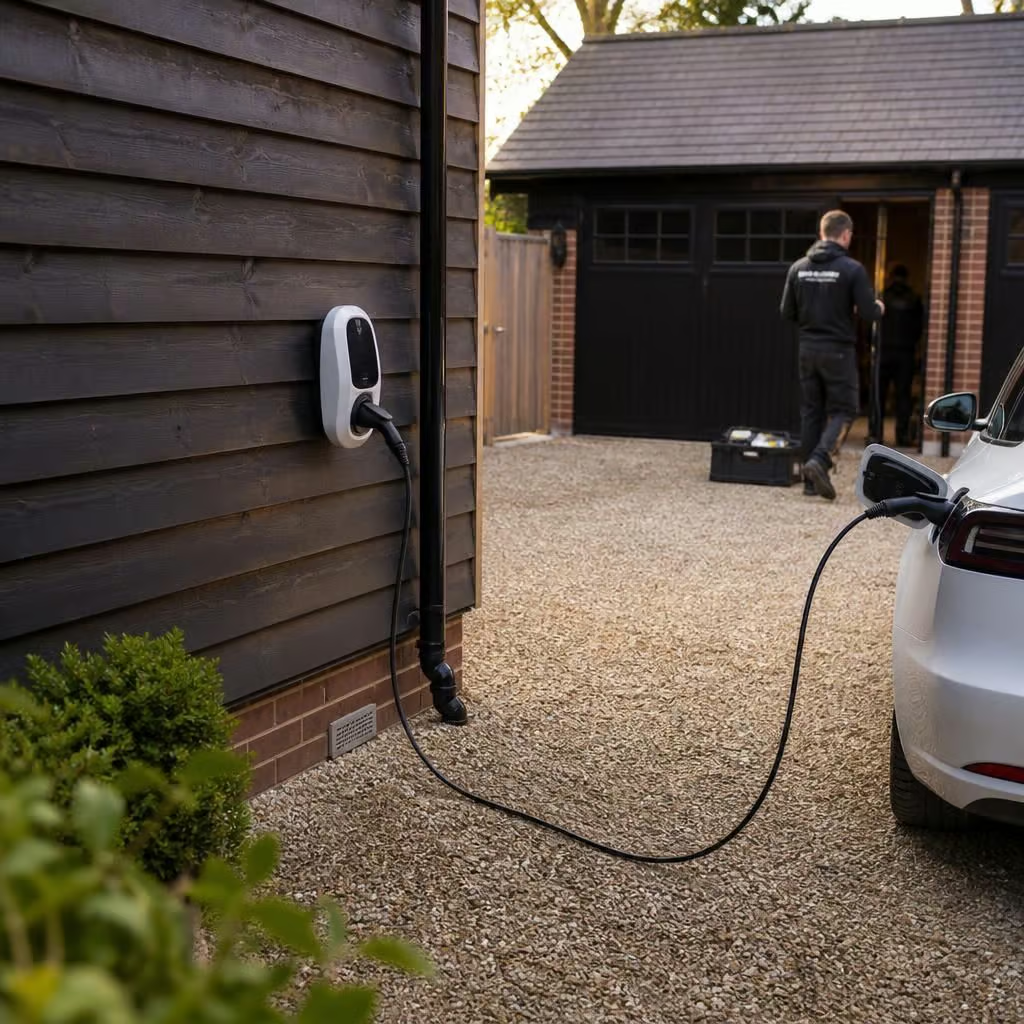
Can an EV charger be installed when my car parks away from the house?
Yes. We can install an EV charger away from the house by assessing the cable route, distance, electrical supply and any detached garage or outbuilding before recommending the safest practical arrangement.
Parking at a detached garage, outbuilding or another part of the drive doesn’t prevent home EV charger installation. The charger is positioned close to where the car is normally parked, while we plan a suitable connection back to the property’s electrical supply.
The main options are:
- An external cable route: the cable runs neatly along suitable walls, fencing or other protected surfaces.
- A buried route: the cable passes through suitable underground ducting between the house and the parking area.
- An existing outbuilding supply: a garage or workshop may provide a useful connection point, but we still test its cable, earthing and protective devices before relying on it.
The best route depends on the distance, the ground between the buildings, the surface covering the route and the condition of the existing electrical installation. A long run can affect cable sizing and voltage drop, so we calculate the installation rather than simply extending the nearest circuit.
When the car parks beside a detached garage
A garage can be a practical charger location, particularly if it already has a suitable electrical supply. That supply may not be adequate for EV charging, even if it currently powers lights, sockets or a garage door. We check the cable from the house, the consumer unit, earthing arrangements and available capacity before deciding how the charger should be connected.
If the existing garage cable is unsuitable, we may recommend a new dedicated cable from the house. This can follow an external route or pass underground, depending on the property and the amount of disruption involved.
When the parking space is across a garden or drive
A buried cable can keep the installation protected and reduce visible cabling. The route may pass beneath paving, tarmac, gravel or a lawn, so the surface and any drainage, irrigation or other services need to be considered before work starts. We agree the practical route with you before installation begins.
Where a route crosses a shared drive, private road or land that is not solely yours, permission may be needed before work can begin. Listed buildings, conservation areas and properties with unusual construction may also need additional planning consideration. We will explain any issue that affects the proposed position or route.
The charger needs the right protection
A distant parking space does not change the electrical safety requirements. The charger needs its own appropriately protected circuit, with equipment selected for the charger’s rating and the property’s earthing arrangement. We also check whether the consumer unit can accept the additional circuit and whether protective equipment needs upgrading.
Where several high-power appliances may operate together, we can consider load management. This allows the charging equipment to work within the property’s available supply instead of assuming that the maximum charging rate can run at all times. The suitable arrangement depends on the supply, the charger and the other electrical loads in the home.
How much access is needed inside the house?
Even with a completely external cable route, we normally need access to the consumer unit and the point where the cable connects to the supply. If the consumer unit is in a cupboard or utility room, that area needs to be clear enough for inspection and electrical work.
A charger placed at the far end of the property may need less visible cabling inside the house, but it can require more work outdoors. We look at both parts of the installation so the final route is safe, accessible for future inspection and not left where it could be damaged by vehicles, gardening equipment or passing foot traffic.
What affects the cost?
The price is mainly influenced by the cable length, the condition and capacity of the existing supply, the charger position and the type of surface along the route. Excavation, difficult access, a detached outbuilding or consumer unit alterations can add work compared with a charger mounted directly on the house.
We explain the proposed route and any electrical work in the quotation before installation starts. That gives you a chance to compare the practical and financial effect of positioning the charger by the house, garage or parking space.
Our NICEIC-registered electricians test the completed installation and provide the relevant electrical certification. The charger can then be used where the car is parked, without relying on a long loose charging lead across the garden or drive.
The charger should suit the way you actually park, not just the shortest cable route. Show us where the car normally stands, how you approach the space and whether gates, paths or other vehicles affect access.
We can then assess the proposed position alongside the electrical route. The finished installation should let you connect the car without running a loose cable across a walkway or leaving it where vehicles and garden equipment could damage it.