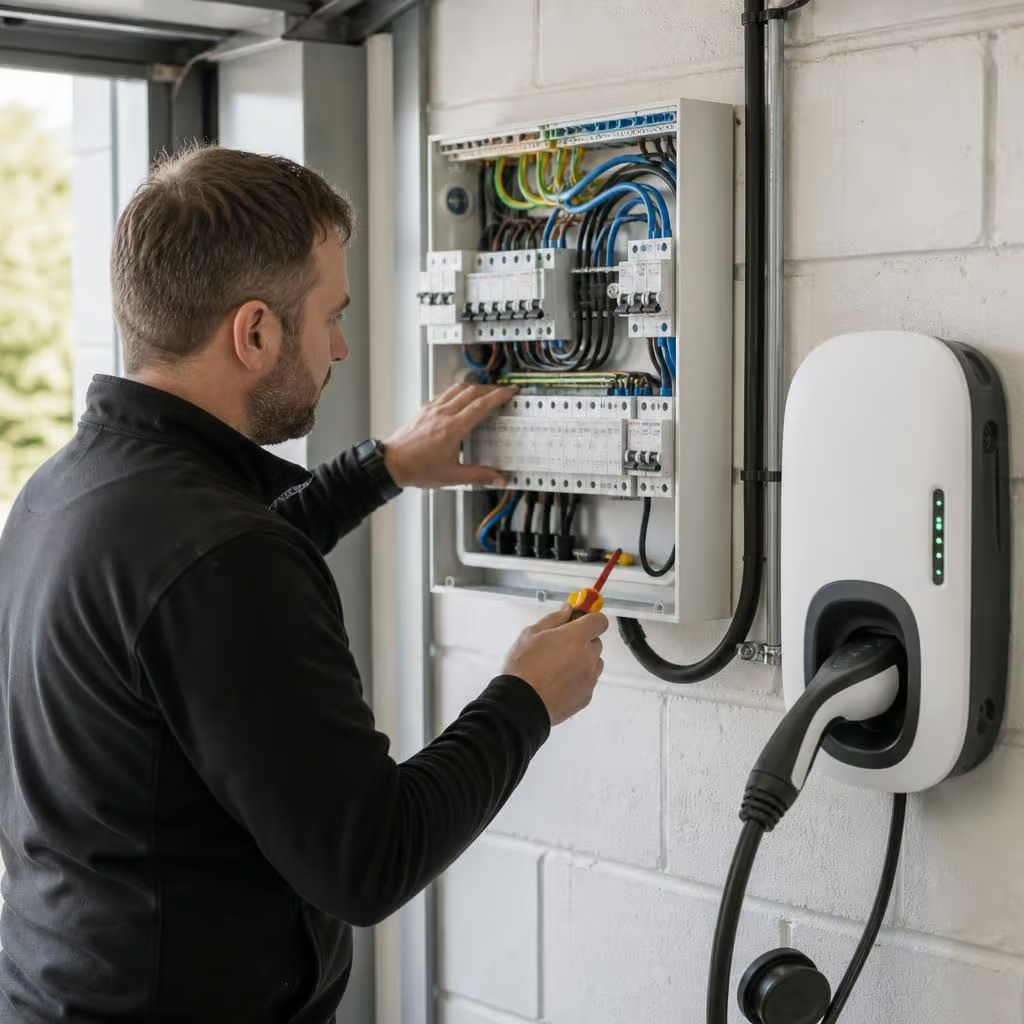
Does an EV charger need its own circuit?
Yes. A home EV charger normally needs its own dedicated circuit from the consumer unit, with correctly sized cabling and protective devices rather than sharing a circuit with household sockets.
The charger draws a high electrical load for a sustained period, so it needs wiring designed for that job rather than a connection to an existing socket circuit. Sharing a circuit with kitchen appliances, a washing machine or an immersion heater could overload the cable or cause unwanted trips.
We normally take the supply from the consumer unit to the charge point using a dedicated cable. The cable size depends on its length, installation method and the charger’s requirements. A longer route, an insulated wall or a cable buried outside can all affect the design.
Before we quote, we check the consumer unit, the available ways and the condition of the existing installation. We also assess the property’s electrical demand. If the board has no suitable space, the work may include a new protective device or a consumer unit upgrade.
An older installation may need remedial electrical work before the charger can be connected. We explain that clearly in the quotation, rather than leaving changes as an unexpected extra. You receive the price and scope in writing before work starts.
Load management can sometimes help where several large electrical loads operate at the same time. It adjusts the charger’s demand to keep the property’s supply within safe limits. We decide whether that is appropriate after checking the supply and the way the home is used. It does not remove the need for correctly designed dedicated wiring.
The cable route affects how much work takes place inside the house. A surface-mounted route may use discreet trunking, while a concealed route can involve lifting floors or making small openings in walls. For a detached garage or driveway, we may need to install outdoor-rated cable and protect it against damage. We agree the route with you before installation.
At the charge point, we fit the required isolation and protection for that particular unit. We test the circuit, confirm that the protective devices operate correctly and check the charger under load. The work is carried out by NICEIC- and ECA-recognised electricians, so the installation is tested and certified as electrical work rather than treated as an add-on to the driveway.
Once the installation is complete, we provide the relevant electrical certification and explain the controls. If the charger has scheduling or load-management settings, we show you how they affect charging. That leaves you with a circuit designed for the charger and a clear record of what has been installed.
A dedicated circuit does not necessarily mean that the property’s incoming supply must be upgraded. That depends on the existing capacity and the other equipment running in the home. We establish that during the survey and tell you if the charger needs additional work before you commit to the installation.
If solar panels or a home battery are part of your plans, tell us before the EV charger is designed. We can consider how the charger fits with the wider electrical installation, but solar generation does not remove the need for a dedicated circuit.
The charger still needs its own cable and protective equipment from the consumer unit. We also consider where the electricity is coming from and how the home uses power, so the finished installation is ready for the controls you actually intend to use.